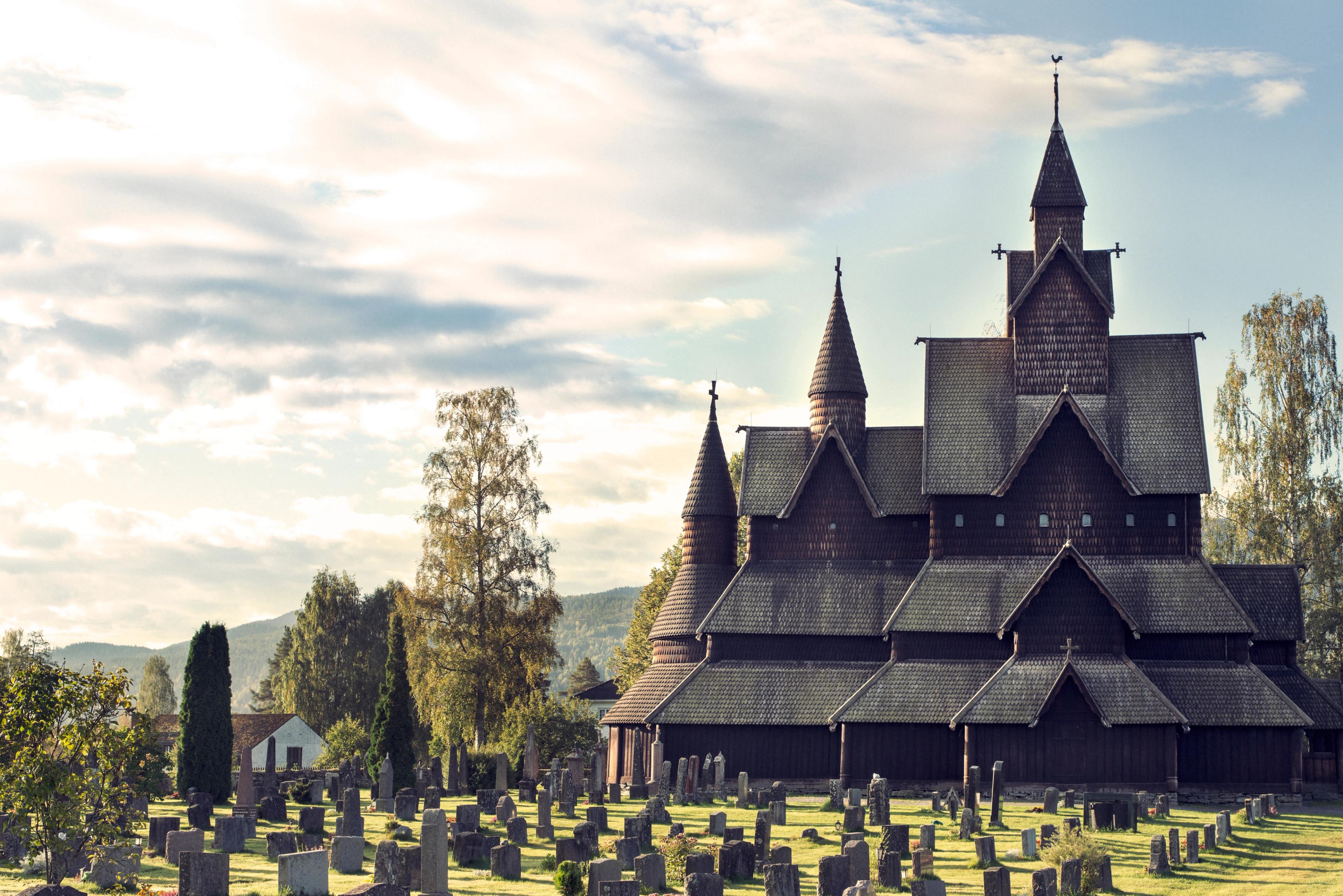
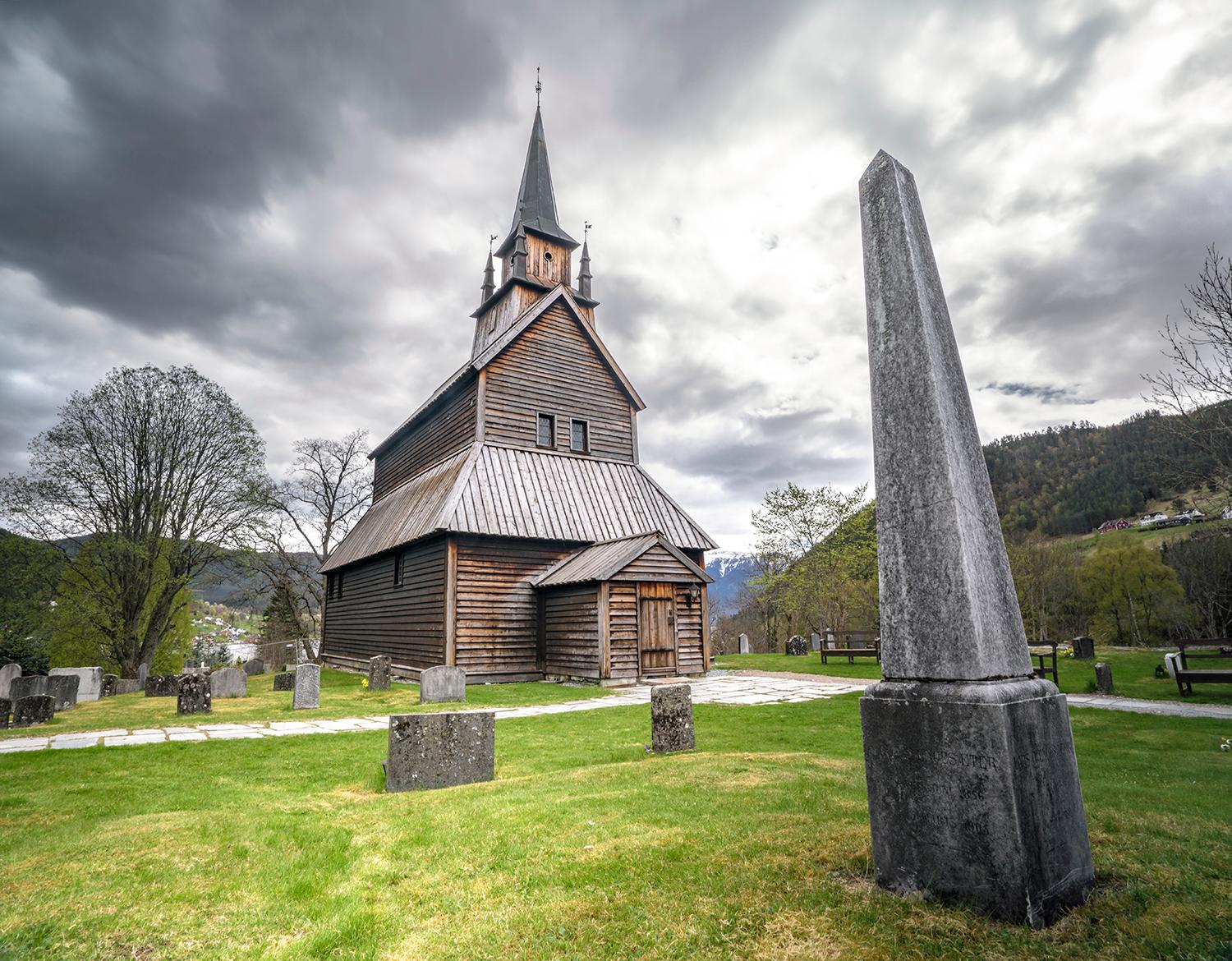
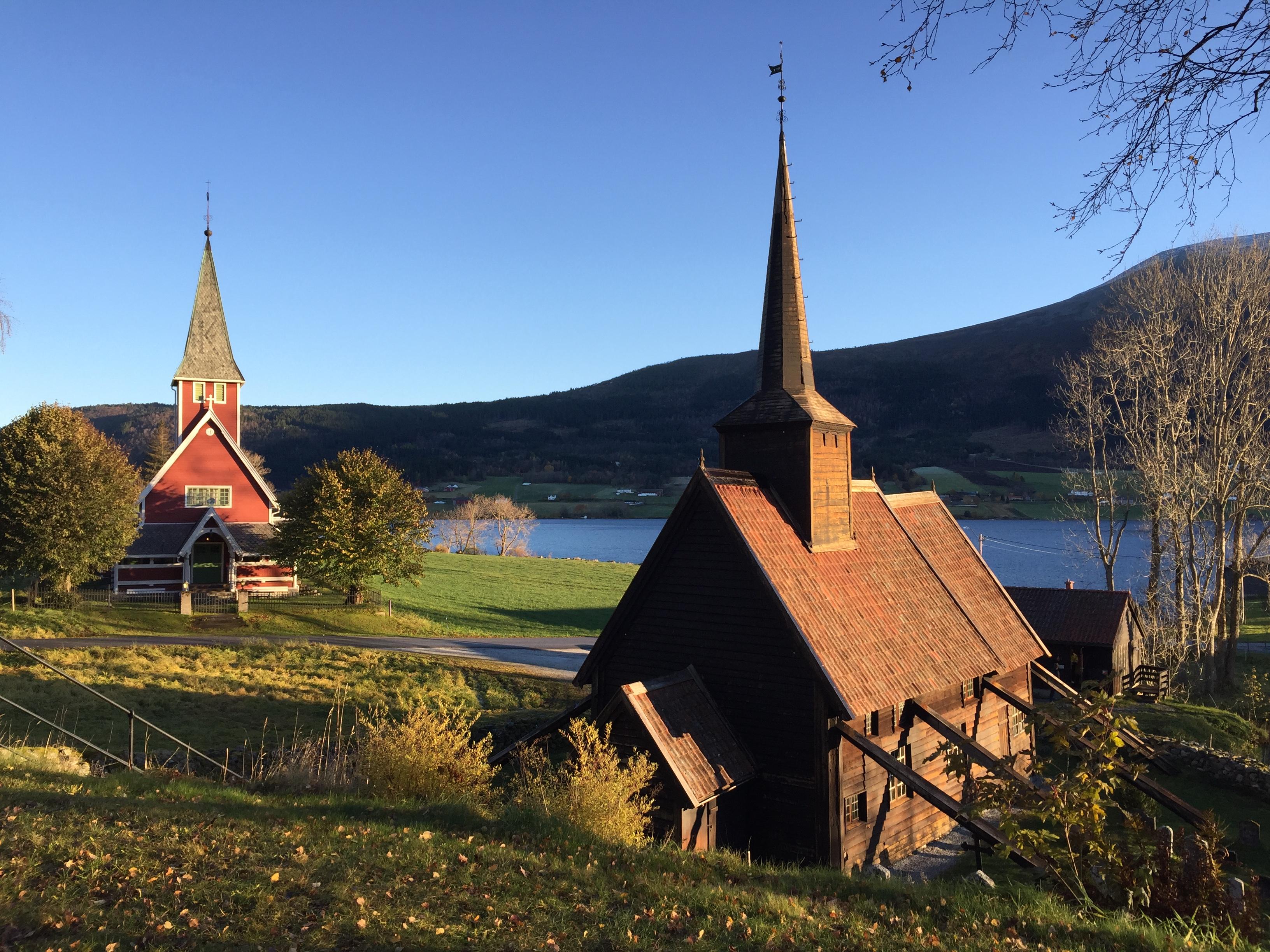
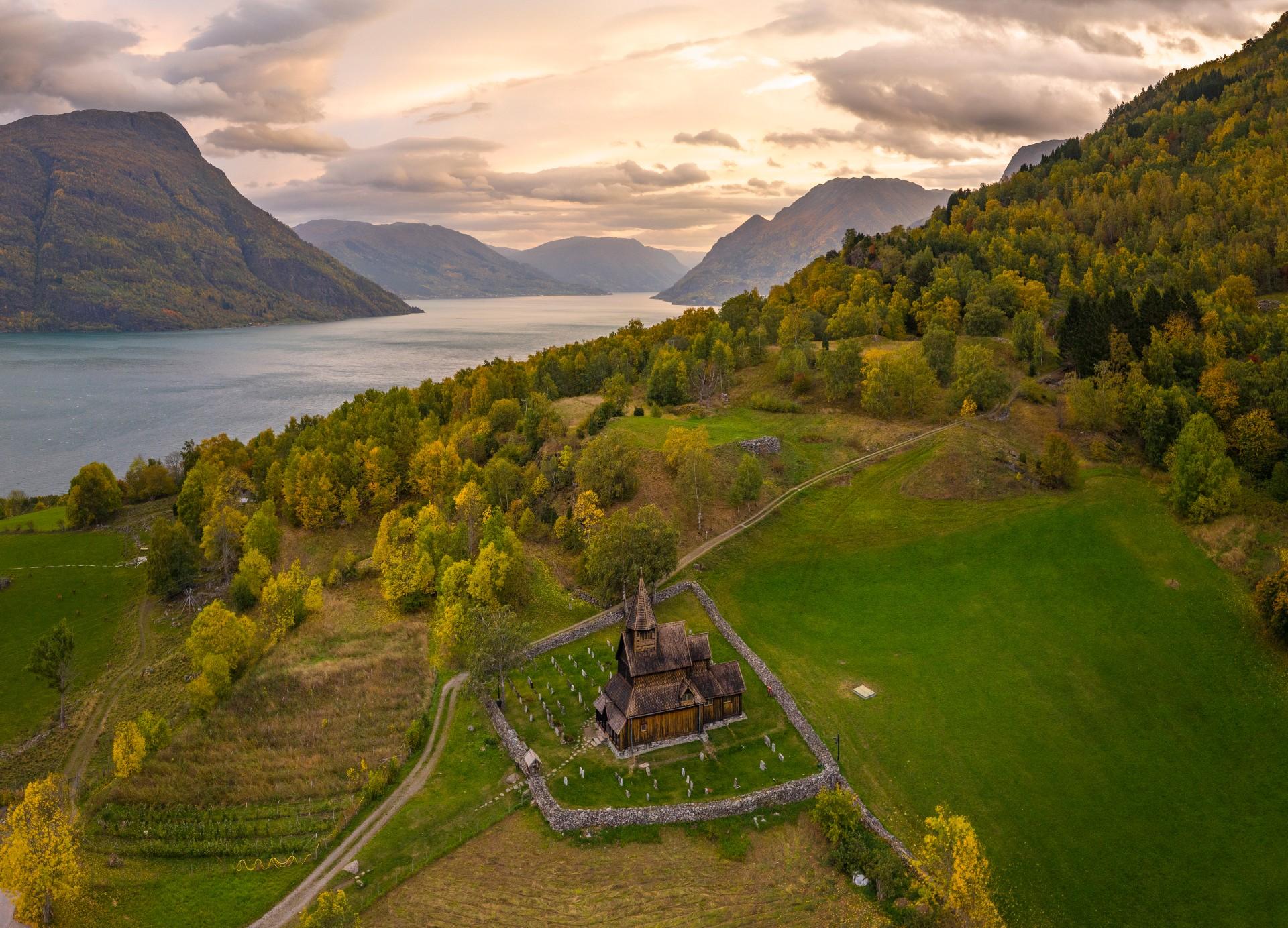
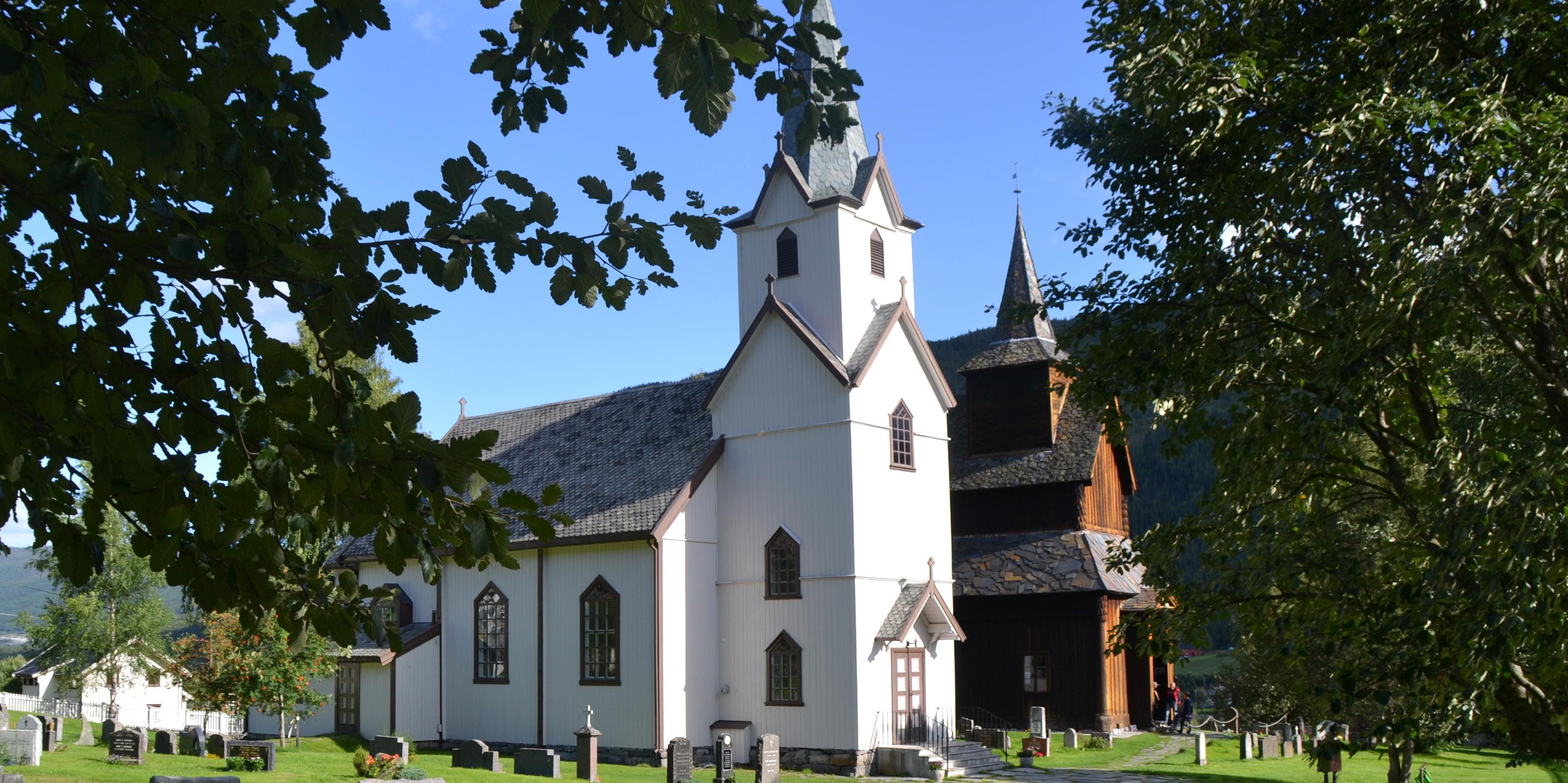
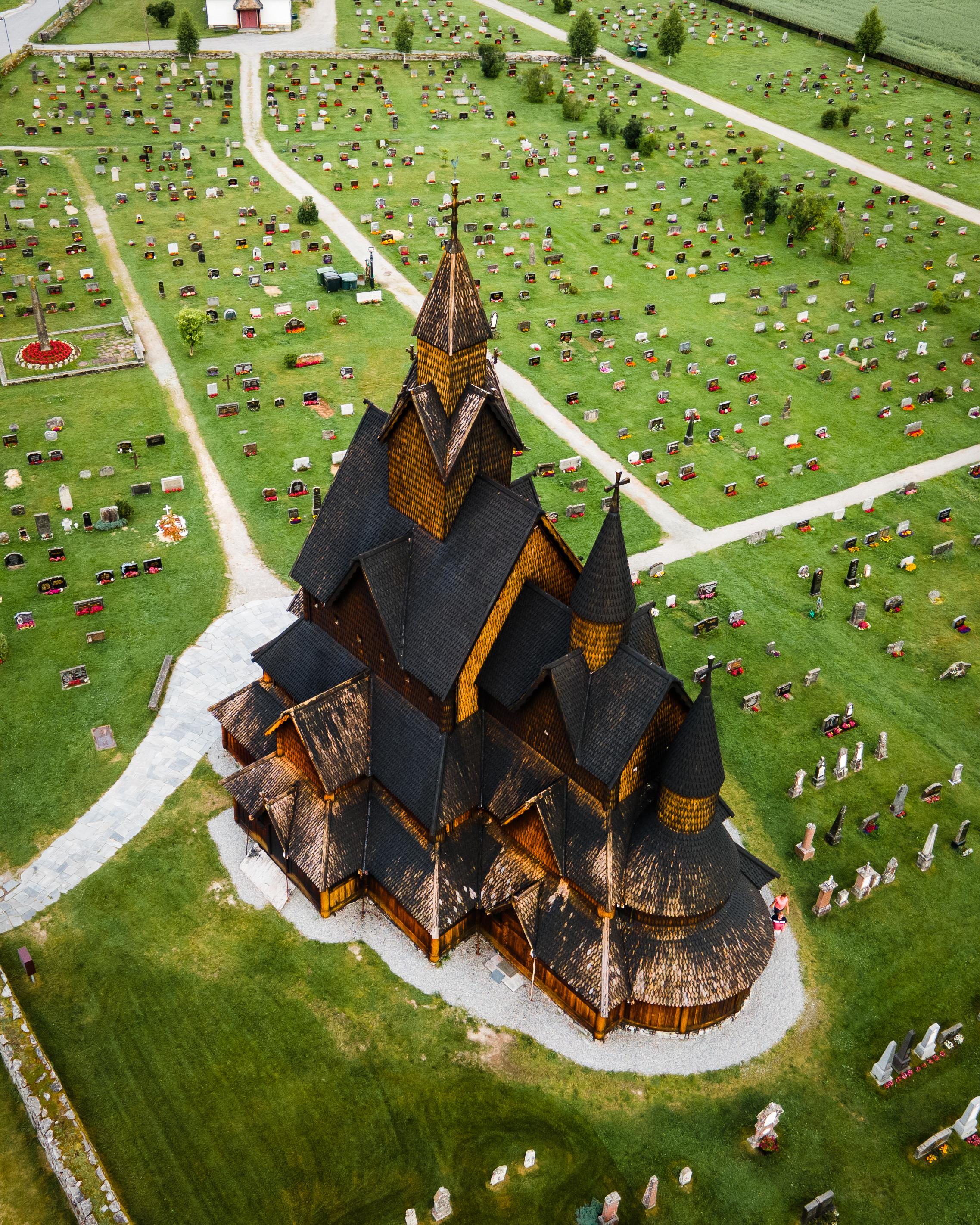
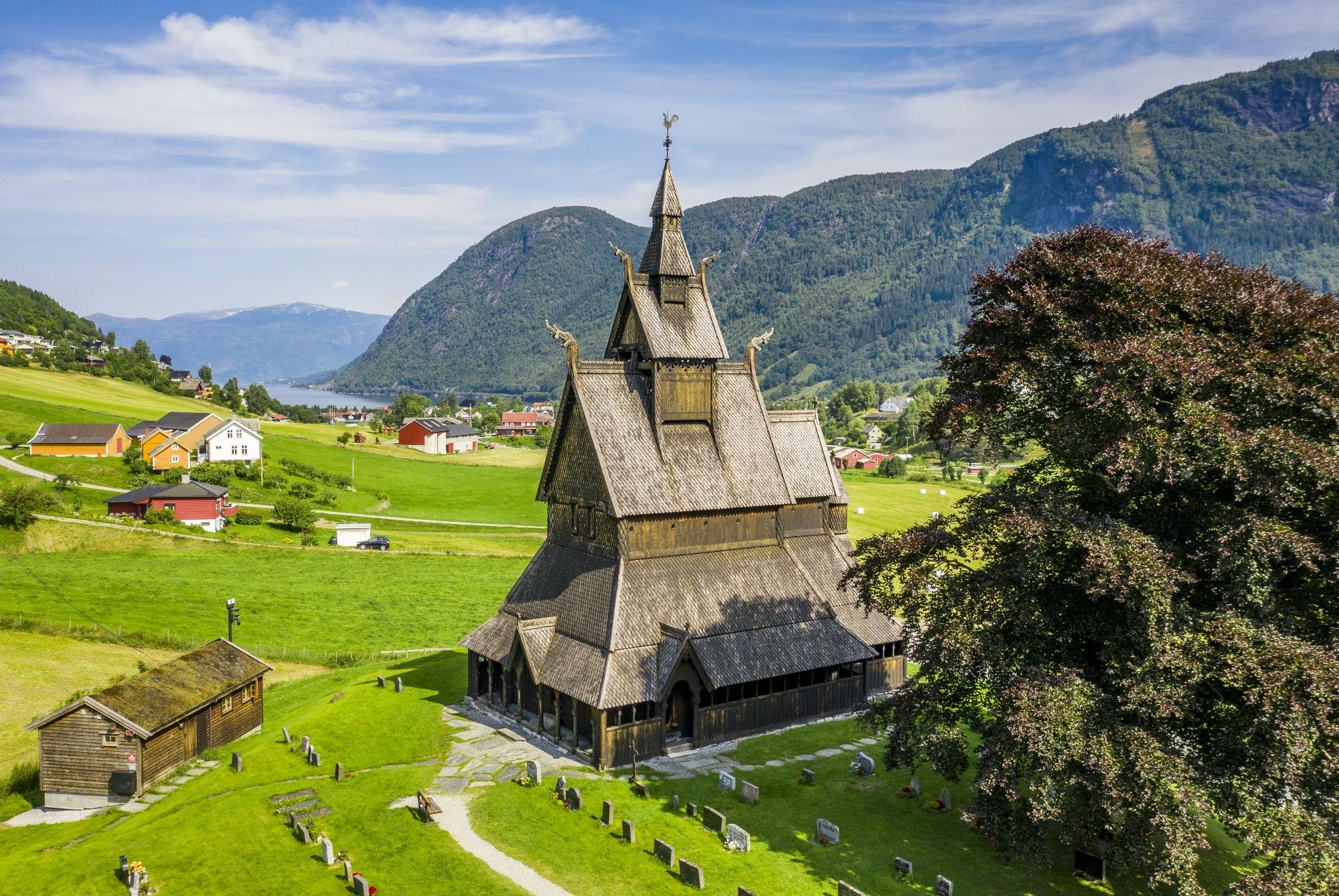
Estas iglesias, también conocidas como stavkirker, son las iglesias cristianas de madera más antiguas que aún se conservan. Si bien la mayoría de ellas eran bastante sencillas, algunas contaban con diseños y tallados con muchos detalles.
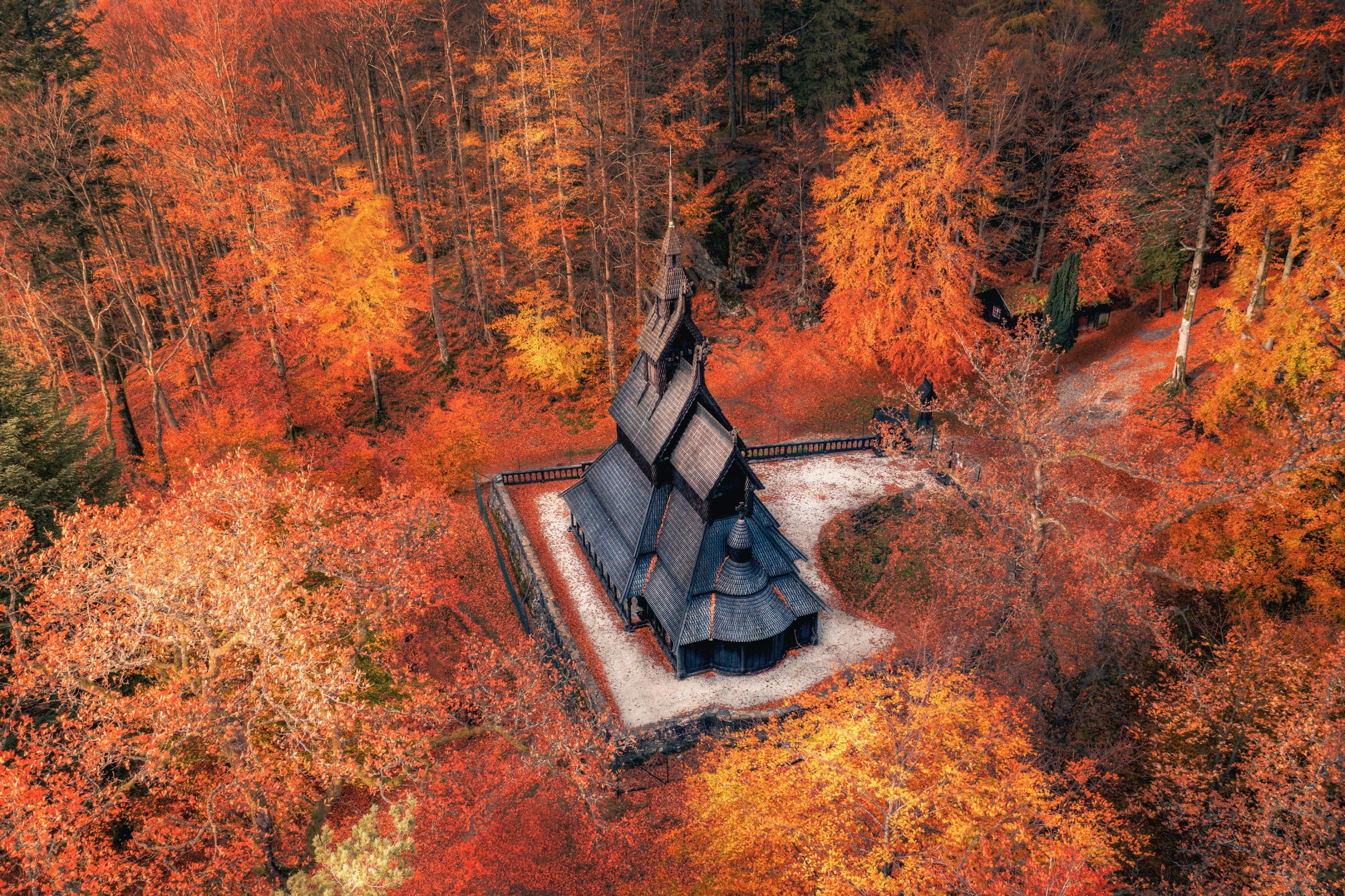
Stavkirker: iglesias medievales noruegas
Un legado de casi 900 años tallado en madera.
No es de extrañar que estas iglesias tan icónicas no dejen de hipnotizar a la gente.
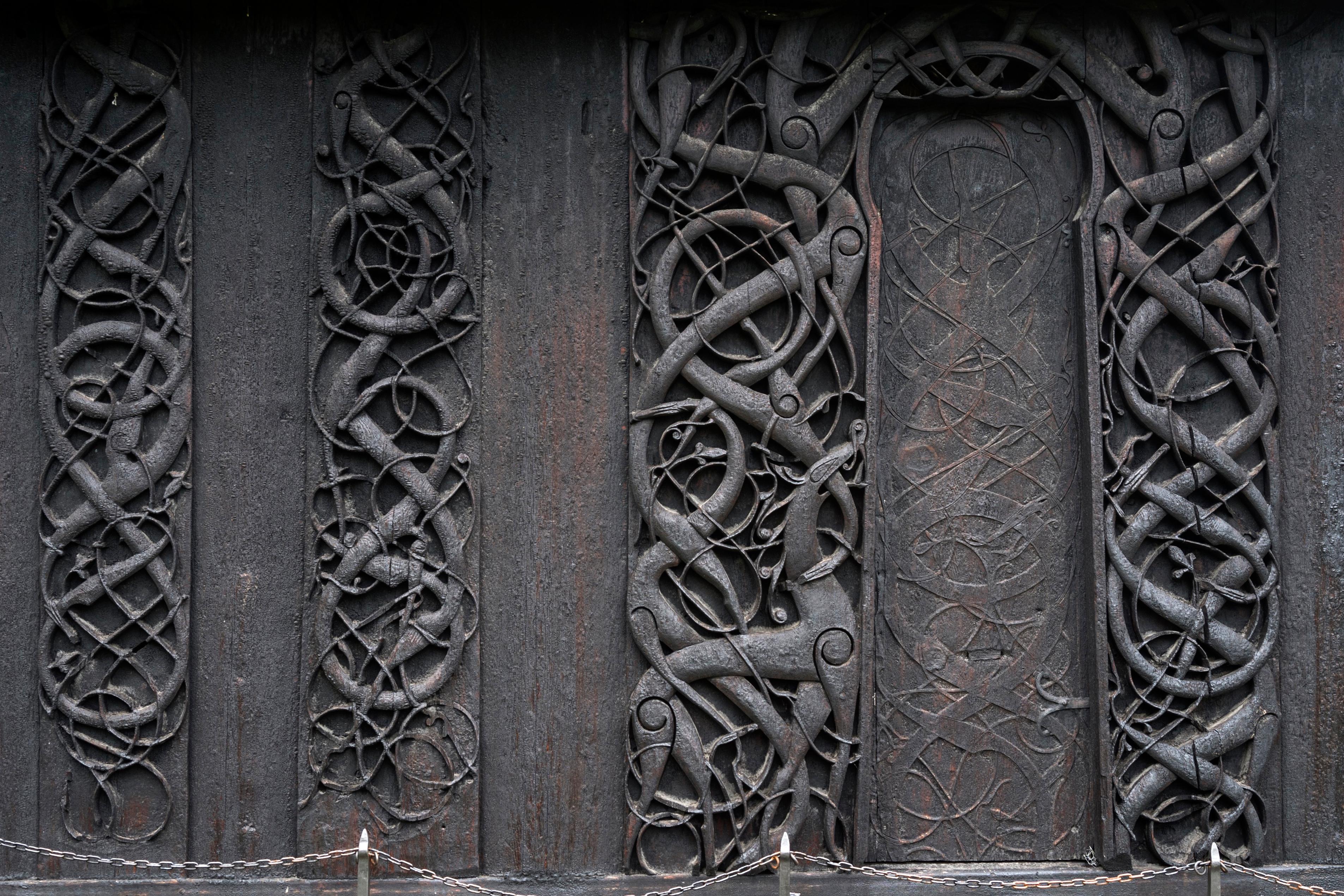
Imagina el tiempo que llevó tallar todos estos diseños tan detallados.
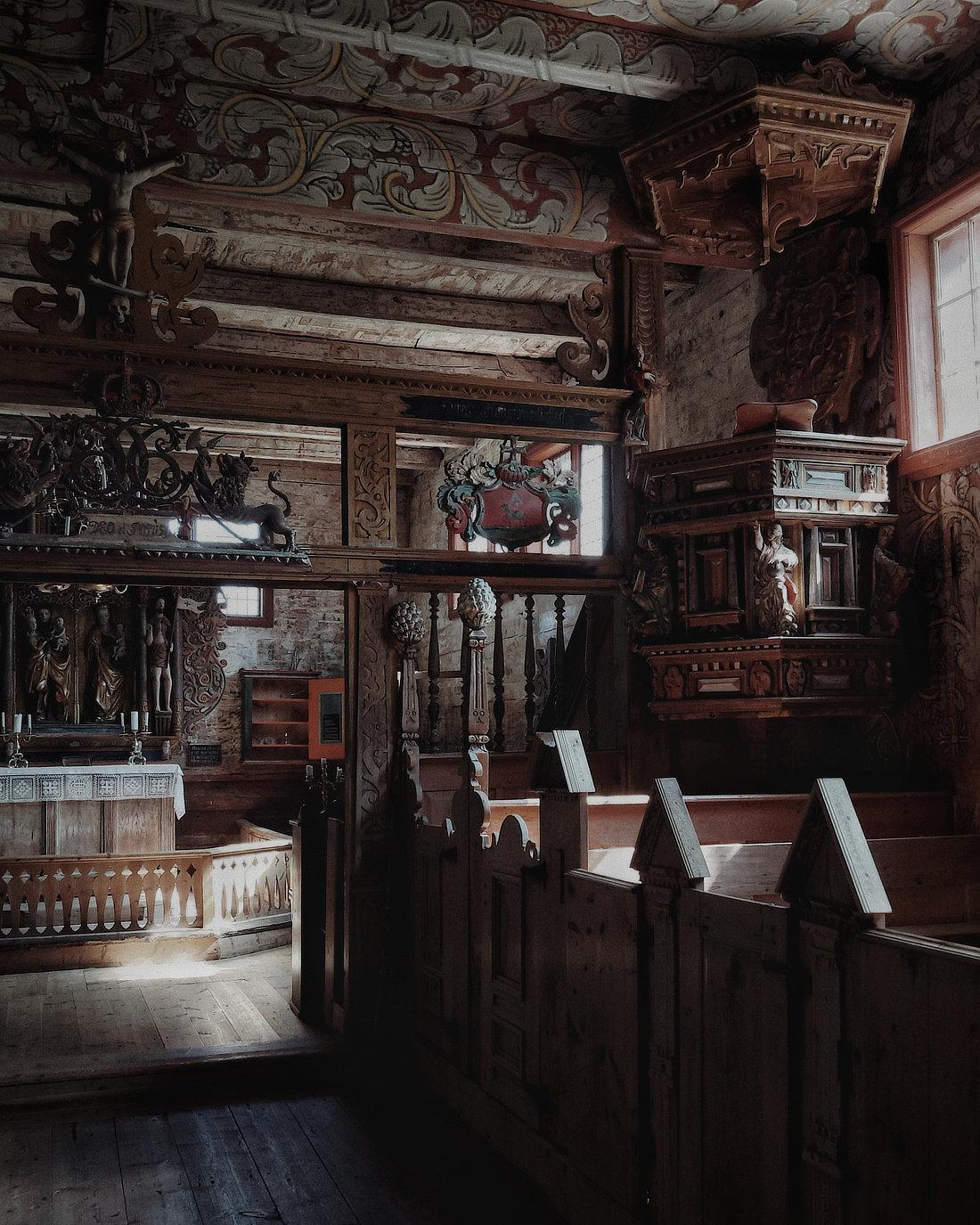
Inhala la esencia de la madera barnizada al entrar y busca elementos de los dioses nórdicos, los antiguos dioses que a menudo coexisten con el dios cristiano en las iglesias más antiguas.
En su día llegó a haber más de 1300 de estas maravillas en Noruega. Desgraciadamente, fueron desapareciendo una por una y reemplazadas por unas más acogedoras, grandes y modernas.
Gracias a un artista apasionado, las últimas 28 iglesias se pudieron salvar en el último momento.
La herencia de los vikingos
En la Edad Media, se construyeron enormes catedrales de piedra en muchas partes de Europa. En Noruega, se empleó una técnica similar para construir madera, pero a una escala mucho menor.
Las puertas y pináculos de madera de las iglesias se suelen tallar. Los decorados cuentan con una interesante combinación de motivos cristianos y lo que a menudo se interpreta como temáticas vikingas previas al cristianismo en las que figuran animales y dragones.
Las increíbles técnicas de tallado y construcción que empleaban los vikingos, sobre todo en sus barcos y casas, se siguieron desarrollando y a menudo se encuentran en estas iglesias.
Hay varios tipos de stavkirker, pero lo que todas tienen en común son sus postes angulares (staves) y un marco de madera con tablones que se aguantan sobre soleras. Estas paredes reciben el nombre de paredes stave, y de ahí el nombre stavkirke.
Hay un motivo para creer que los vikingos construyeron muchas de estas iglesias sobre tierra consagrada. Por aquella época, la religión Åsa no contaba con una casa de adoración y su práctica se llevaba a cabo en bosques sagrados, junto a un altar, o en un hov pagano. Este hov solía ser una sala amplia o el recibidor del granjero más rico del pueblo.
Dónde encontrar las stavkirker
De estas iglesias, que en su día se encontraban por toda Noruega, apenas quedan 28 en condiciones más o menos buenas.
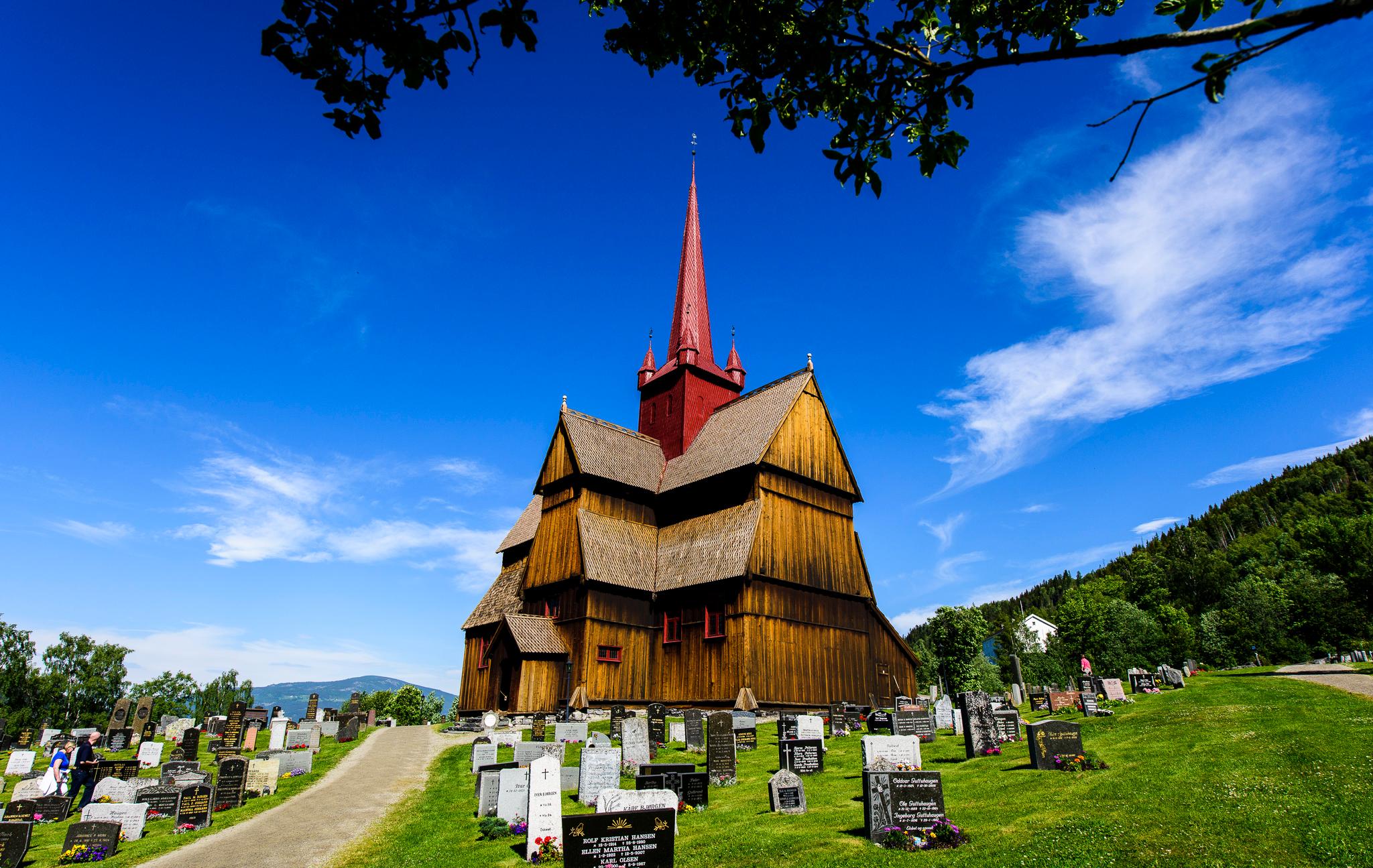
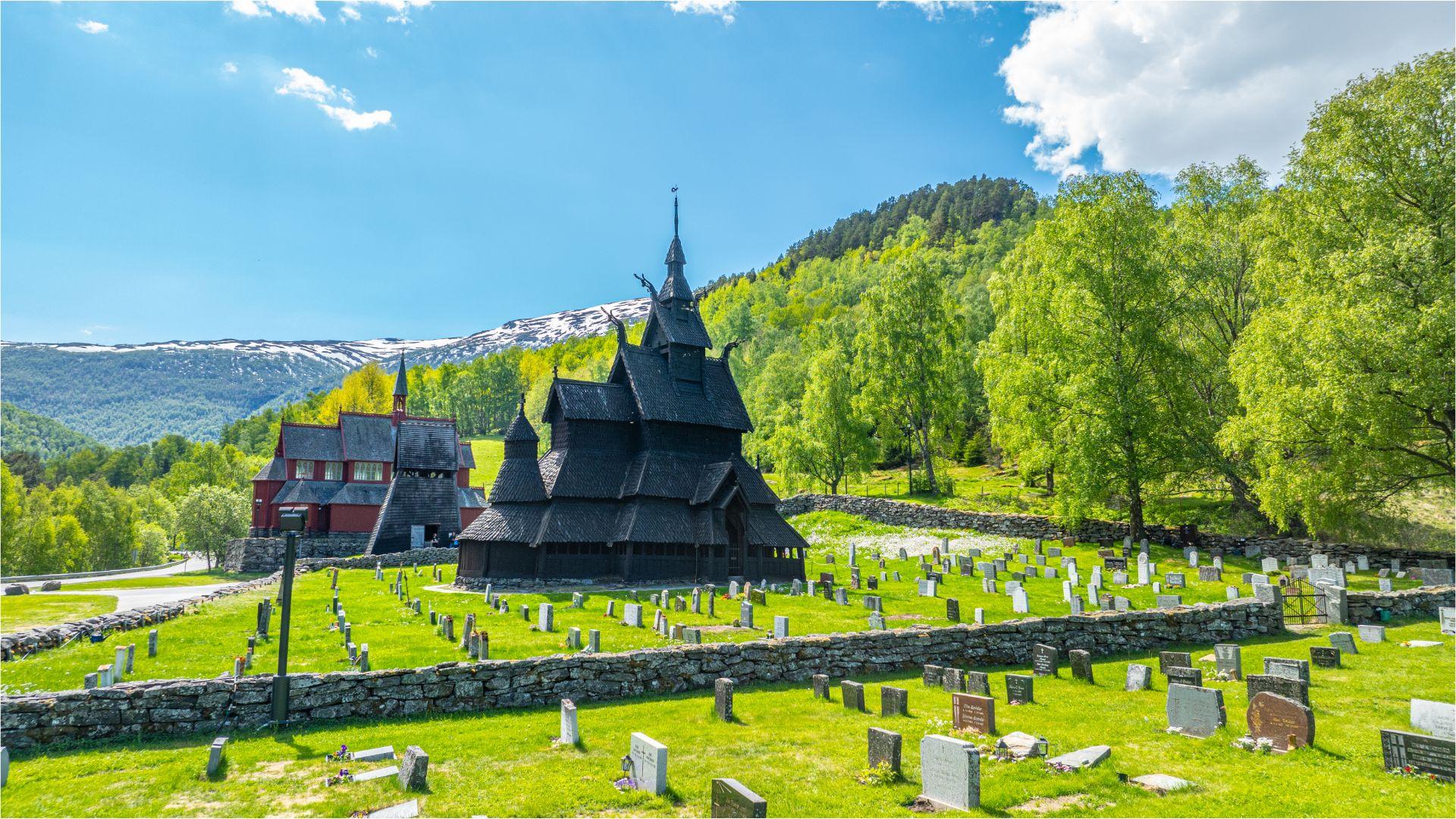
Si quieres conocer la mejor conservada, Borgund, tendrás que desplazarte hasta Lærdal, en la Noruega de los fiordos. Sin embargo, también podrás ver más ejemplos de este tipo de iglesias en Heddal, Telemark; en Fantoft, Bergen; y en Luster (la Urnes Stavkirke, patrimonio de la Unesco), entre otras.
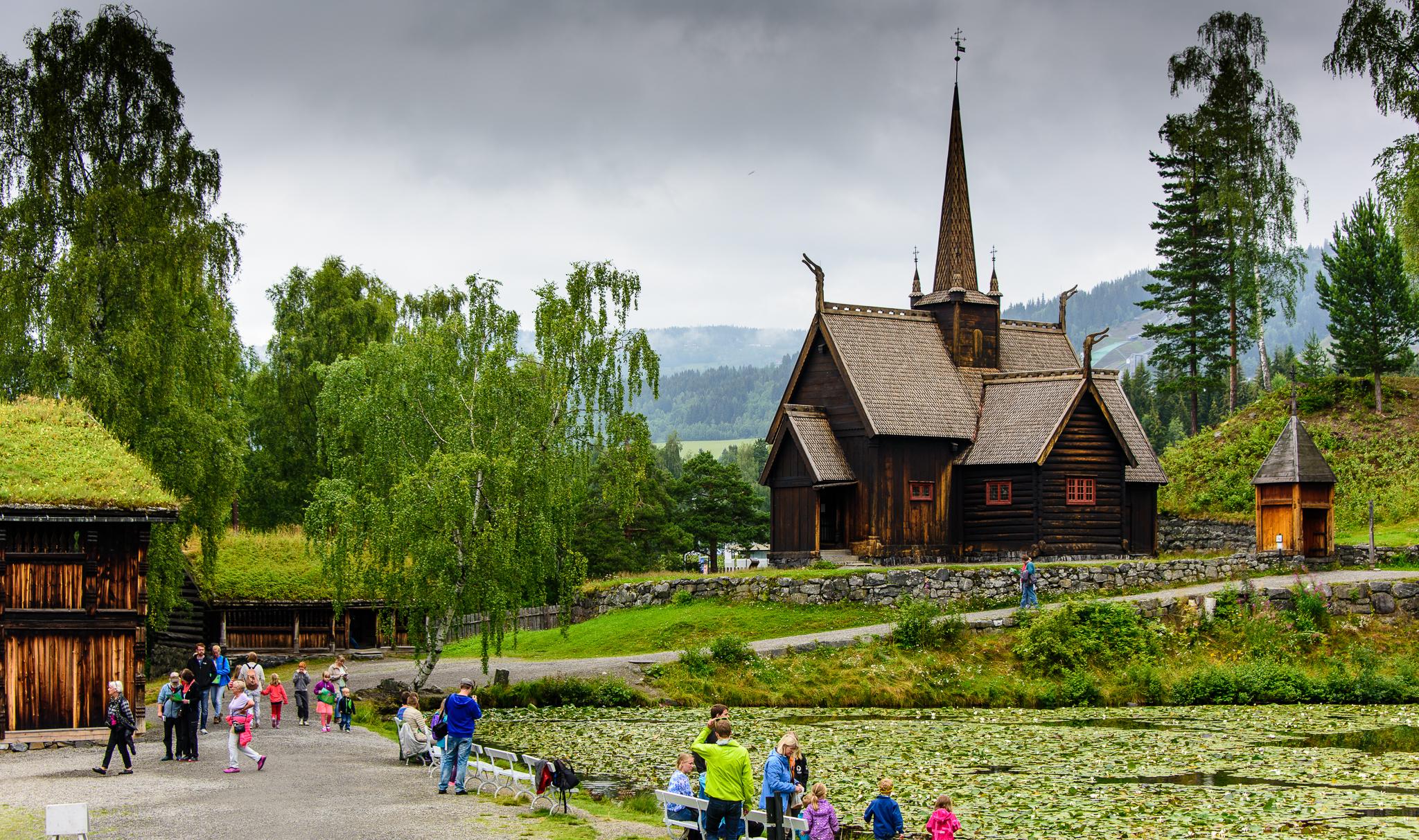
Una de estas iglesias, que originalmente se encontraba en Gol, se trasladó al Museo de Historia Cultural de Bygdøy, en Oslo, donde le han devuelto su aspecto original y han abierto sus puertas al público. También podrás ver otra que se trasladó de Garmo en el museo al aire libre de Maihaugen, en Lillehammer.
No obstante, estas no son las únicas iglesias que se han trasladado a lo largo de los años.
El fin de las stavkirker
Las stavkirker no siempre han recibido el aprecio que tienen en la actualidad. A comienzos del siglo XIX, la mayoría de ellas había desaparecido. En 1851, se decretó una ley que estipulaba que todas las iglesias debían contar con una capacidad de aforo equivalente a, al menos, el 30% de la población local. Debido al acelerado crecimiento demográfico, muchas de las stavkirker que aun seguían en pie se quedaron pequeñas. Así pues, se comenzaron a construir otras más grandes y luminosas, que en seguida ganaron más popularidad que sus frías y oscuras predecesoras.
Esto derivó en la demolición o venta de muchas stavkirker entre 1851 y 1890. La madera a menudo se reutilizó para construir otros edificios. Sin embargo, por suerte hubo quienes supieron ver el valor que tenían estas antiguas iglesias de madera y pusieron todo su empeño en intentar preservarlas.
El salvador de la Iglesia de Vang
Una de las iglesias que se salvaron fue la increíble Iglesia de Vang, la stavkirke más visitada del mundo. Sin embargo, curiosamente, esta iglesia noruega no se encuentra en Noruega, sino en Polonia.
El héroe de esta historia es Johan Christian Clausen Dahl, un pintor de Bergen que se convirtió en el primer catedrático de Noruega en Historia del Arte. Fue una figura fundamental para la fundación de la Fortidsminneforeningen (Sociedad de la Preservación Histórica), que jugó un papel muy importante en el proceso de preservación de las stavkirker. Escribió un artículo tan conmovedor sobre lo especial de estas iglesias y su origen, y de sus “formas salvájemente fantásticas”, que consiguió salvar las iglesias que quedaban en pie. Además, dio a conocer la historia de estos singulares edificios a un elenco más amplio de historiadores del arte del marco europeo.
Dahl terminó comprando la iglesia de Vang en una subasta y consiguió convencer al rey de Prusia para que trasladase la iglesia a Berlín. La desmontaron pieza por pieza y la llevaron a Szczecin en carro de caballos, trineo y barco. Un año después, el rey ordenó su reconstrucción cerca de la actual localidad polaca de Karpacz, en Baja Silesia.
A pesar de que la iglesia ha perdido parte de su esencia noruega, lo que está claro es que, si Dahl no la hubiese comprado en su momento, lo más probable es que a día de hoy no existiría.
Abiertas al público
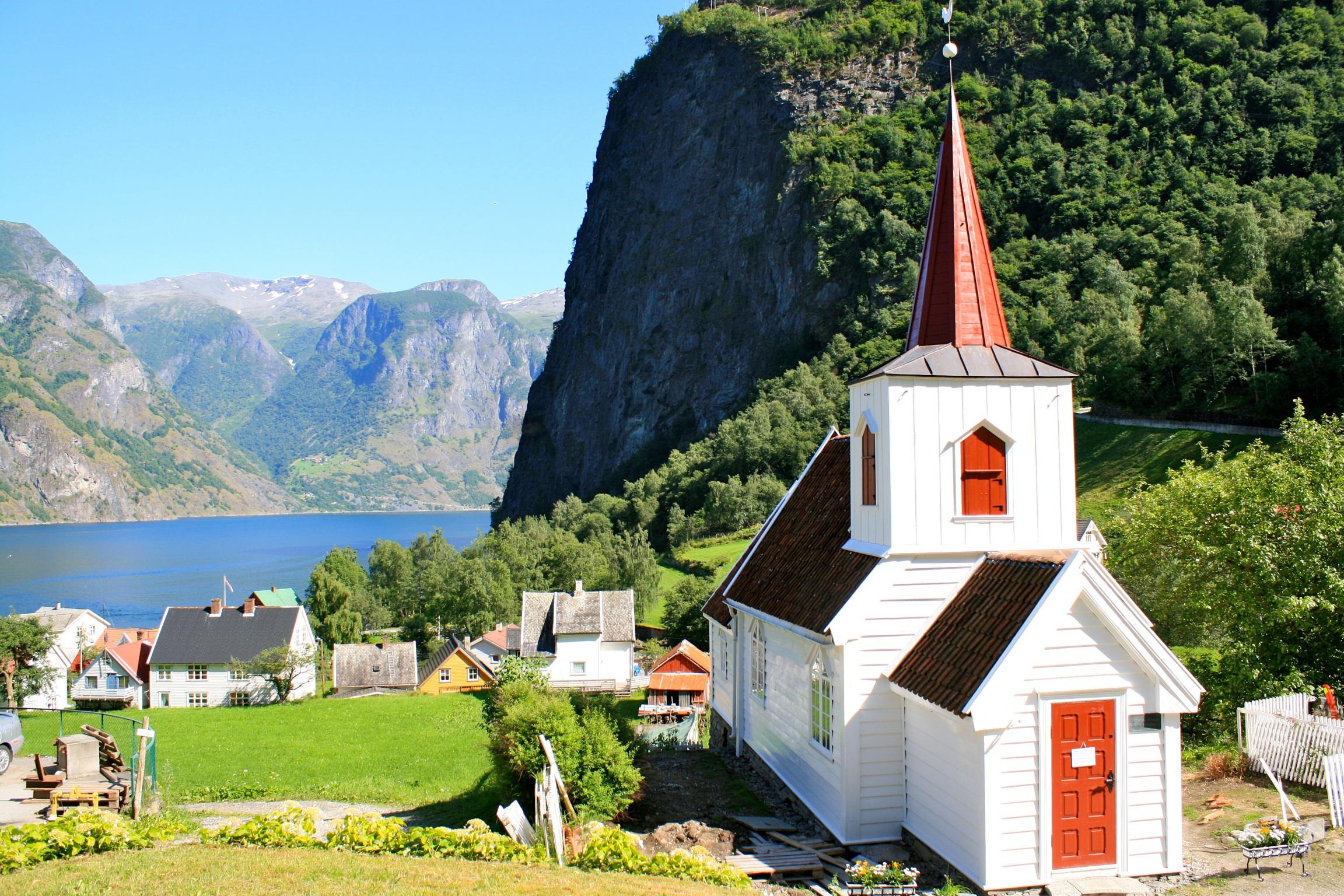
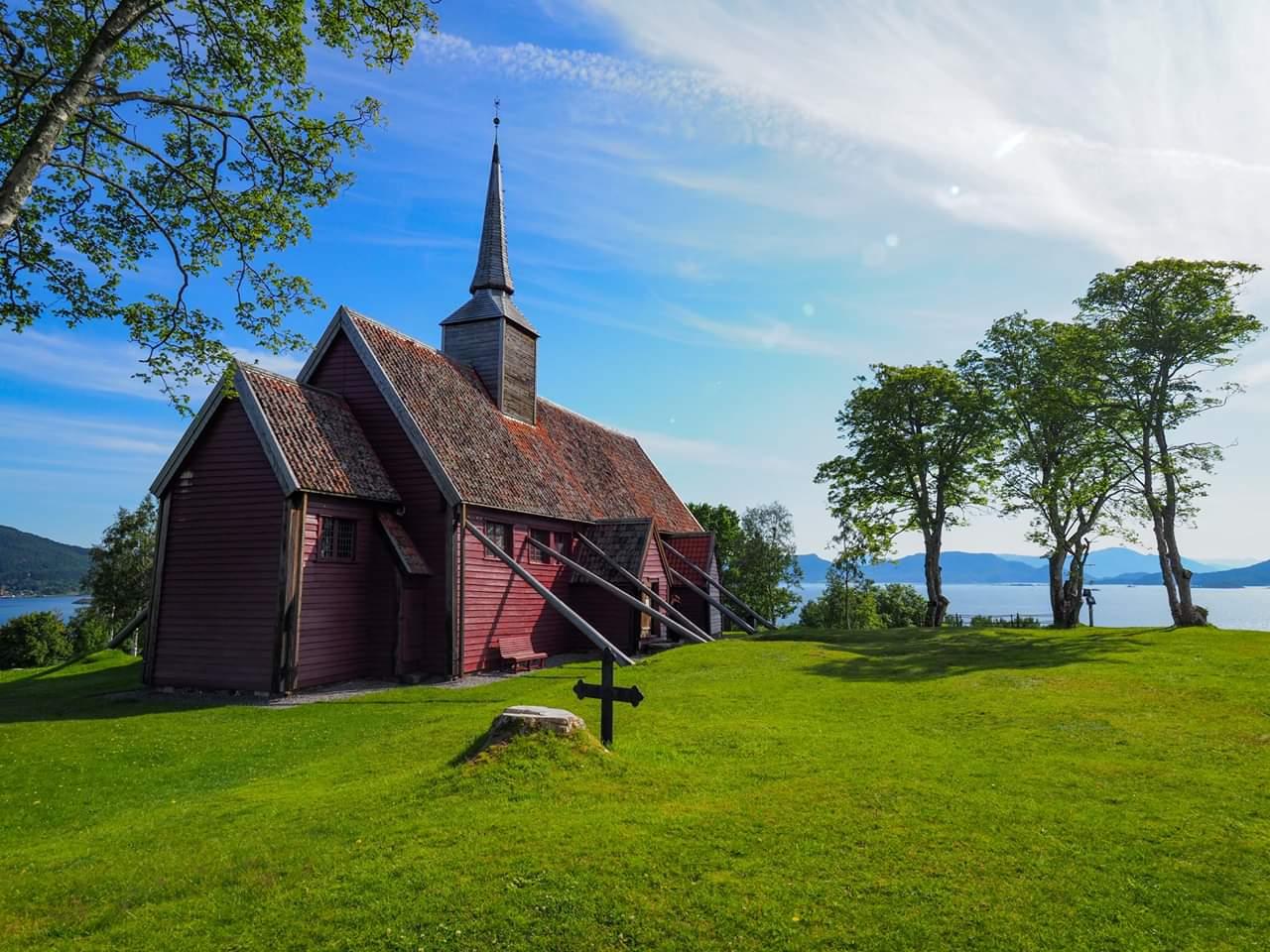
En la actualidad quedan en pie 28 stavkirker. Como se puede ver en el mapa que aparece a continuación, la mayoría de ellas se encuentra en el interior del este de Noruega y en la Noruega de los fiordos.
Casi todas abren al público en verano, pero algunas se pueden visitar durante todo el año.
 Ål
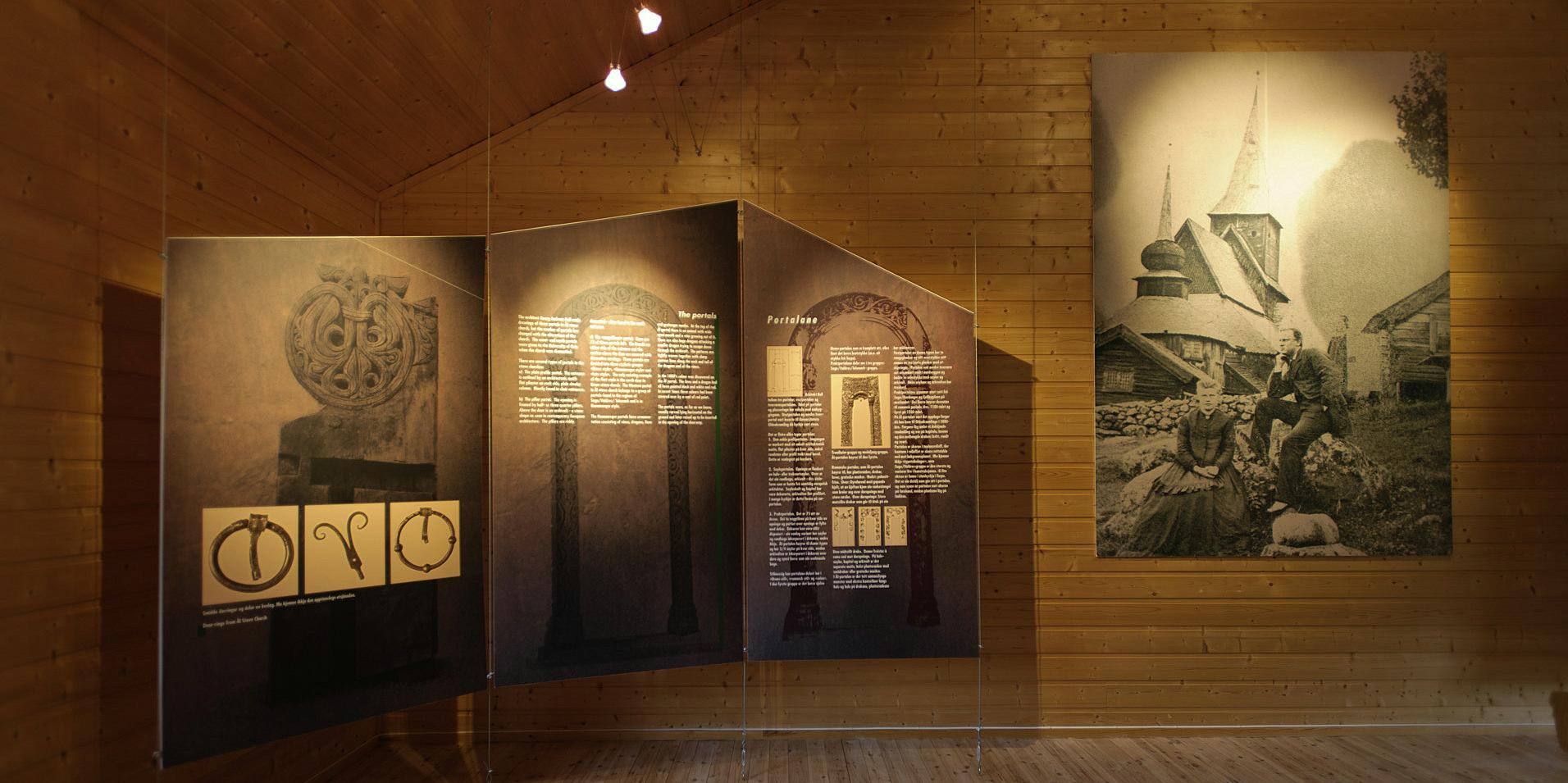
ÅlÅl Stave Church Museum
The Ål Stave Church dated from the latter part of the 12th century was richly decorated at the time of its demolition in 1880. The main doorway and the ceiling painting can be seen at the medieval exhibition at the Historical Museum in Oslo. Some of the church's fittings as well as a copy of the Ål ceiling can be found in Ål Church. The site of the church was examined and planned, and today it forms part of the church park. In the 1990s, the Ål Stave Church Museum in Prestegardslåven in the church park opened. The museum restores and displays decorative panels from stave churches and it has a copy of the Ål doorway. The exhibition provides information about Ål Stave Cchurch and about Norway’s other stave churches in Norway. Free admission for children up to the age of 16, when accompanied by an adult.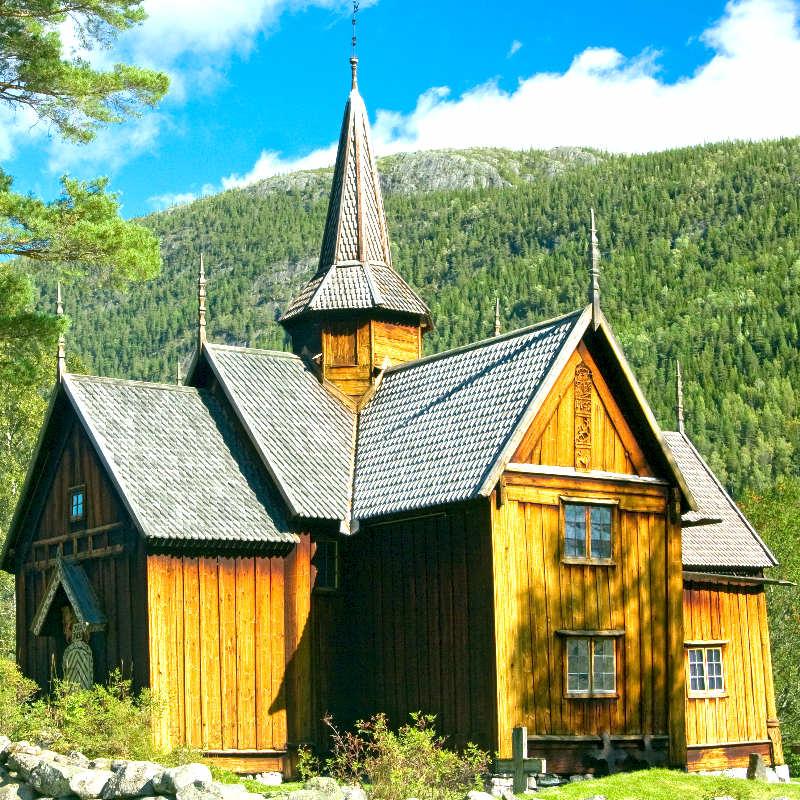 Nore
NoreNore Stavkirke
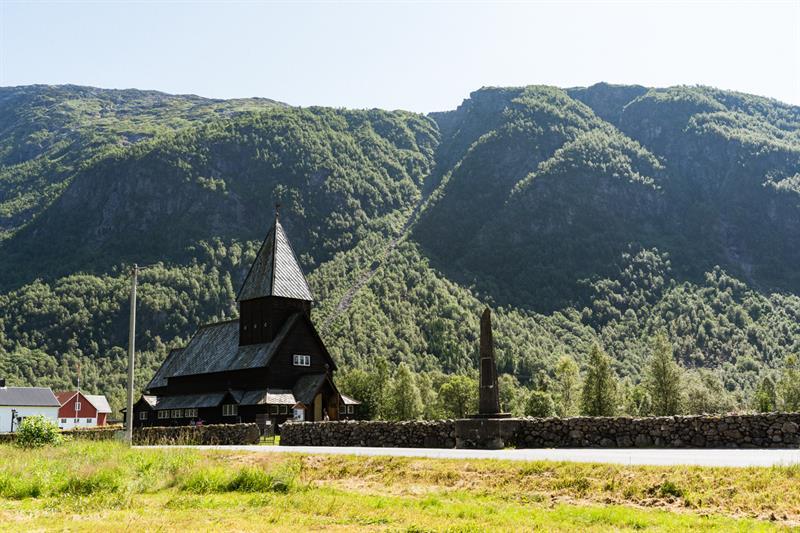
Nore Stave Church Nore Stave Church is located in Nore and Uvdal municipality in Buskerud. Nore Stave Church was built according to an architectural style called: Numedalstype. The church was built as a cruciform church approximately 1167, with galleries, a chancel and cross naves with an apse. This was very rare at the time, and one does not know of of any other church in Norway or Europe that could have been a model for this structure. The church was partially rebuilt in the 1600s and 1700s. The naves and chancel have remnants of beautiful coloring from 1655 and 1683. As in Uvdal Stave Church the woodcarvings in Nore are very artfully done. The nave's west portal has carved decorations with leaf vines and animal ornamentation. The animal figures are dragons and lions, and the portals are related to similar portals in Telemark. In the Stave Church are also two inscriptions, one of which is a prayer: "Wish me the very best". The two crucifixes may be from the Middle Ages, and during the excavation revealed a piece of painting that seemed to originate from the late Middle Ages. The Church seems to have been richly endowed with art objects. The Christian symbols probably spoke more directly to the medieval population than they do to people of today. Art objects and decoration of the stave churches in Nore and Uvdal confirms the impression we have from other stave churches, that the first half of the Middle Ages was the most creative period.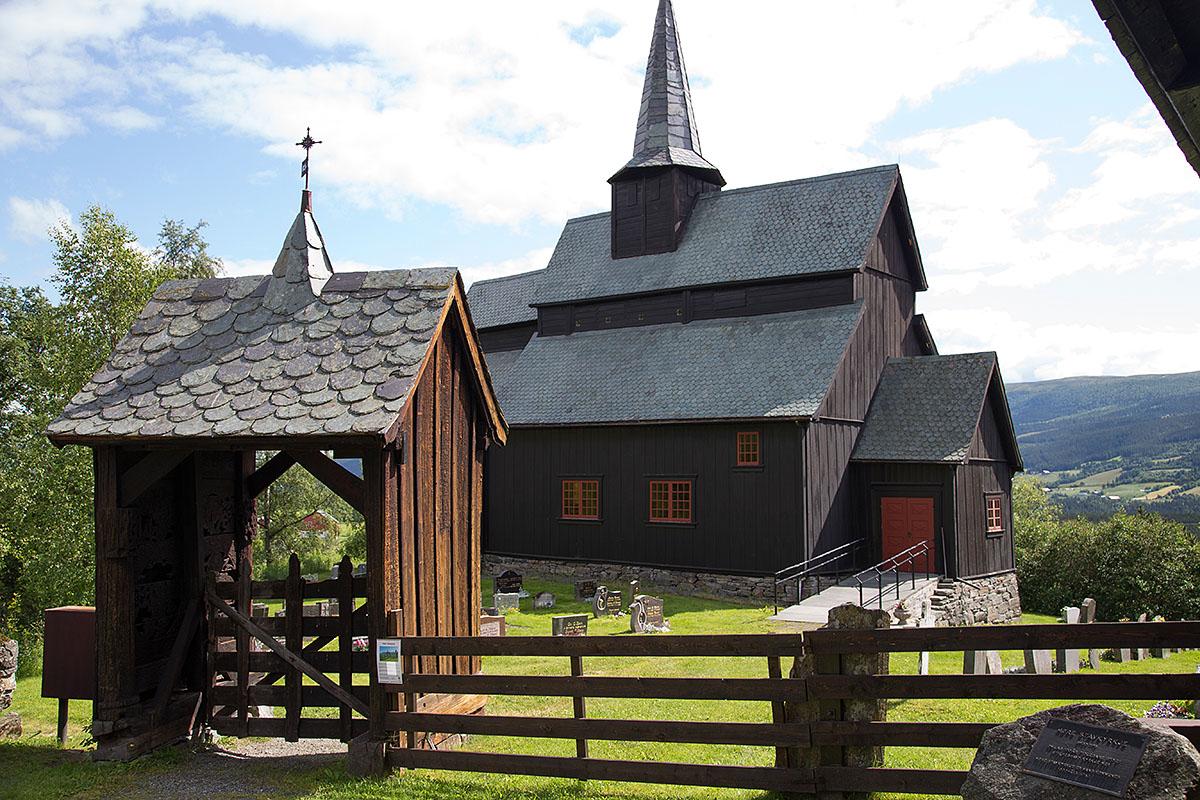 Ryfoss
Høre Stave Church
Høre Stave Church is rich in dragon and lion carvings from the Middle Ages, and among these are two beautiful portals. What used to be the ridge turret is today the entrance of the graveyard. An unusual runic inscription shows that Høre Stave Church dates back to around 1179. However, as the oldest coin found under the church floor is from around 1100, it is presumed to have replaced a previous, smaller sized church. An extension was built in 1822, and today still, Høre Stave Church serves the community as a regular parish church. The story behind the runic inscriptions found in the pulpit is exciting. According to legend, King Sverre passed through Valdres in 1177 when he fled before Magnus Erlingsson. Elling, the feudal overlord of Kvie, had joined King Sverre in his fight against King Magnus and his father the Earl Erling Skakke. When Erling Skakke fell in the battle at Kalvskinnet in Nidaros (Trondheim), Elling and his brother Audun decided to build Høre Stave Church as the runic inscriptions show: "In the summer of which the brothers Elling and Audun cut (timber) to this church, Erling (fell) in Nidaros." Admission (incl. guiding): Adults NOK 80,- Children 6-16 years NOK 50,- Family NOK 170,- Groups NOK 60,- per person (minimum 10 people) No student or senior discounts. Visits out of hours on request, minimum charge NOK 500,- Please note that we cannot accept foreign currencies, i.e. Euro.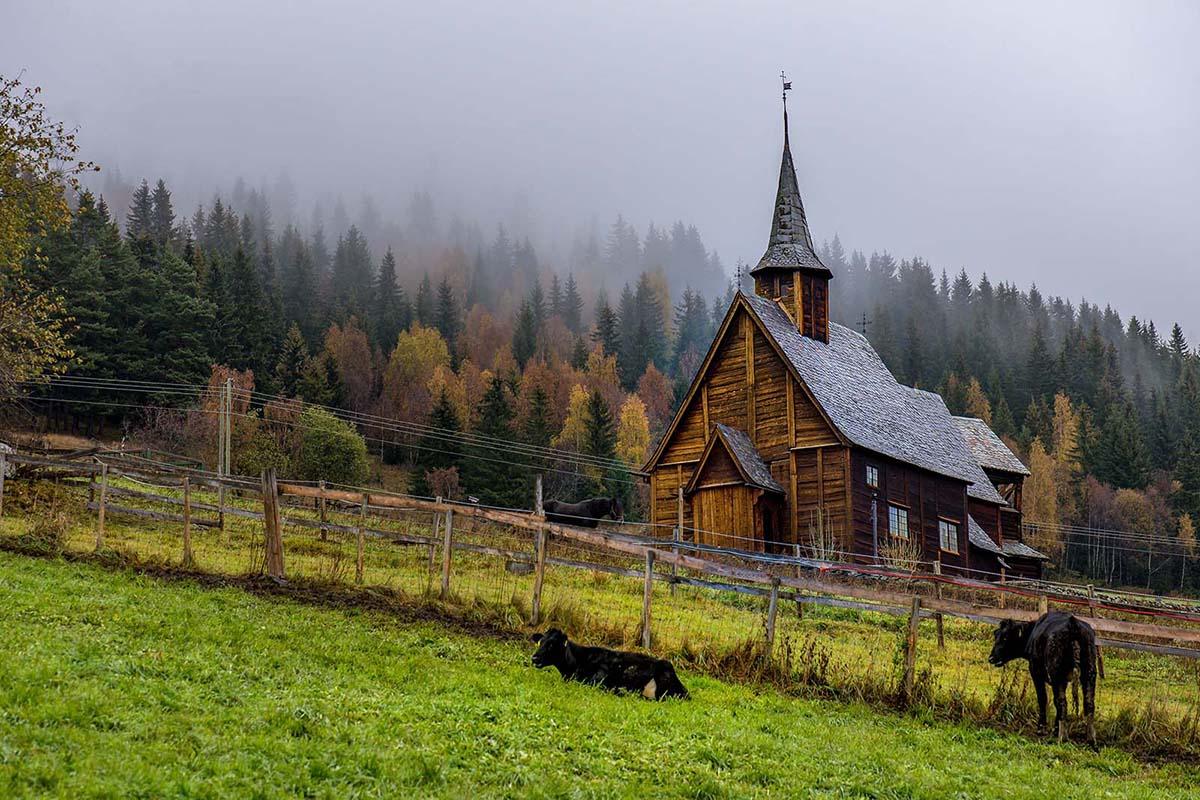 Lomen
LomenLomen Stave Church
Lomen Stave Church is believed to date back to around 1192. The oldest coin found is from King Sverre`s era 1177-1202. In 1750, the church was converted and extended as it had become too small to meet the needs of an increasing population. When the new Lomen Church was completed in 1914, regular use of the stave church ended. Today, it is only used for weddings and church services during the summer season. Wooden sections dating back to the Middle Ages have been stripped down to the woodwork, but post-reformatory parts are still painted. Several medieval portals featuring wood carvings and animal decorations can be found in the church. Of the soapstone font from the Middle Ages, only the base remains. A mediaeval chest leans towards the wall in the choir. It features a magic runic inscription that has almost been rubbed off. The Madonna-head on the altar is a plaster copy of the beautiful original from the 1200s. It was probably once part of a whole figure. The original can be found at Valdres Folk Museum in Fagernes. Admission (incl. guiding) - payment by cash only: Adults NOK 80,- Children 6-16 years NOK 50,- Family NOK 200,- Seniors NOK 70,- Groups NOK 60,- per person (minimum 10 people) No student discount. Visits out of hours on request, minimum charge NOK 500,- Please note that we cannot accept foreign currencies, i.e. Euro.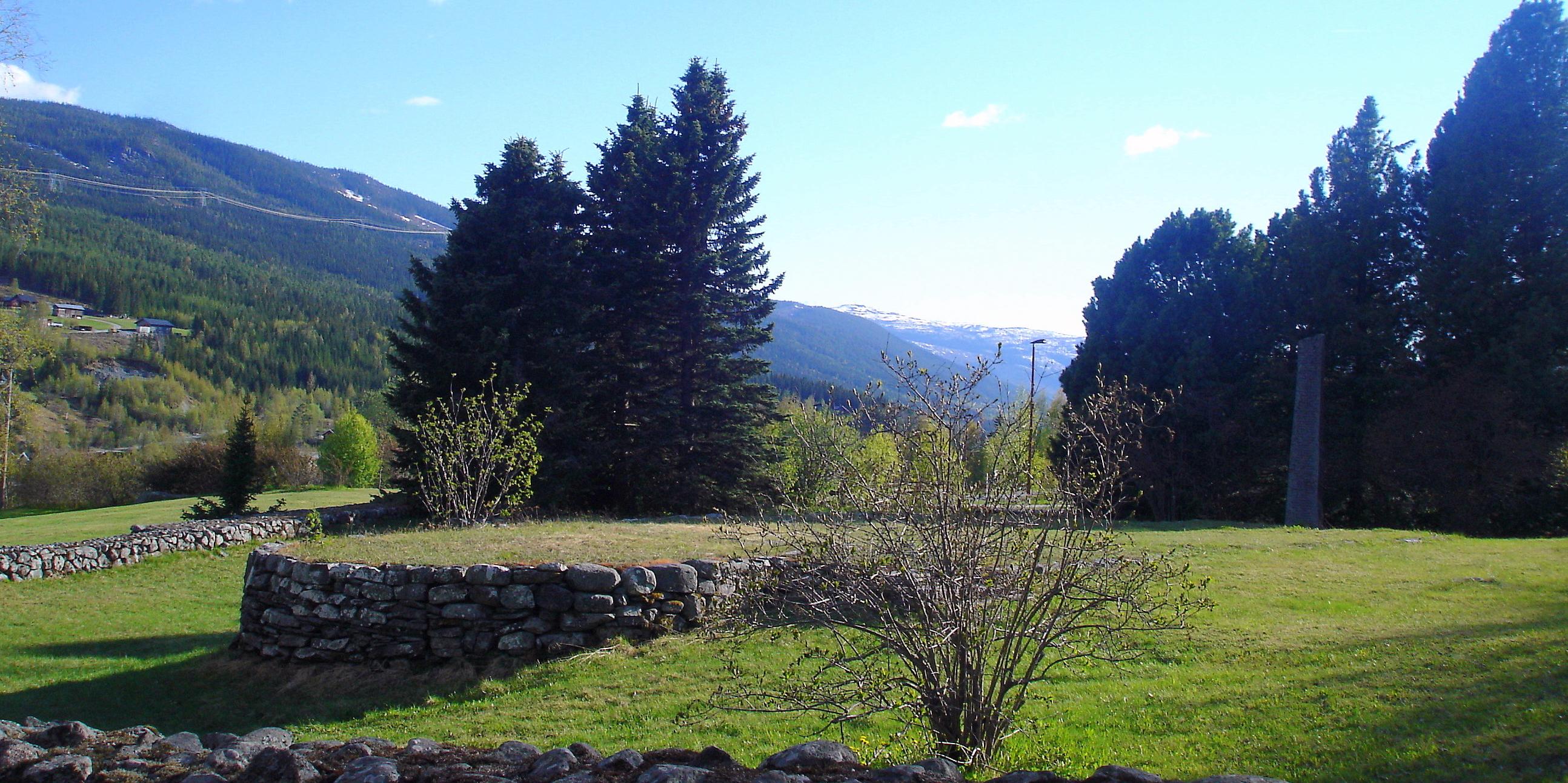 Ål
ÅlThe old Ål Stave Church site
Ål Stave church was erected around 1170 and demolished in 1880. The stave churches are a wooden building with a carrying construction of poles. The stave churches are today counted as among the most important European architecture in wood from medieval times. The stave church in Ål with its 18 poles was the largest church in Hallingdal. The church also changed appearance several times with expansions and reconstructions. In Ål Stave church they also found an ancient runic inscription that showed who was the constructor of the church. This site is located in the centre of Ål, parking spot by the schools.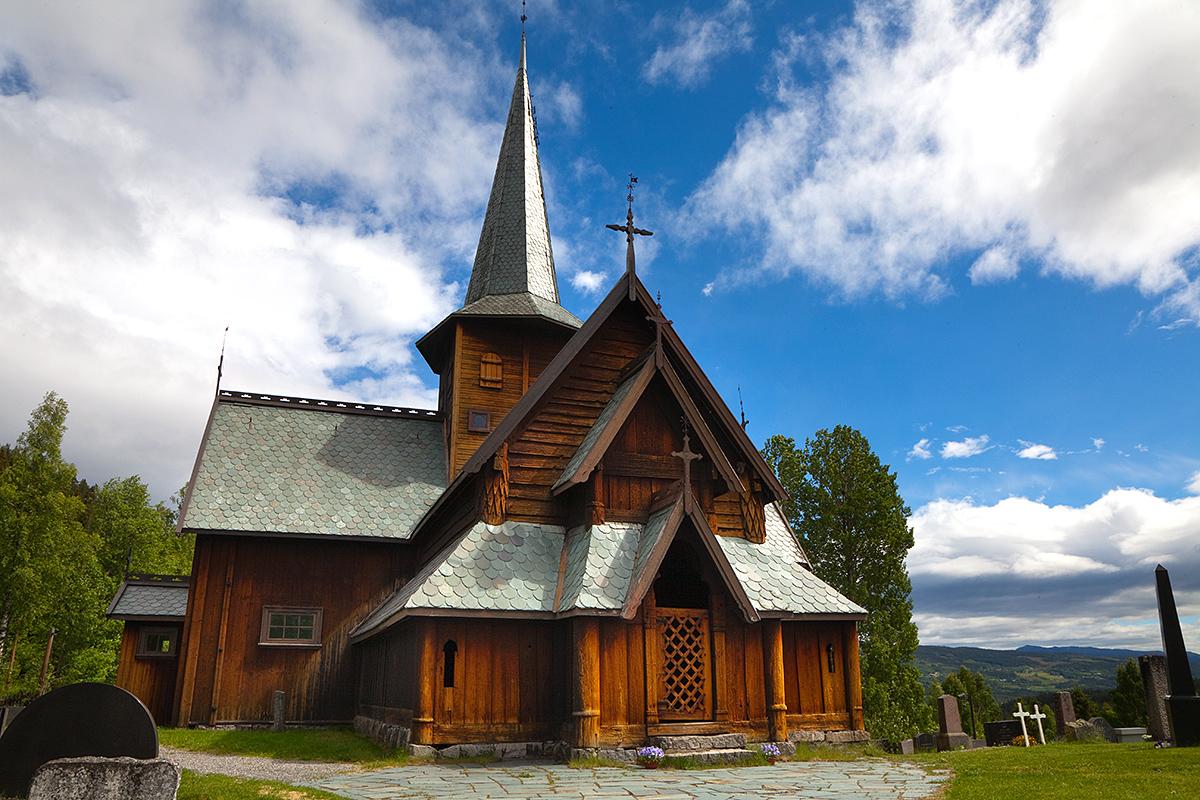 Hedalen
Hedalen Stave Church
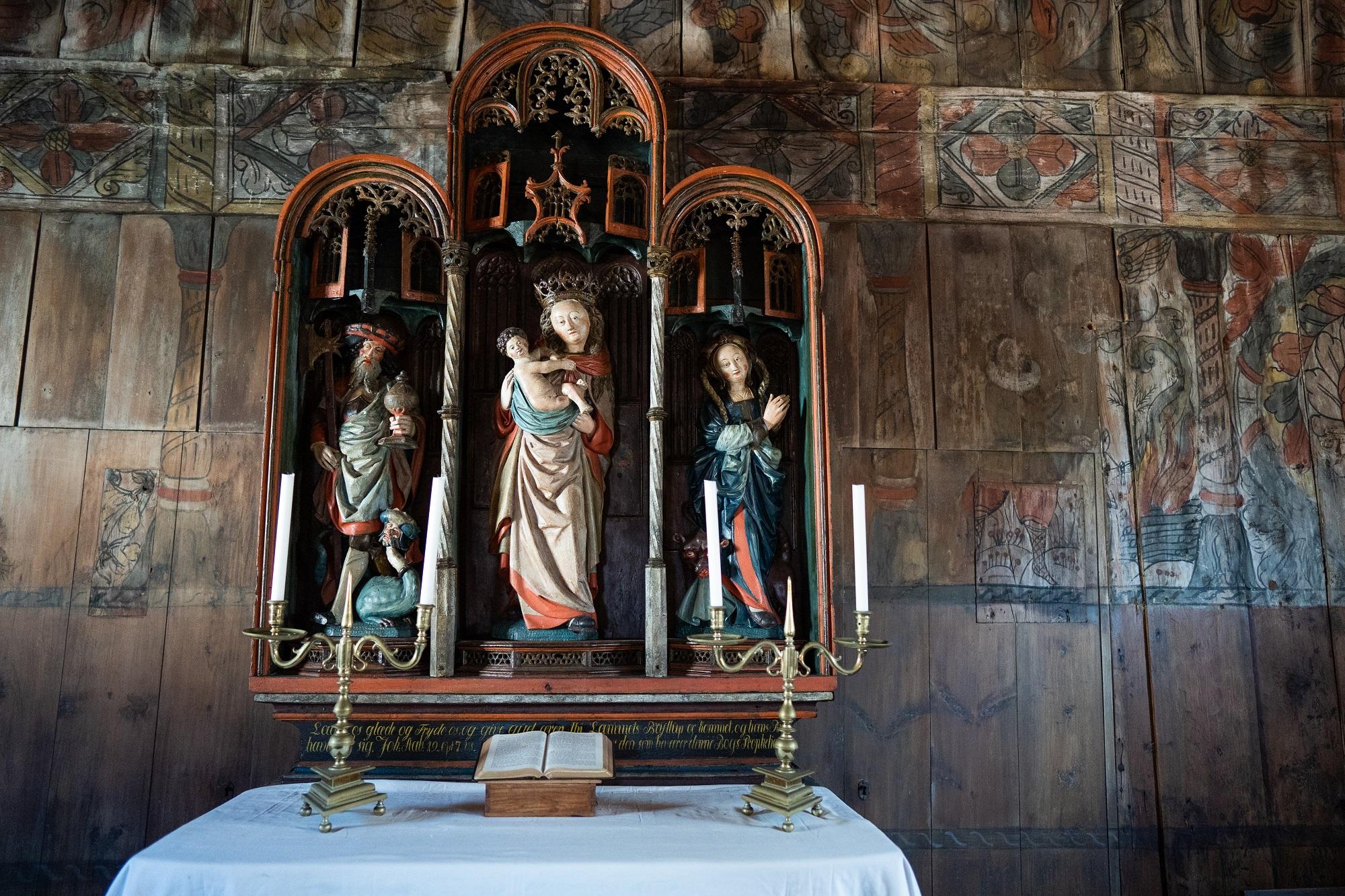
The Hedalen Stave Church may be the oldest of its kind in Valdres today. It comprises an unusual amount of catholic items and among these a reliquary. Only a few of these can still be found in Norway. The church dates back to around 1163, and coins from King Sverre's era 1177-1202 have been found under the floor. It is in use as a regular parish church. The west-facing portal features dragon and vine decorations from the late 1100s. These dragons symbolise the evil forces you leave behind before you enter the place of worship. The reliquary is the most treasured item in the church. It is made out of copper-gilded wood, and dates back to around 1250. The figures featured are Christ, St. Mary, St John, St. Jacob, St. Thomas, St. Olav and St. Peter. Norway has only a few such reliquaries left. Its original reliquary casket is still intact, and is the only one of its kind. The Hedal Madonna (sculpture of St. Mary), dating back to the mid-1200s, is one of the most stunning pieces of medieval ecclesiastical art in Norway. Originaly, the sacrament house was part of the triptych. Changes to this gothic triptych were probably made in 1699, and it was painted in 1769. Its crucifix dates back to around 1260-1280. The Romansque font is made out of soapstone, and has a cover dating back to 1250. In the sacristy, a bearskin is hanging on the wall. According to legend, there was no one left in Hedalen after the Black Death. A hunter found the church in the woods and shot a bear in front of the altar. But there were still people living in Hedalen, and maybe the bearskin was just the vicar's somewhat unusual rug in front of the altar. Admission (incl. guiding) Adults NOK 90,- Children 6-16 years NOK 50,- Family NOK 250,- Groups NOK 70,- per person (minimum 10 people) No student or senior discounts. Visits out of hours on request, minimum charge NOK 500,- Please note that we cannot accept foreign currencies, i.e. Euro.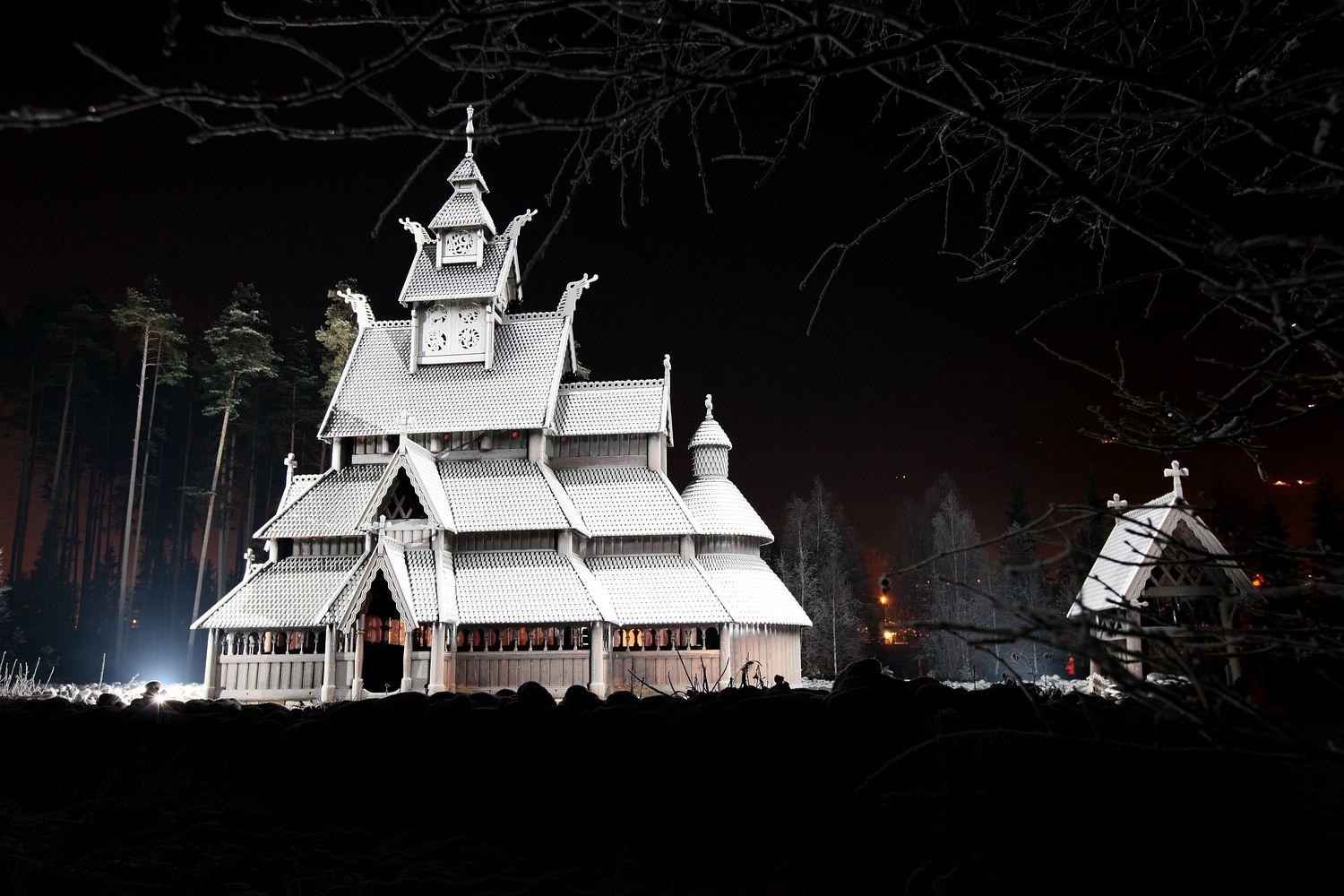 Gol
GolGol Stave Church
It is estimated that around 2000 stave churches were built between 1150 and 1350. This had to be an enormous achievement in sparsely populated Norway, meaning an average of 10 stave churches were erected each year. The accomplishment is no less impressive, considering all construction was done manually, using axes as the primary tool. This was when Norway had just been converted to Christianity, and the true faith had not yet been fully embraced. It's interesting to observe some Norse symbols used in the churches, such as Thor's hammer above the entrance, dragons on the roof, Odin, Thor, and others standing and supporting the church roof (the masts). Why these symbols found their way into a Christian church remains unknown. History suggests that Norwegians were uncertain about the new faith and wanted to keep "one foot" in Norse beliefs just to be safe. It is assumed that craftsman guilds led the construction of stave churches. When studying the construction, many aspects resemble boat building, which is precisely where these craftsmen gained expertise through centuries of constructing Viking ships and other boats. Hence, they possessed the skills to create some of the finest examples of wooden architecture. Garðar kirkja The original Gol stave church was moved to the Norwegian Folk Museum on Bygdøy in Oslo, belonging to the reigning monarch of Norway. Studies indicate that the church was built after 1216, with elements dating as early as 1157. The old stave church site is in the hamlet where Gol was located at the time, 300 meters southwest of the current Gol church on Leikvollen in Golreppen. The stave church was used until 1881, when Gol got a new one. Gol Stave Church began to deteriorate significantly in the 1800s. The church was also heavily modified due to increased space requirements. In 1882, the church was sold to the "Association for the Preservation of Norwegian Ancient Monuments," it was moved to Bygdøy Kongsgaard, now the Norwegian Folk Museum. The church was restored to its original form and size during the reconstruction at the folk museum, with doubts about the reconstruction, using Borgund Stave Church in Sogn as a model. Borgund Stave Church is considered the sister church to Gol Stave Church, possibly built by the same craftsmen. Gol Stavkyrkje The church on Storeøyne (the island in Gol) replicates the original stave church from the 1200s. The church was completed in 1994 and consecrated on July 10. Gol Stavkyrkje consists of a nave, ambulatory, gallery, choir, and apse. Three spires stand on the main roof. A challenge in copying a stave church today is the absence of the old, coarse pine forests. Suitable materials are hard to find. Behind the copying of Gol Stavkyrkje lies approximately 10 years of work. Local artisans built the church, and the woodcarving and furnishings were done by Hans Slettemeås from Telemark. Most of the timber was sourced from the valley. Textile artist Karin Stang created the textile work on the apse wall. The man behind the project is civil engineer Torbjørn Rustberggard from Gol. Stave Church - Why is it called a stave church? The reason lies in the robust masts (staves) supporting the church. The stave principle involves standing wall panels enclosed by sills above and below, with corner columns at each end.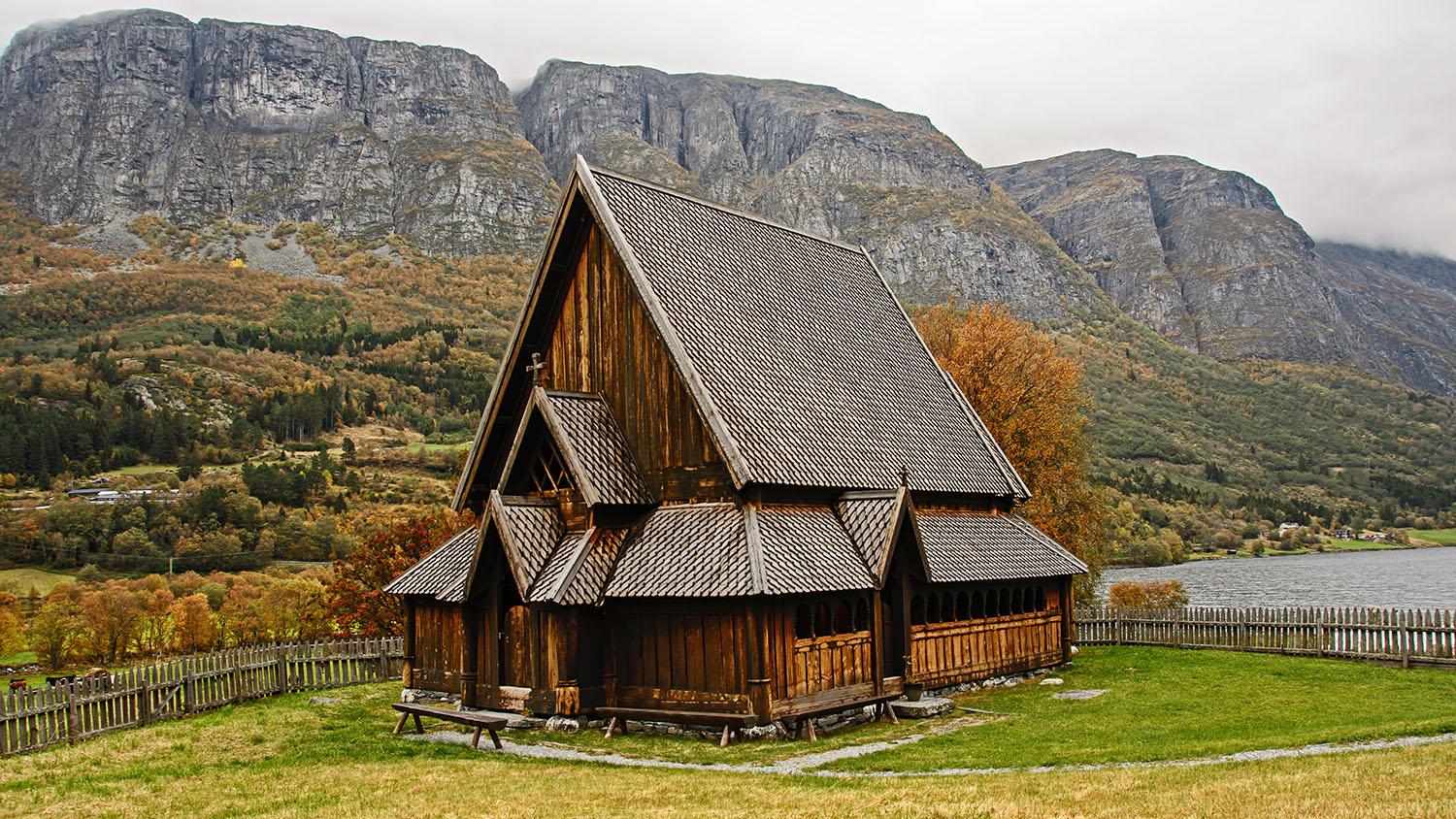 Øye
ØyeØye Stave Church
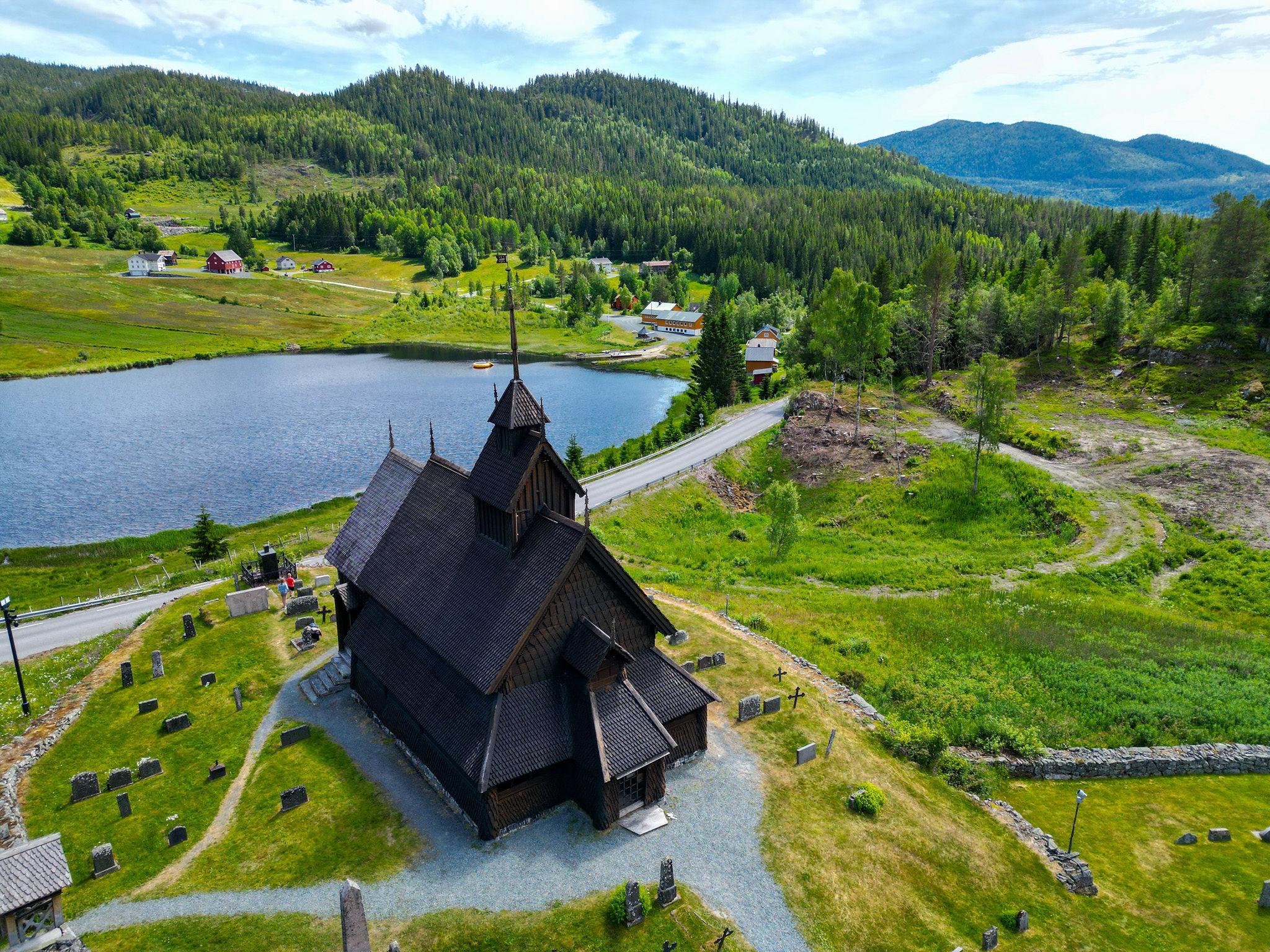
Øye Stave Church was probably built towards the end of the 1100s. Its original location was in the fields facing Vangsmjøsa. This was an extremely wet area, and during the spring flooding the graves were often filled with water and stones had to be added to the coffins in order to lower them down. The church was in a poor state of repair, and it either rotted away or was taken by the wind. 1747 saw the consecration of the new Øye Church. The stave church disappeared. In the 1930s, work had to be done on the foundations of new Øye Church. Under the church floor, Øye Stave Church was found - 156 pieces in total. No one knows why it was stored here. It was in the end decided to erect the stave church, and it was consecrated in 1965. Today Øye Stave Church is used for weddings and Midsummer Mass only. The church has a strong Catholic medieval character with a narrow opening to the choir and pews along the walls only. It features copies of two medieval portals (probably from the 1100s) with capitals and numerous animal decorations. The door has a medieval ring handle. On the altar stands a crucifix dating back to the 1200s, featuring a Christ-figure from the 1300s. The wooden baptismal font from the 1300s is quite unique, and one of the pews in the choir may be from the Middle Ages. In May 2023 a small exhibition about the stave church was opened just across the road from the church. It is accessible during the church's opening hours, and shows a rune stone, a cencer from the old stave church, a sword and a weaving spoon from the Viking age, as well as an axe head from Helin. There is also information about our one thousand year old church history.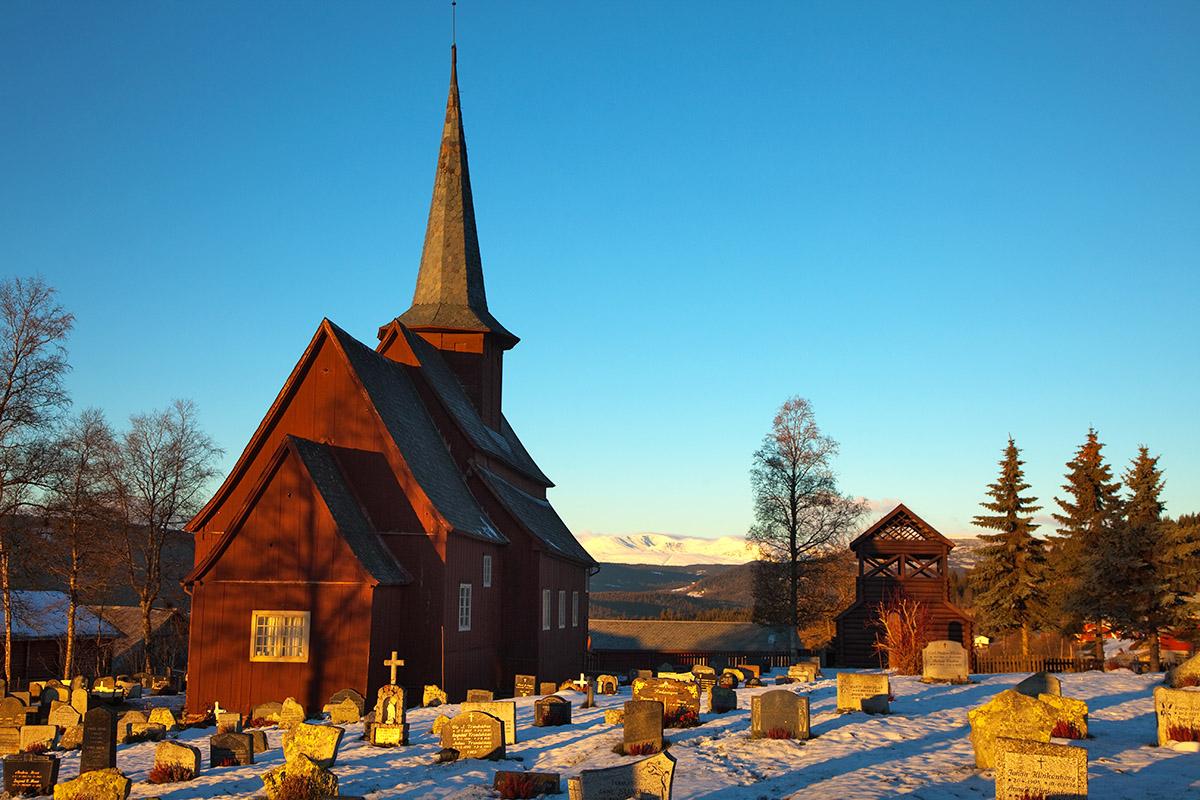 Heggenes
Hegge Stave Church
The Hegge stave church dates back to 1216 and celebrated its 800th anniversary in 2016. The church is still in use as a parish church in the local community. It has a carved gate from the Middle Ages and inside the church you can see the original staves with carved face masks. One of the staves has a runic inscription. The baptismal fountain made of soapstone is from the 1100s and the altarpiece has a unique history which you can read further down. The alterpiece, dating back to 1782, has its own special history. Four men from Hegge were in Gudbrandsdalen to trade livestock, but in the mountains they got caught up in a storm. They promised God that if they were to return home alive, each of them would donate the value of a cow to Hegge Church. They kept their promise, ordered and paid for the altarpiece in Gudbrandsdalen and brought it home on a sledge. Admission: free Guiding for groups can be booked at Øystre Slidre kyrkjekontor, Tel. (+47) 61 35 25 78 or email [email protected]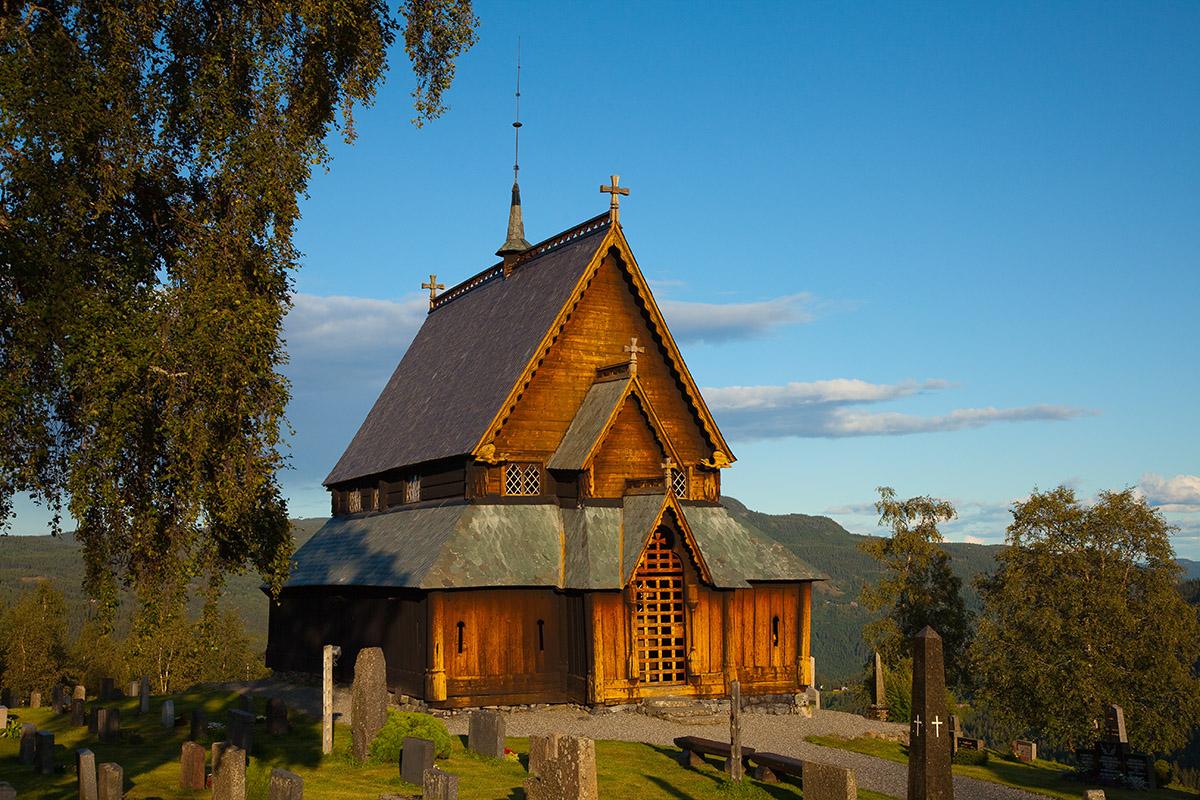 Reinli
Reinli Stave Church
Reinli Stave Church dates back to around 1326. Prior to this, the site has been home to two other churches. The only remains left of the first church are graves, and the second must have burnt down or been demolished. Reinli Stave Church is a parish church, but is only used during summer. For the rest of the year, the chapel further down the road is used. Reinli Stave Church still has 12 medieval consecration crosses. These have been painted black, and are believed to date back to around 1326. Reinli stave church is the only one in Norway with all consecration crosses intact. The altarpiece is a medieval triptych, but it was painted in the 1890s and 1920s. A crucifix hangs on the choir wall. Fittings in wrought iron, the soapstone font and a bell in the belfry are all from the Middle Ages. The wall features a hatch for the leprous, which was used to let them confess and receive Holy Communion. Admission (incl. guiding) Adults NOK 90,- Children 6-16 years NOK 50,- Family NOK 250,- Groups NOK 70,- per person (minimum 10 people) No student or senior discounts. Visits out of hours on request, minimum charge NOK 500,- Please note that we cannot accept foreign currencies, i.e. Euro.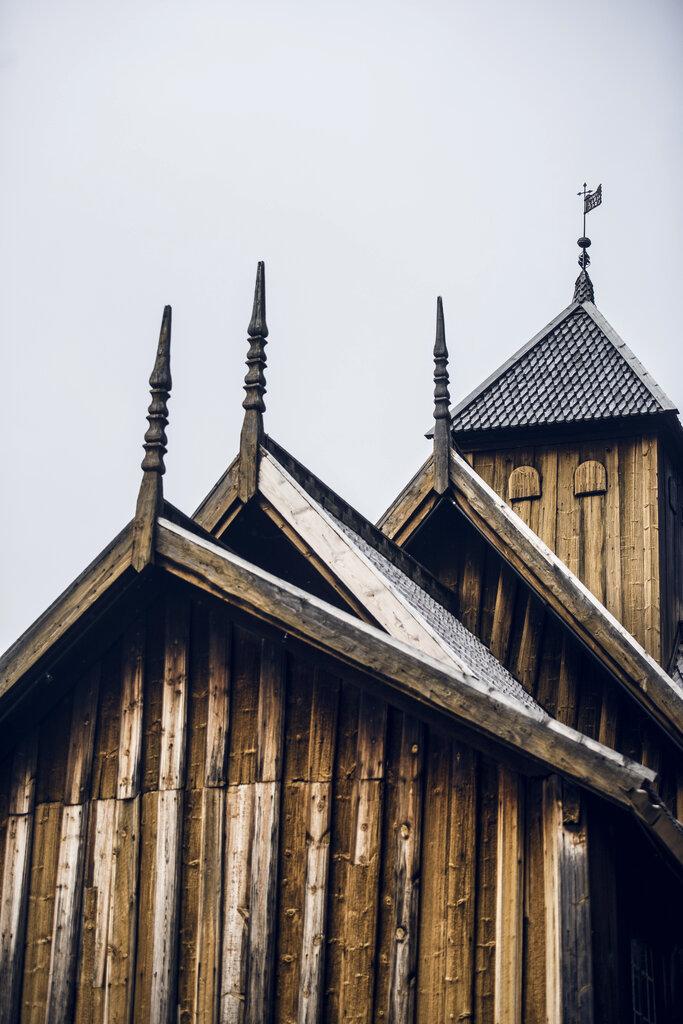 Uvdal
UvdalUvdal Stave Church
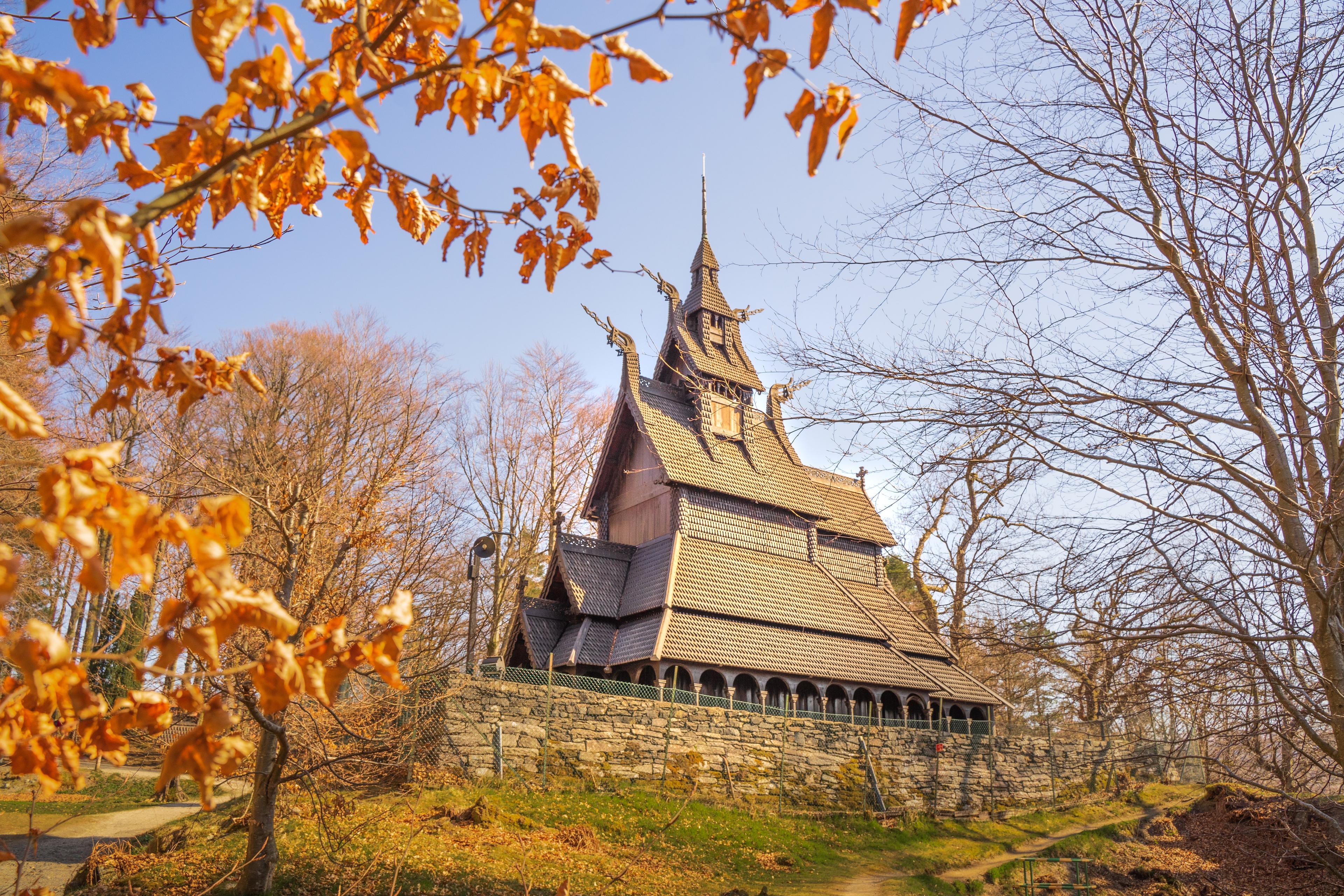
Uvdal Stave Church, as it stands today, does not have its original appearance but is a result of steady expansion and modifications until the 1800s. Each century has added something to it, and so the Church has become a beautiful and quaint example of how building style and decoration from several periods may merge into a rich and harmonious whole. In 1978, excavations were conducted in Uvdal Stave Church. One found among other items over 500 coins beneath the floor. From these we can conclude that the church was probably built at the end of the 12th century. Another interesting discovery was distinct holes in the ground made by pillars from an even older building, that also probably being a church. In one of these holes were two coins from the beginning of the same century, which may indicate the age of the first church. We do not know how this church might have looked or indeed its size. Facilities: Church Distance: 7.4 km. Location: Rødberg Time: 7 min. / car

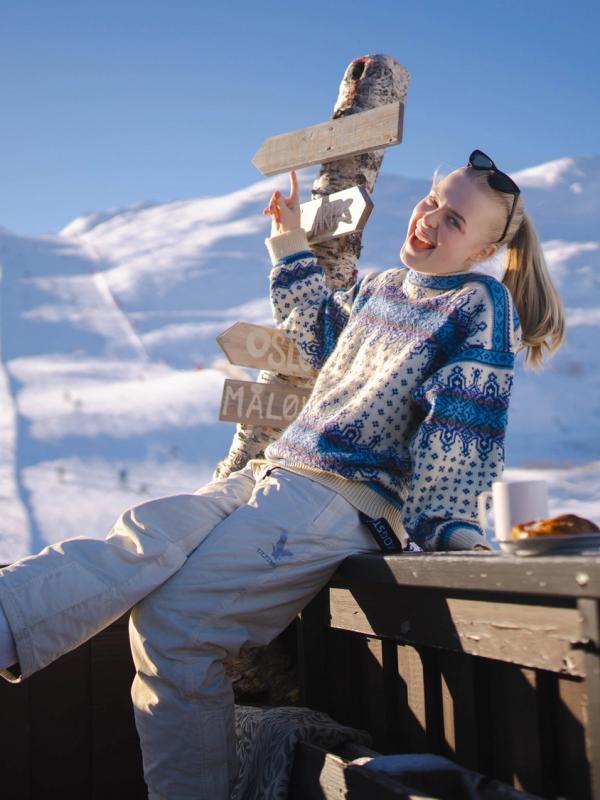


Aprovecha estas increíbles ofertas
Echa un vistazo a algunas empresas que te ayudarán a sacar el máximo partido de tu viaje.
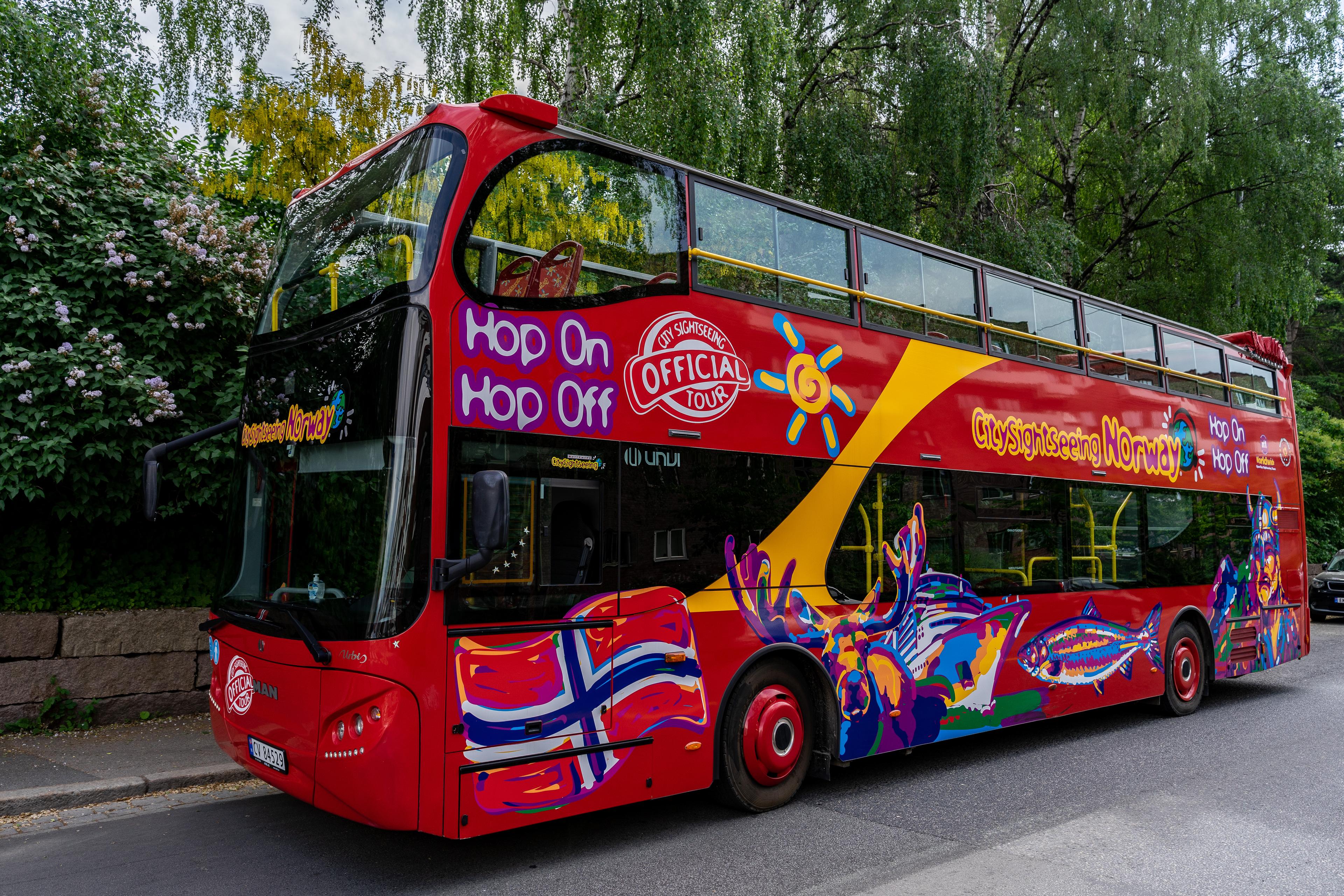 StrömmaVisitas turísticas en autobús y barco en varios de los principales lugares turísticos y ciudades de Noruega.
 Norrøna AdventurePrepárate para expediciones y viajes de aventura con Norrøna Adventure. Excursiones de senderismo, esquí y ciclismo.
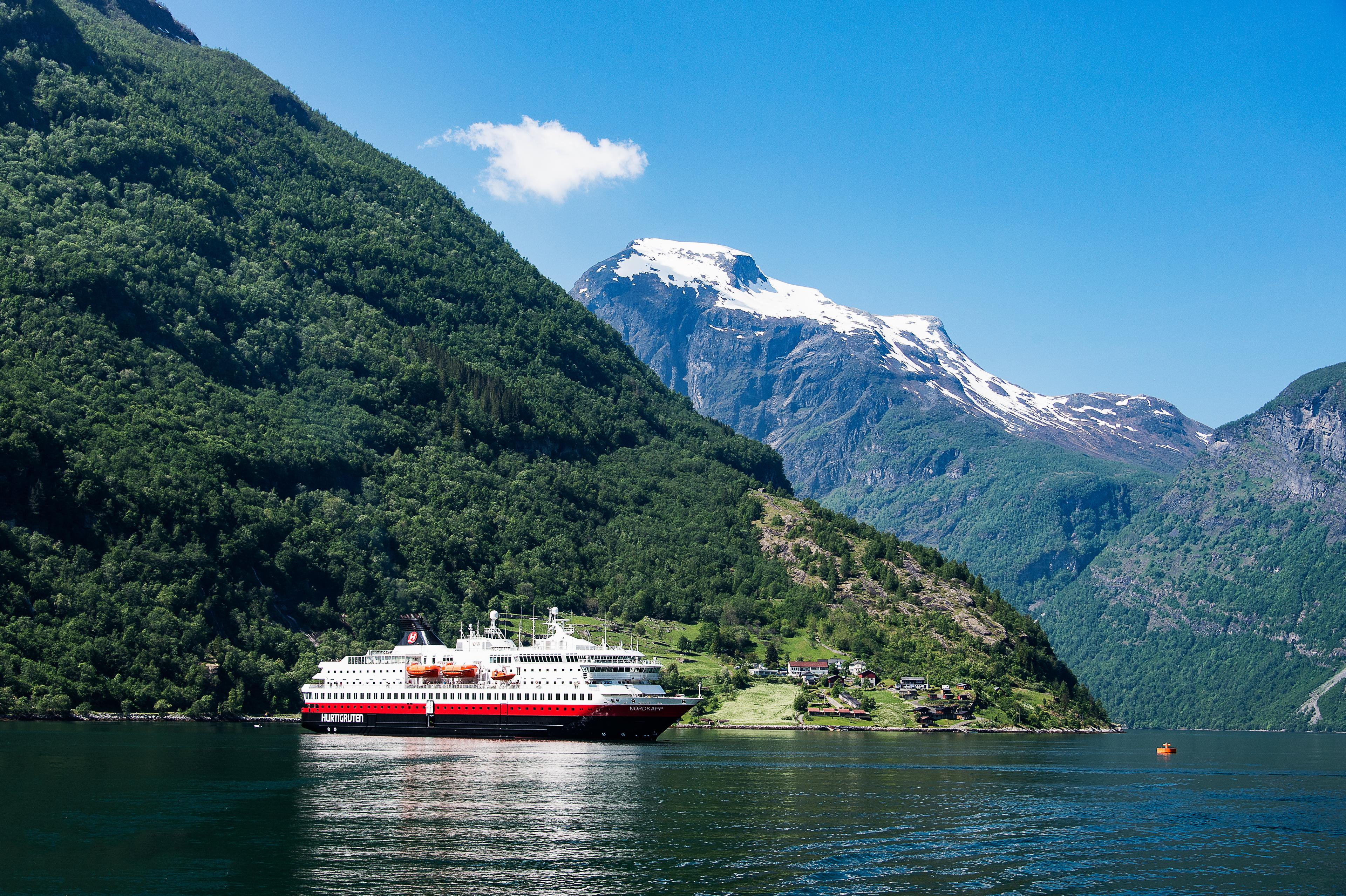 HurtigrutenDisfruta de unas vistas pintorescas en cómodos viajes en autobús a los fiordos y de ciudad en ciudad con nuestros autobuses exprés.
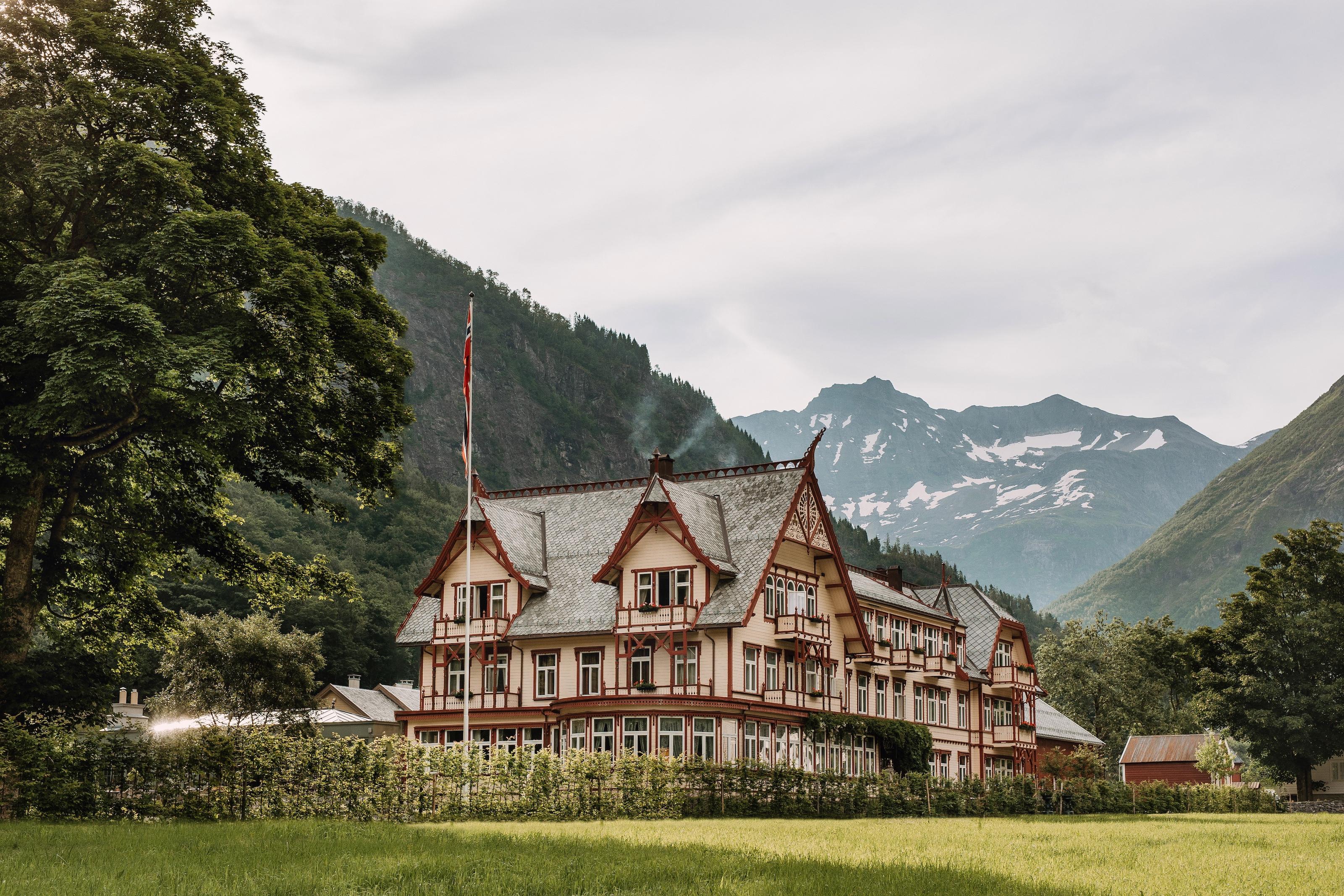 De HistoriskeVive una estancia inolvidable en uno de los singulares y auténticos hoteles históricos de Noruega. Disfruta de experiencias gastronómicas de primera y de una gran variedad de actividades.
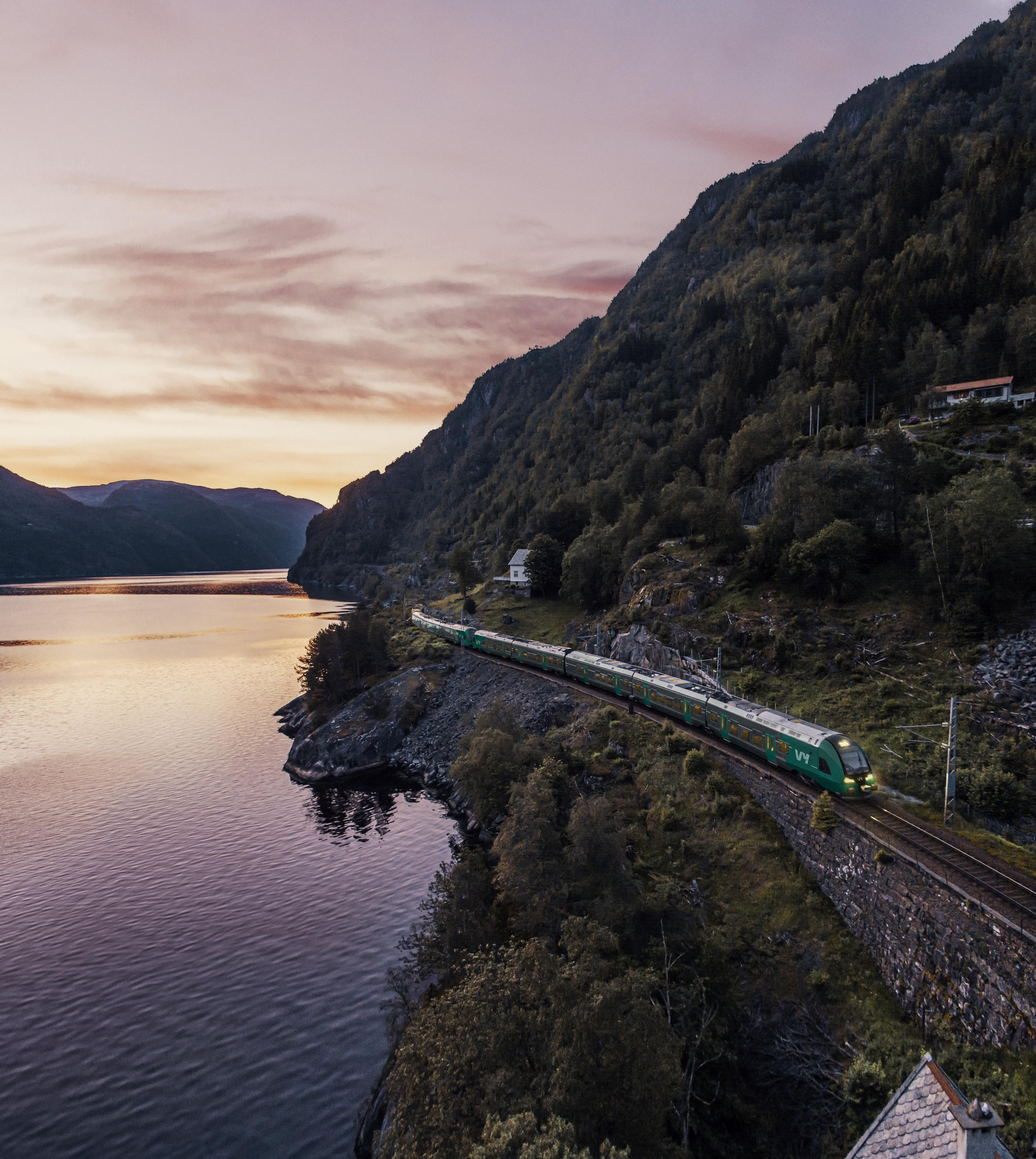 Vy TrainContempla el paisaje en un viaje en tren entre Oslo y Bergen con el ferrocarril de Bergen y conoce la gran región de Oslo.
 NorwegianNorwegian ofrece vuelos baratos en Noruega y conexiones directas desde más de 70 aeropuertos europeos. Reserva los vuelos a tu destino a través de nuestro calendario de tarifas bajas.
 Brim ExplorerTours tranquilos por los fiordos en catamaranes eléctricos galardonados por Oslo, Tromsø, las Lofoten y Svalbard.
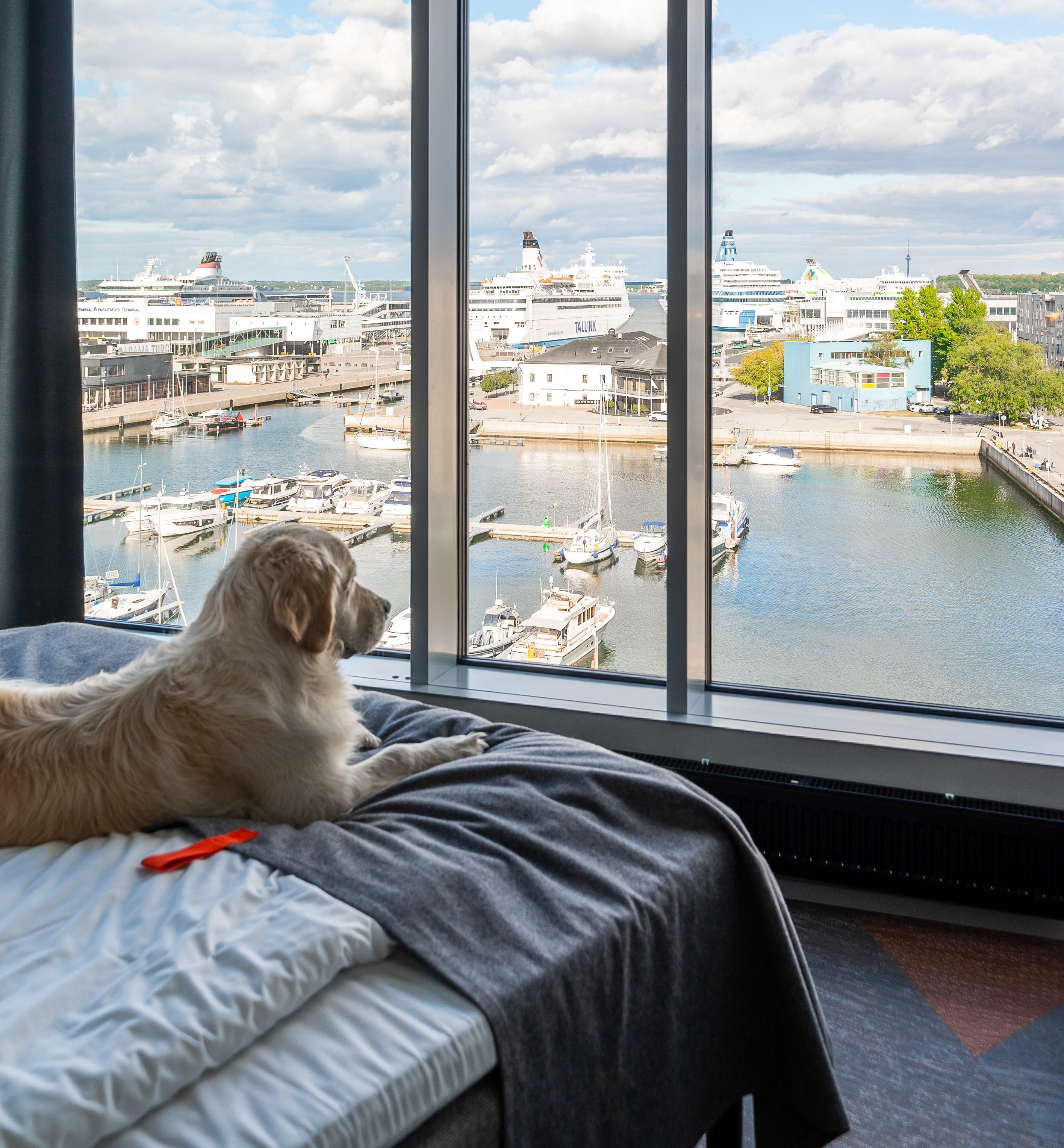 CityboxHoteles modernos y asequibles en ubicaciones céntricas de Oslo, Bergen y Kristiansand.
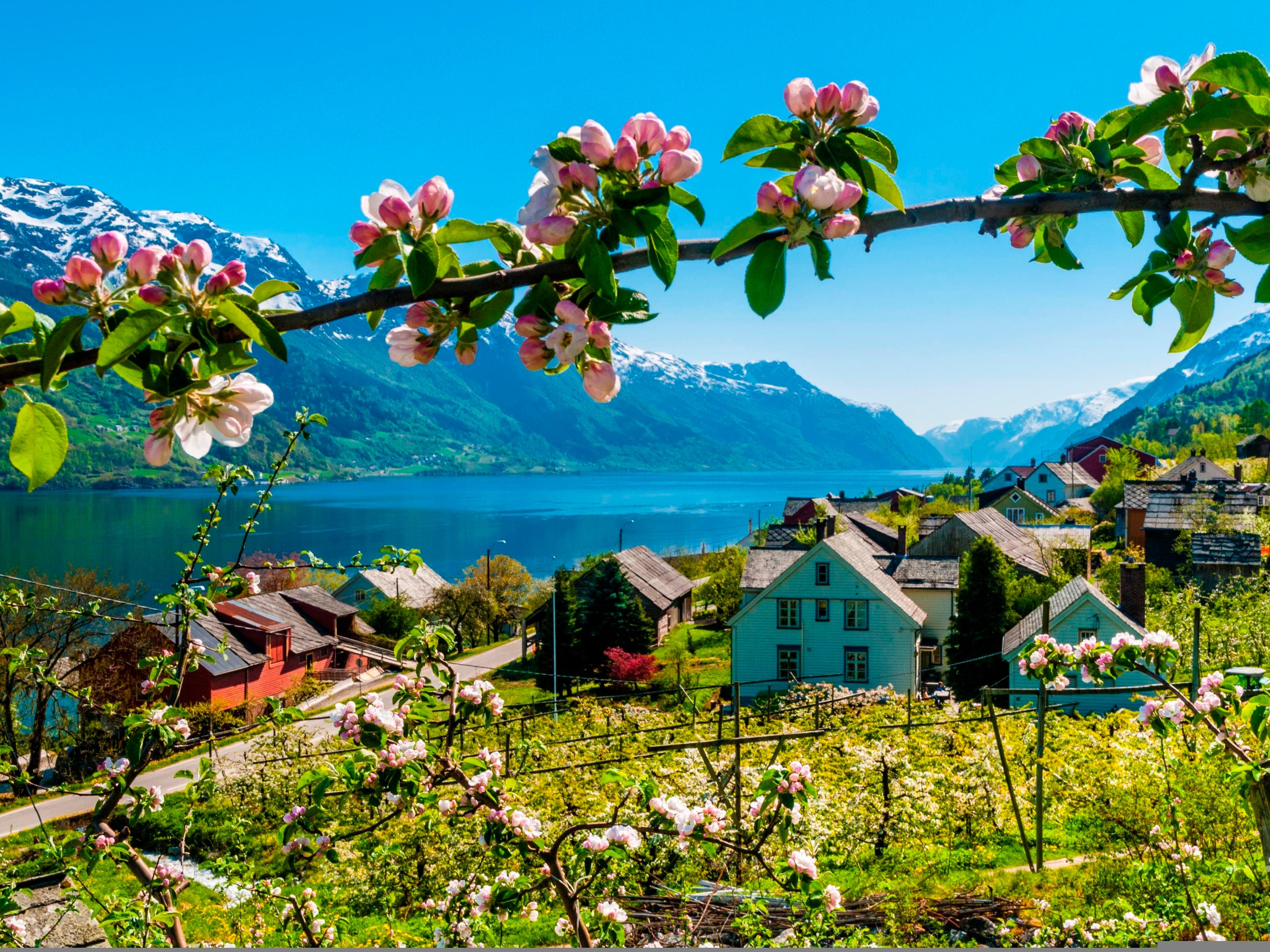 Authentic ScandinaviaViajes organizados por locales. Nuestros tours personalizados se adaptan a todo tipo de viajeros y presupuestos.
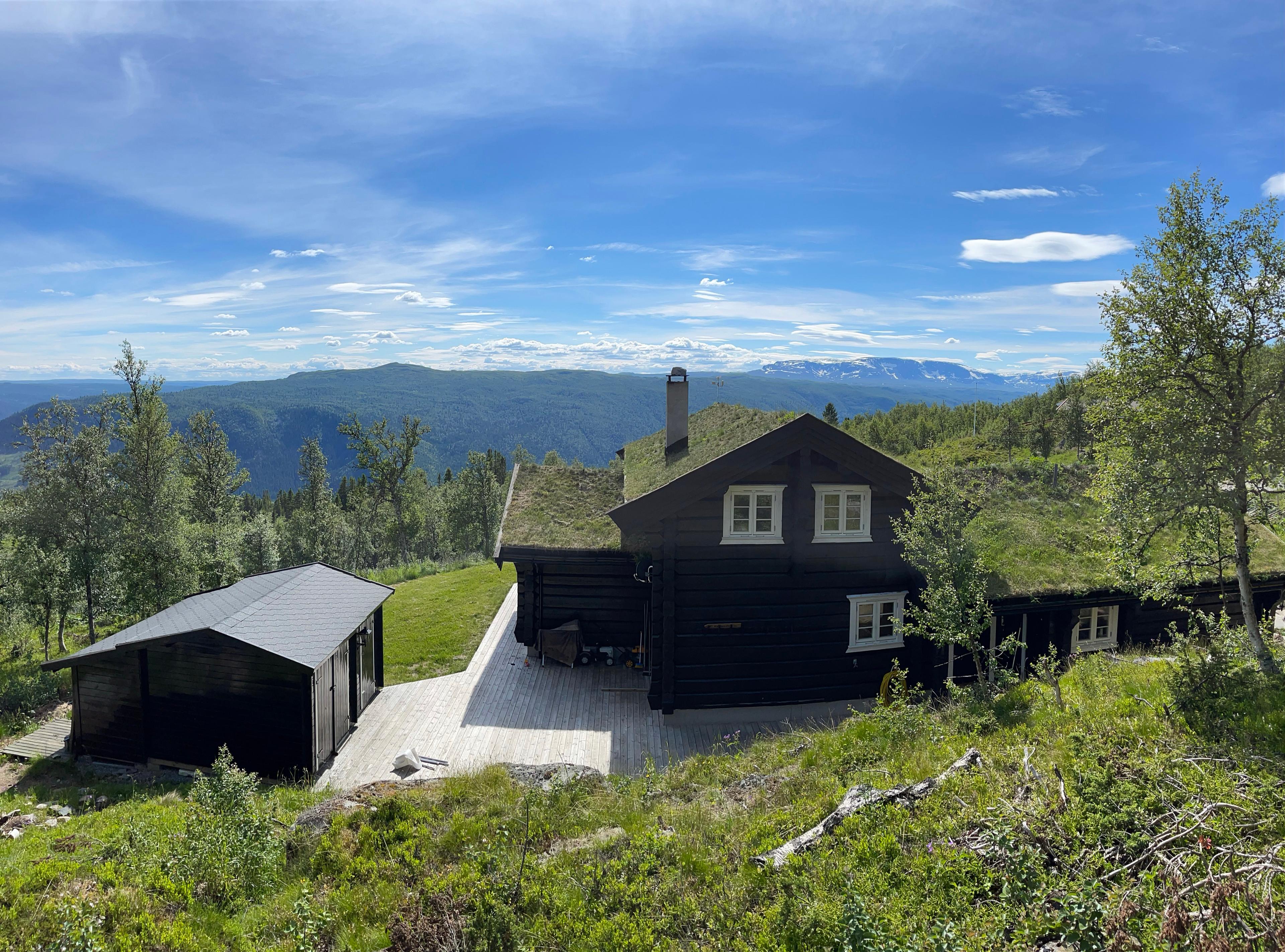 NorgesbookingReserva la estancia perfecta en una cabaña en los fiordos, las montañas y los valles de Noruega.
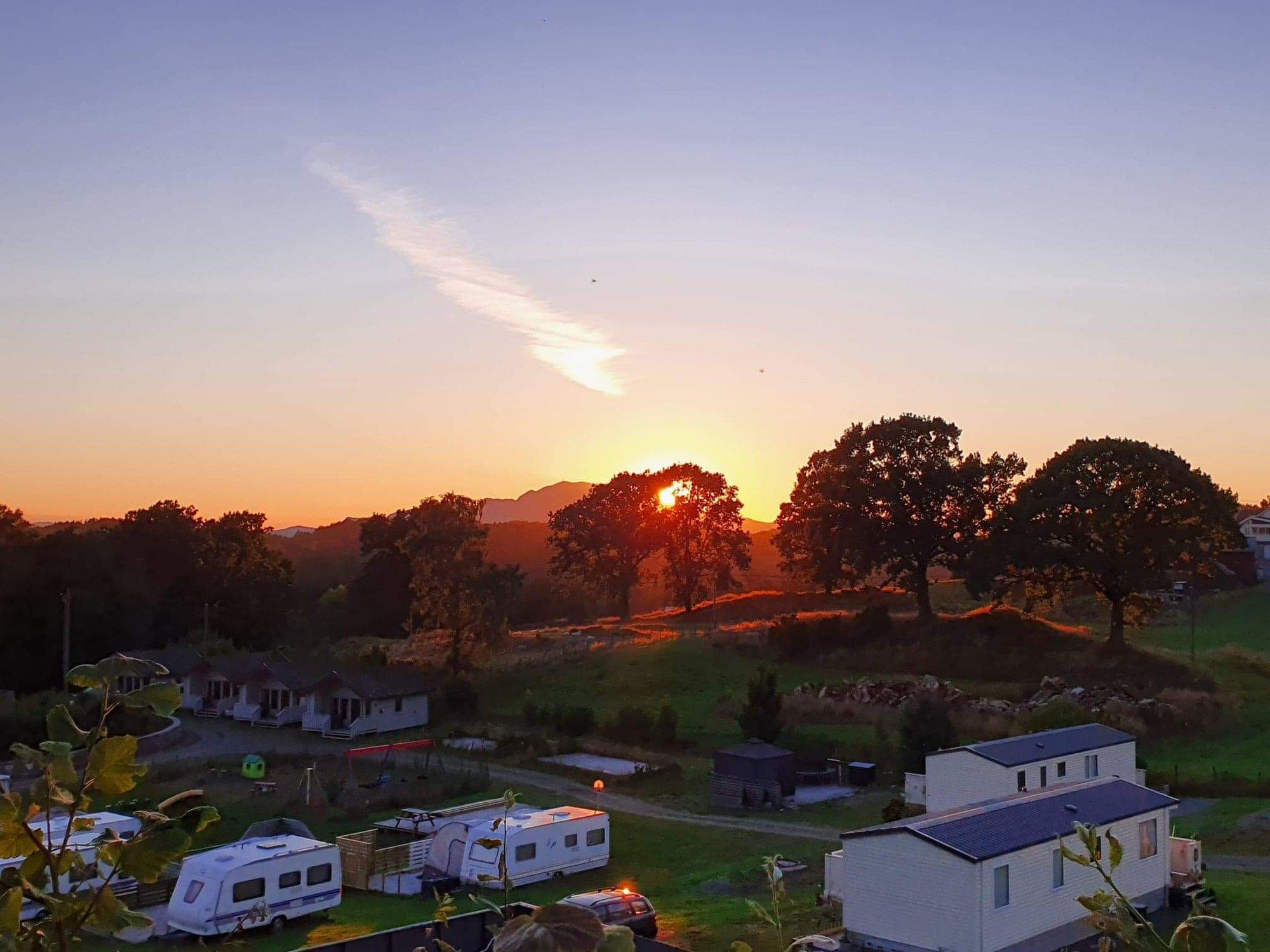 CampcationReserva una estancia en un camping en lugares impresionantes y únicos de toda Noruega con Campcation.
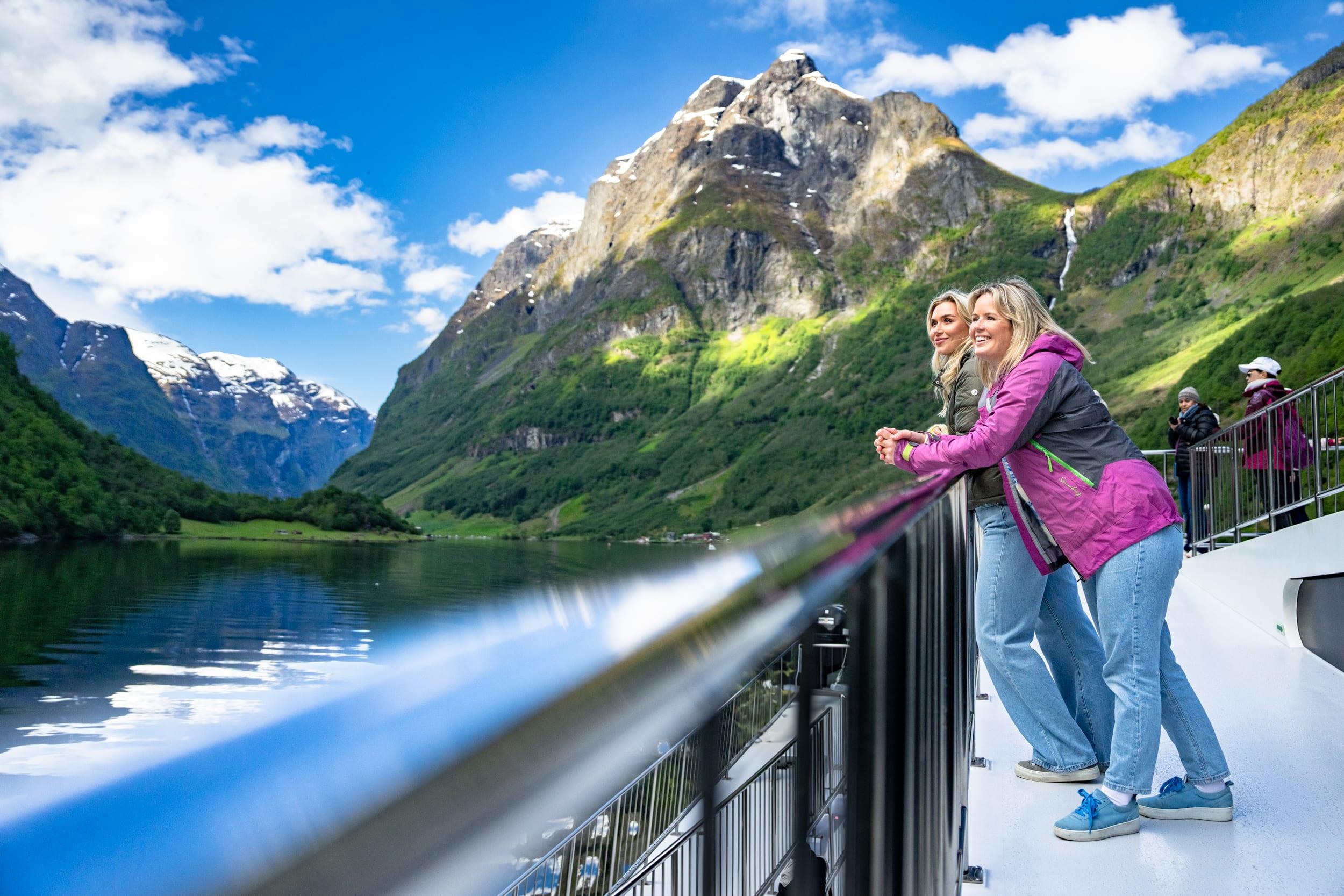 Fjord ToursHogar de Norway in a Nutshell, el tour más popular de Noruega. Fiordos, montañas y destinos alucinantes, ¡todo en un solo viaje!
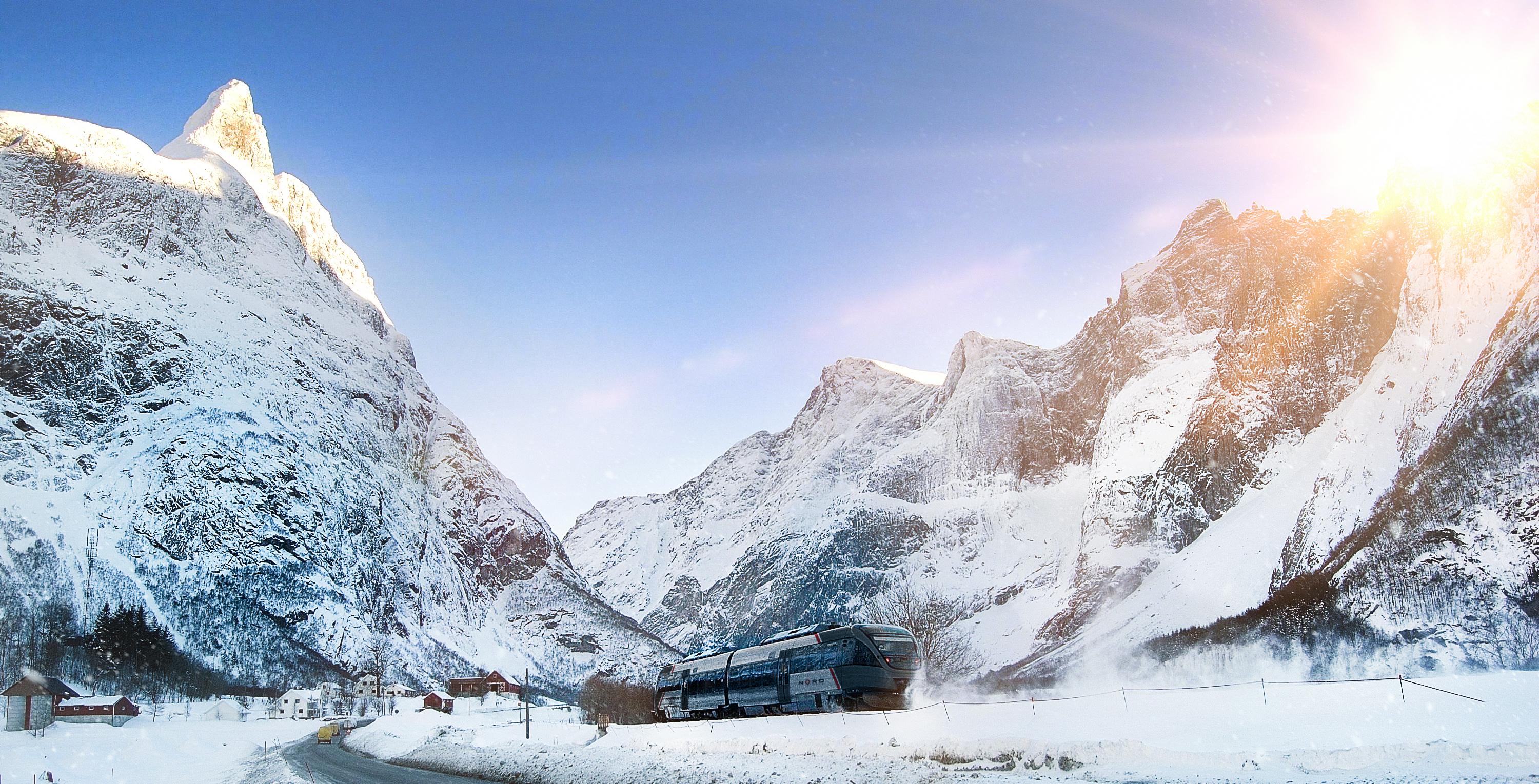 SJ NordSJ NORD: la aventura comienza en el tren
 Norwegian HolidaysPaquetes vacacionales a un precio bajo con Norwegian. Reserva el vuelo, el hotel y el coche de alquiler desde un único lugar.
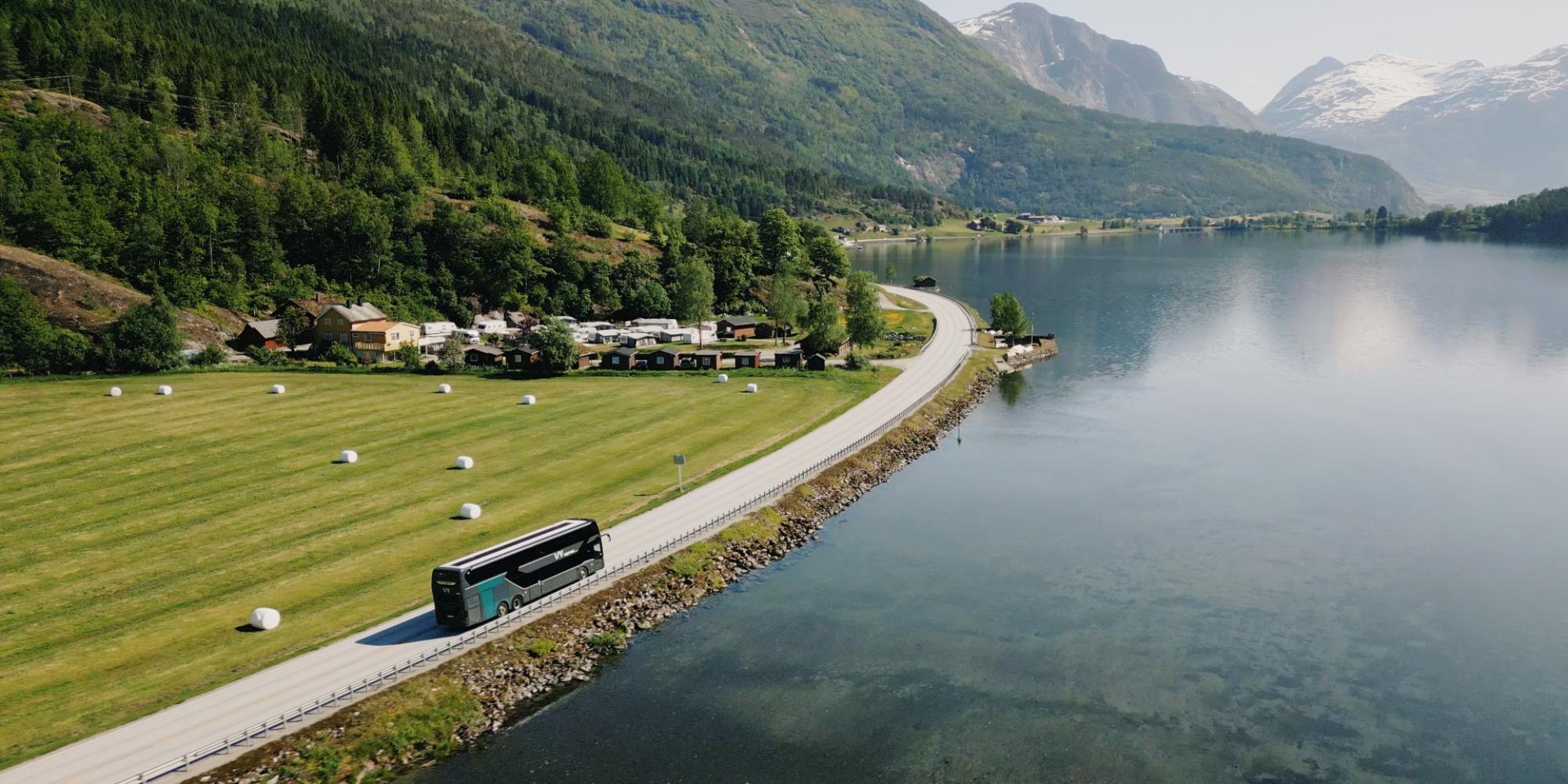 Vy expressDescubre Noruega en cómodos autobuses exprés que te llevarán a las principales ciudades, montañas y fiordos.
 Booknordics.comPaquetes vacacionales únicos, hoteles de aventura, tours y actividades.
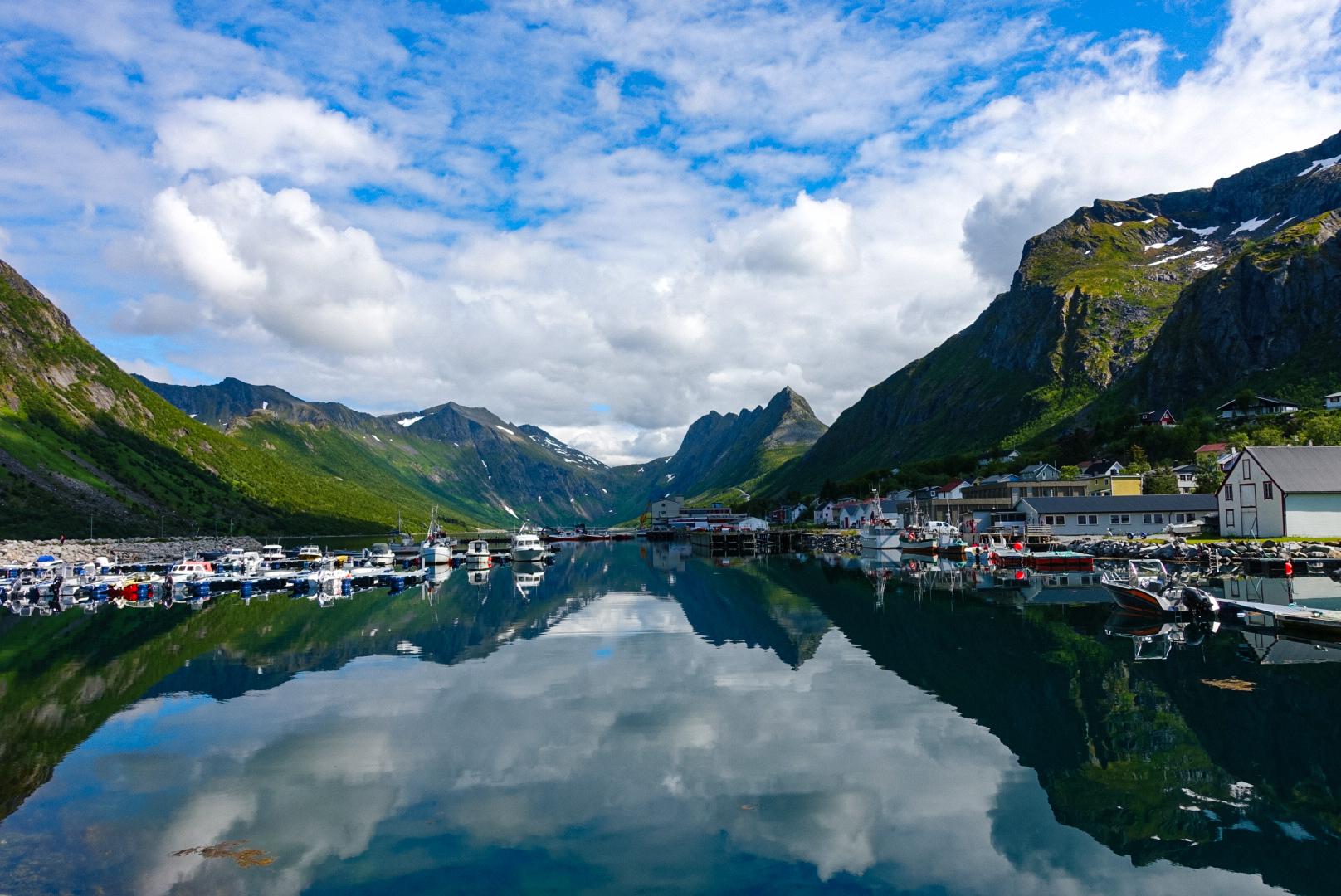 My Nordic TravelElige entre itinerarios diseñados a medida y paquetes de vacaciones ya elaborados a los mejores destinos de Noruega.
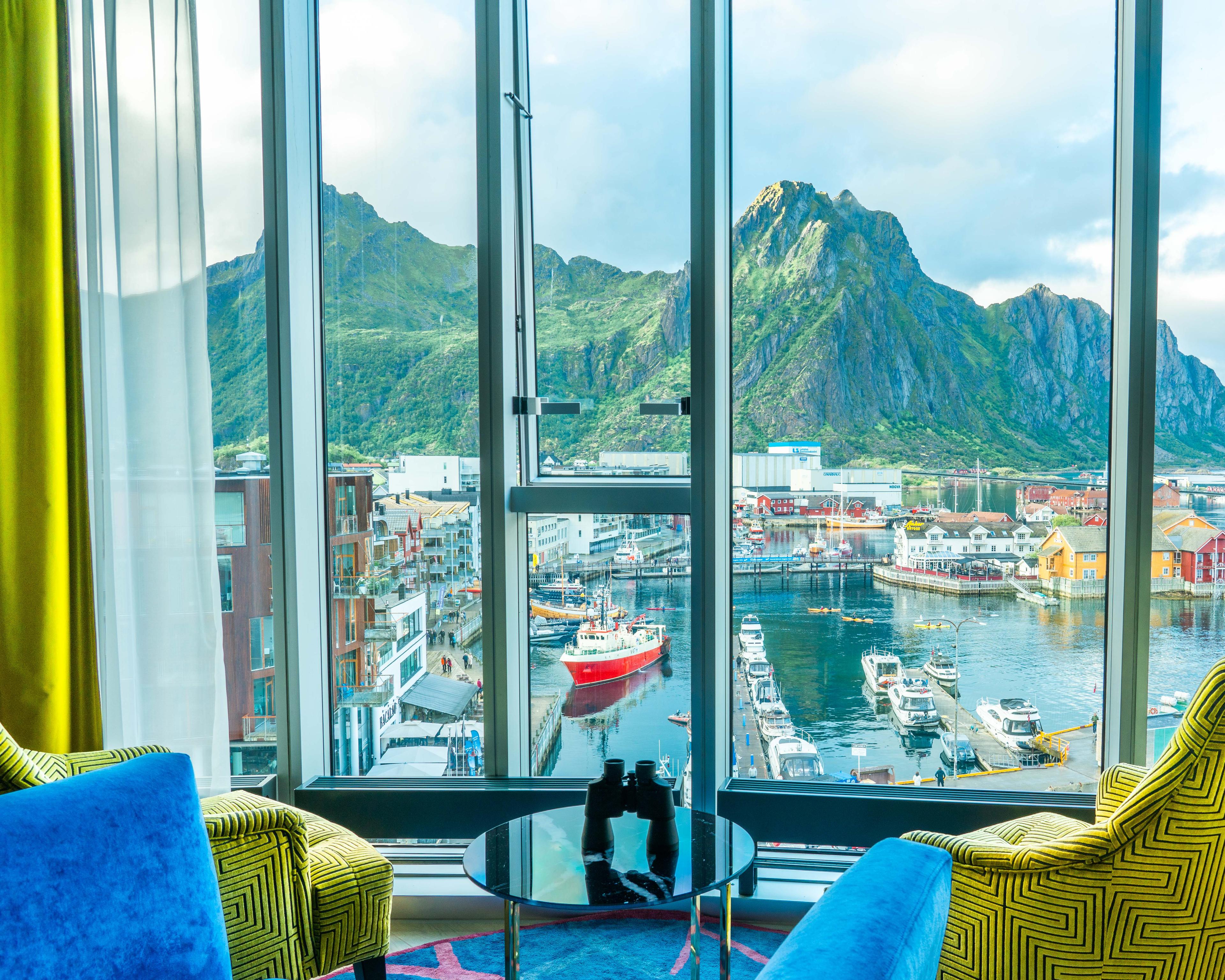 Thon Hotels AS¡Desayuno delicioso incluido! Disfruta del verdadero confort y de precios razonables en nuestros 80 hoteles de Noruega.
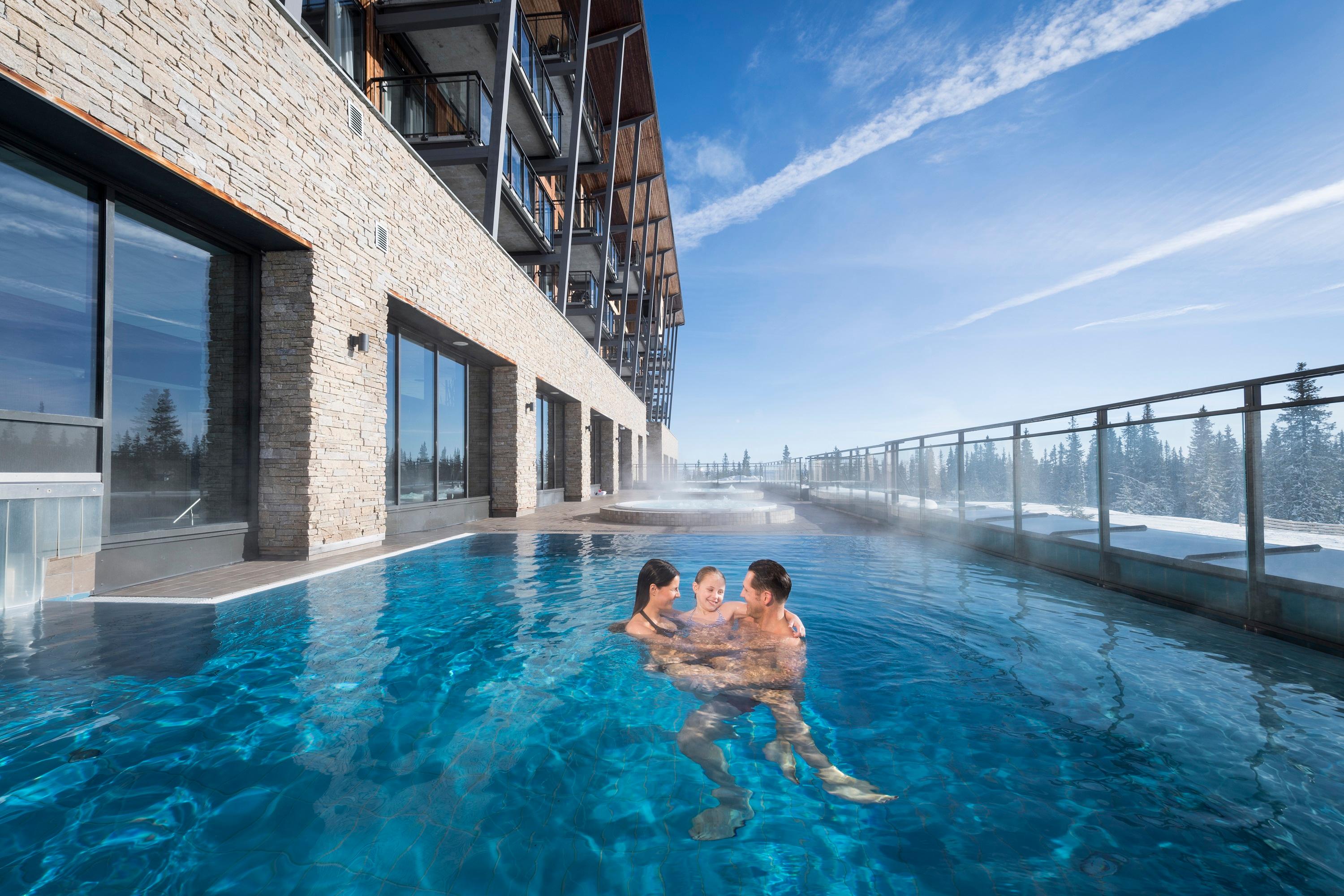 Radisson HotelsOfertas económicas y estancias cómodas de calidad en las principales ciudades, aeropuertos y estaciones de esquí de Noruega.
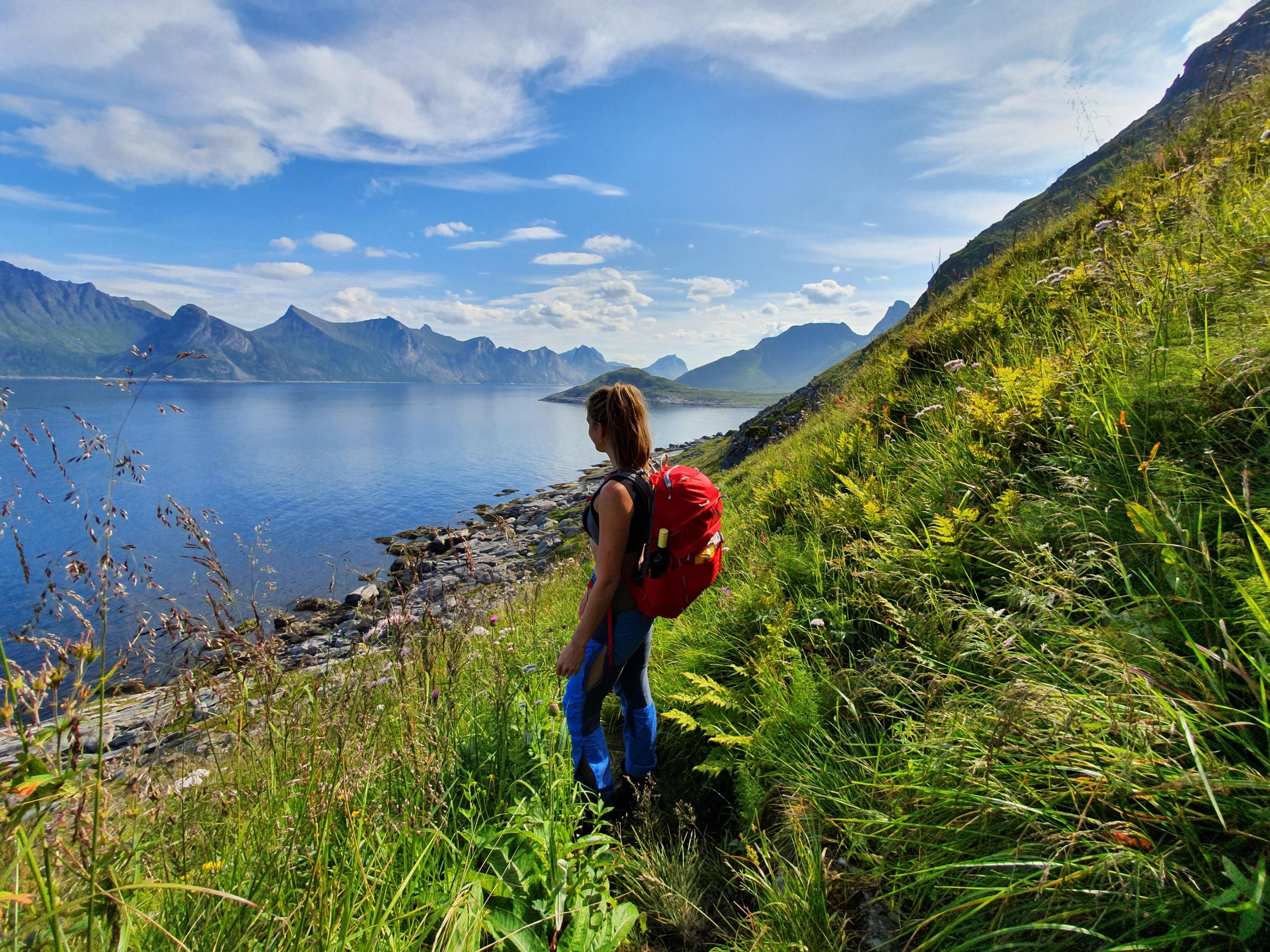 CampioCampio es el mayor sitio web de reservas de acampada de Noruega. Encuentra los mejores campings y aparcamientos de autocaravanas en todo el país.
 Rent-A-Wreck of Scandinavia ASLa alternativa de alquiler de coches inteligente y económica.
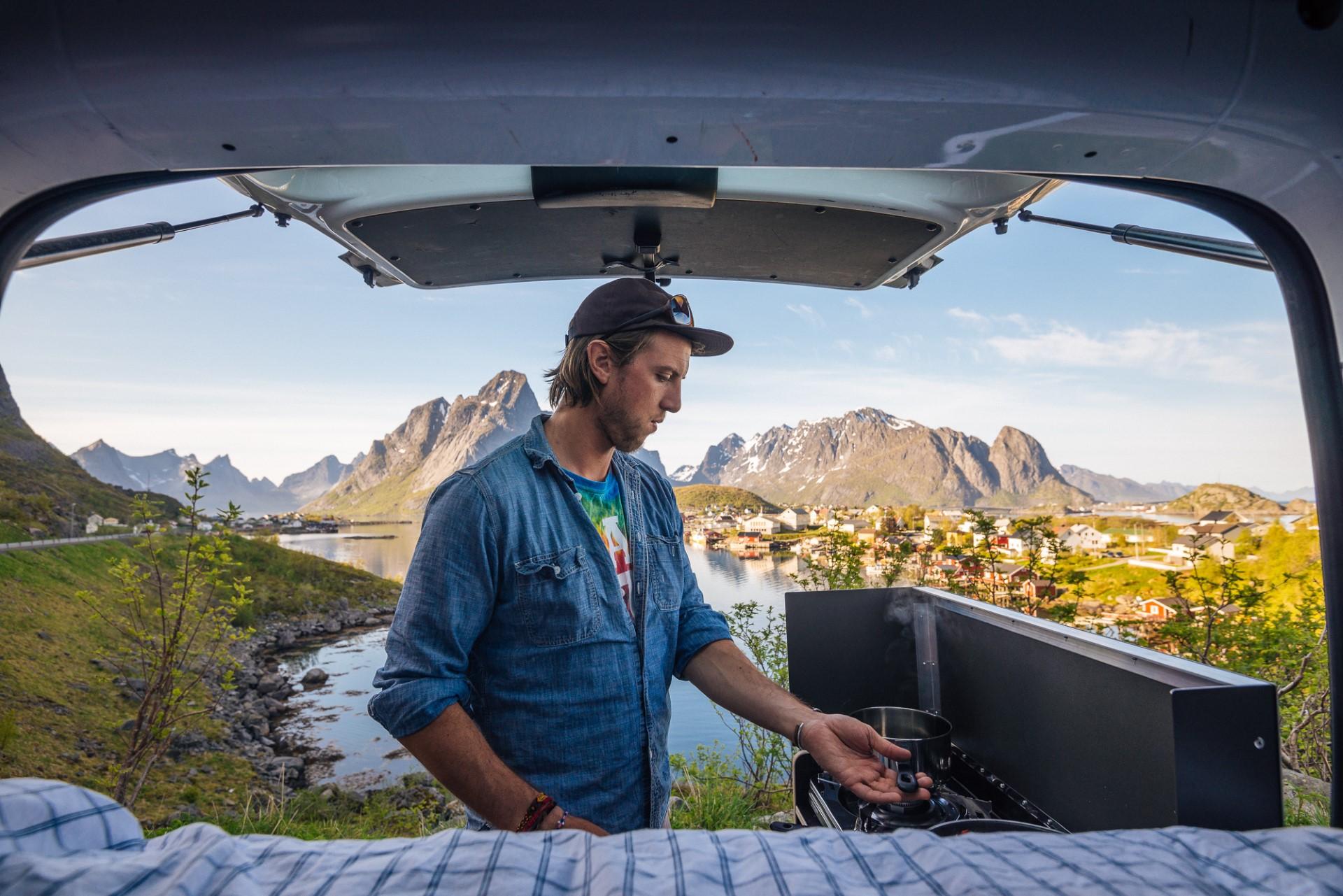 Arctic Campers AS¿Quieres saber cómo es la vida en una caravana? Explora Noruega con comodidad y estilo en nuestras autocaravanas inteligentes y acogedoras.
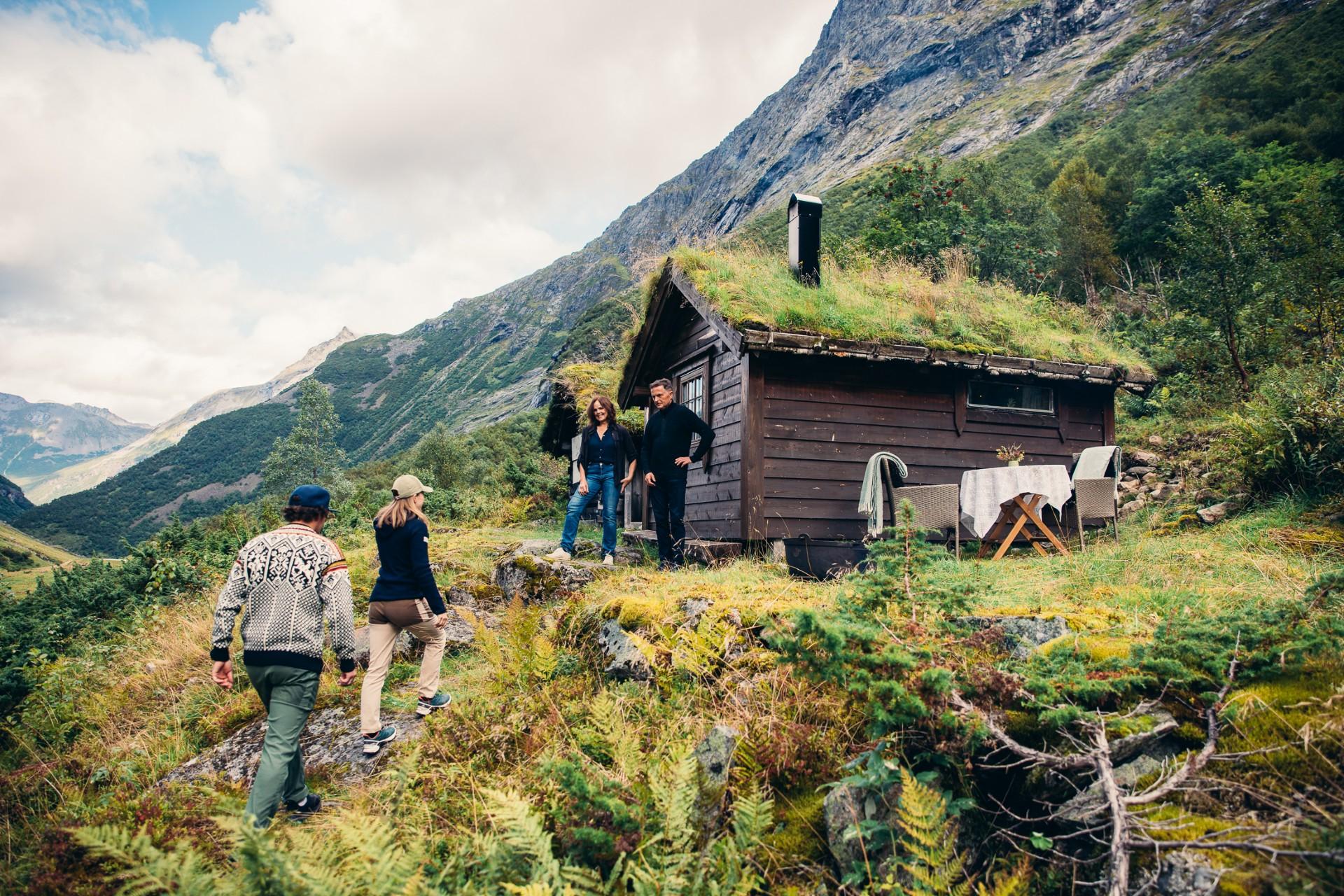 Up NorwayLujo a medida seleccionado por expertos locales. Combinamos tus preferencias y nuestros conocimientos para que el viaje sea inolvidable.
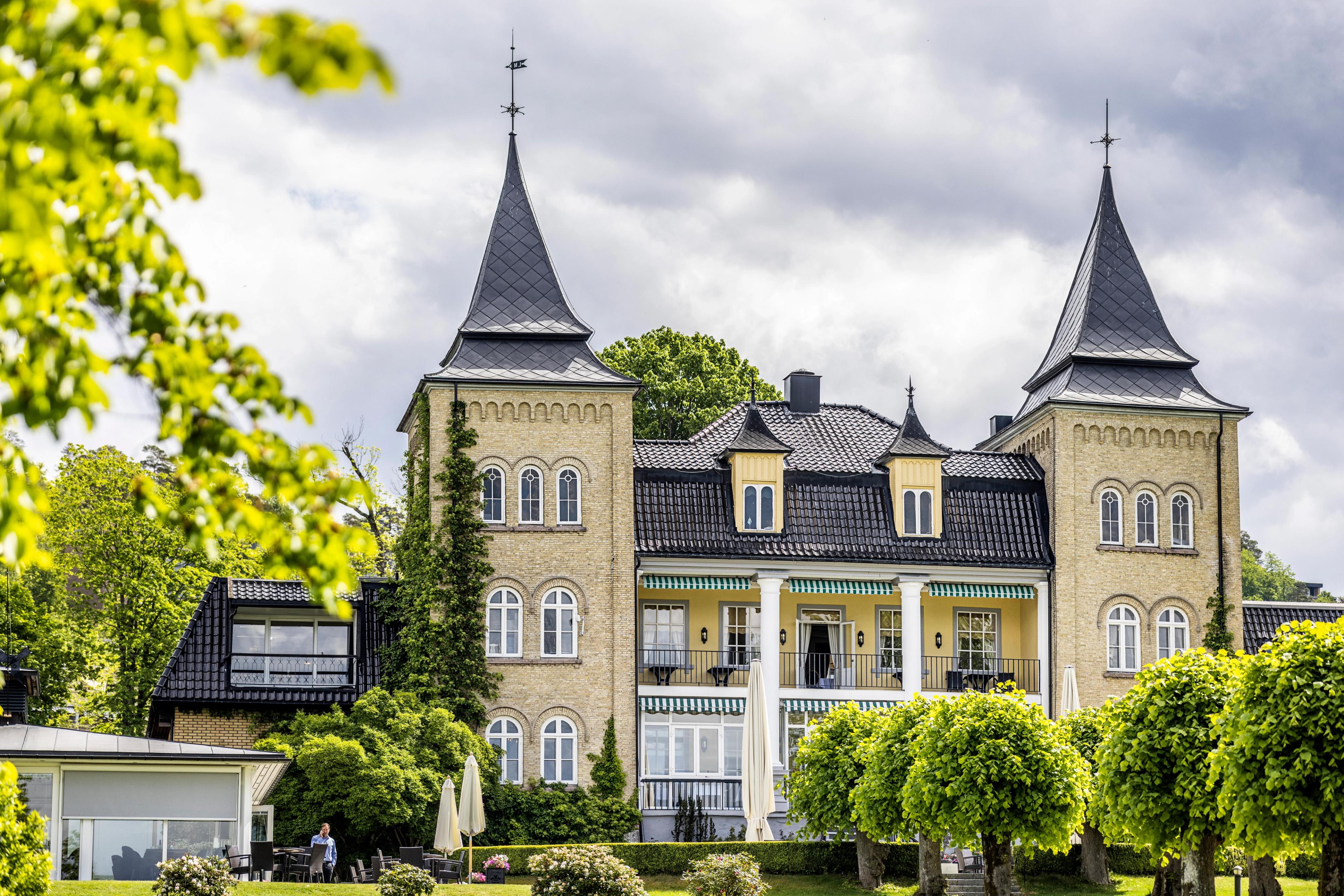 Classic Norway HotelsCon nosotros, el hotel es el destino. Reserva una noche para recordar en uno de los hoteles más singulares y característicos de Noruega.
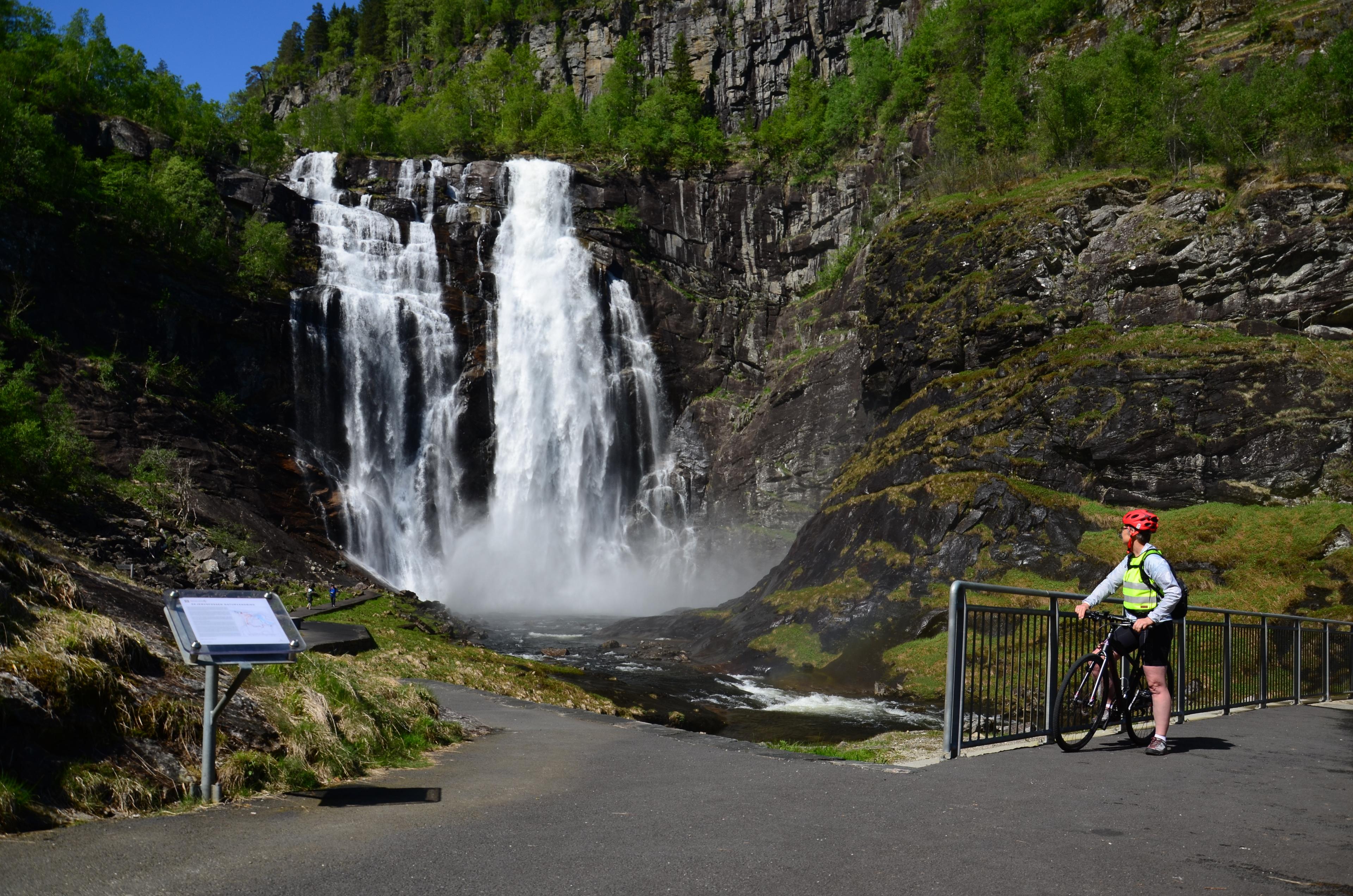 Discover NorwayOfrece una gama de emocionantes vacaciones por tu cuenta de senderismo, ciclismo y esquí por Noruega. Traslado de equipaje incluido.
 Benzini CampersLa aventura de tu vida empieza aquí. Reserva ya tu autocaravana con Benzini Campers.
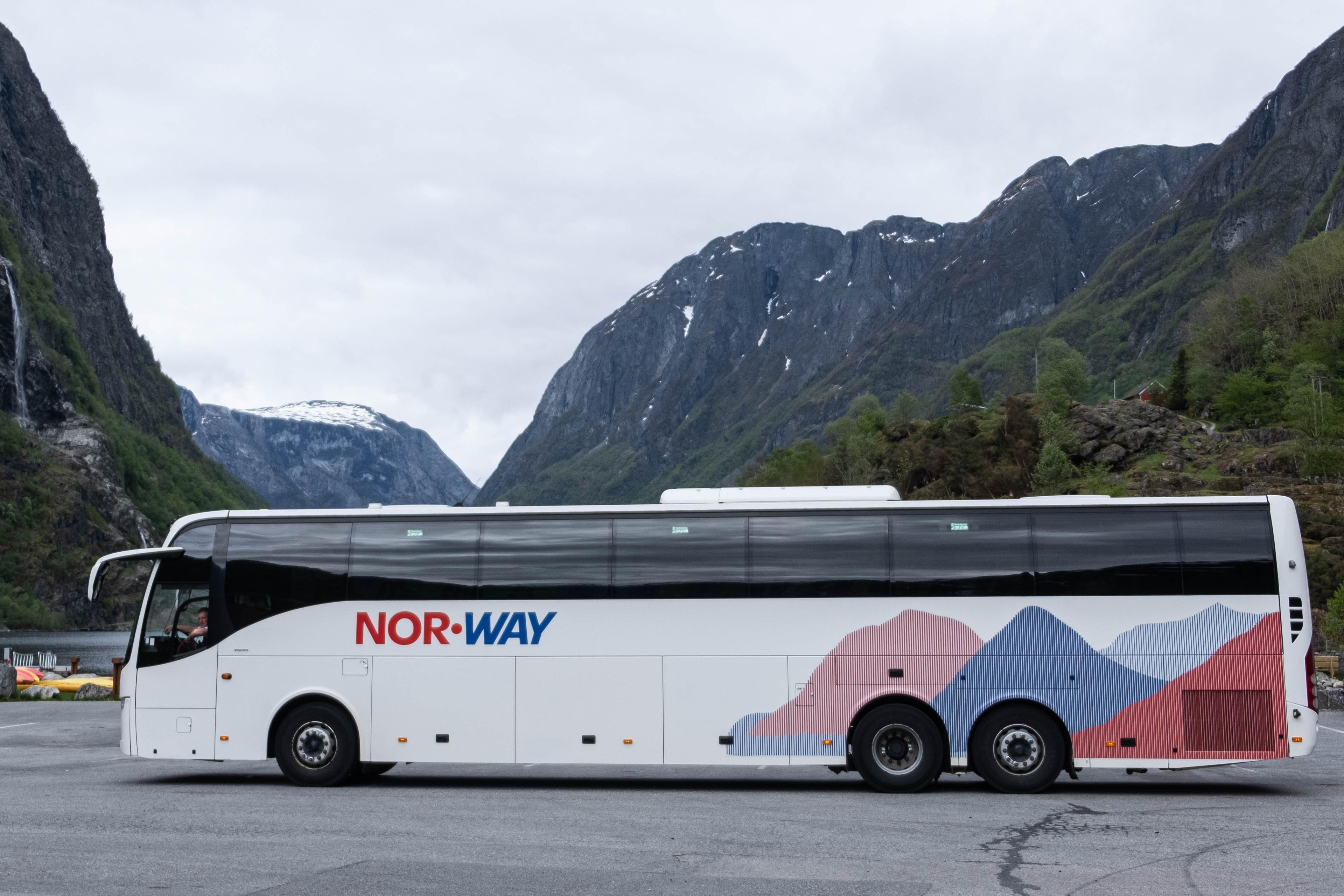 NOR-WAY BussekspressDisfruta de unas vistas pintorescas en cómodos viajes en autobús a los fiordos y de ciudad en ciudad con nuestros autobuses exprés.
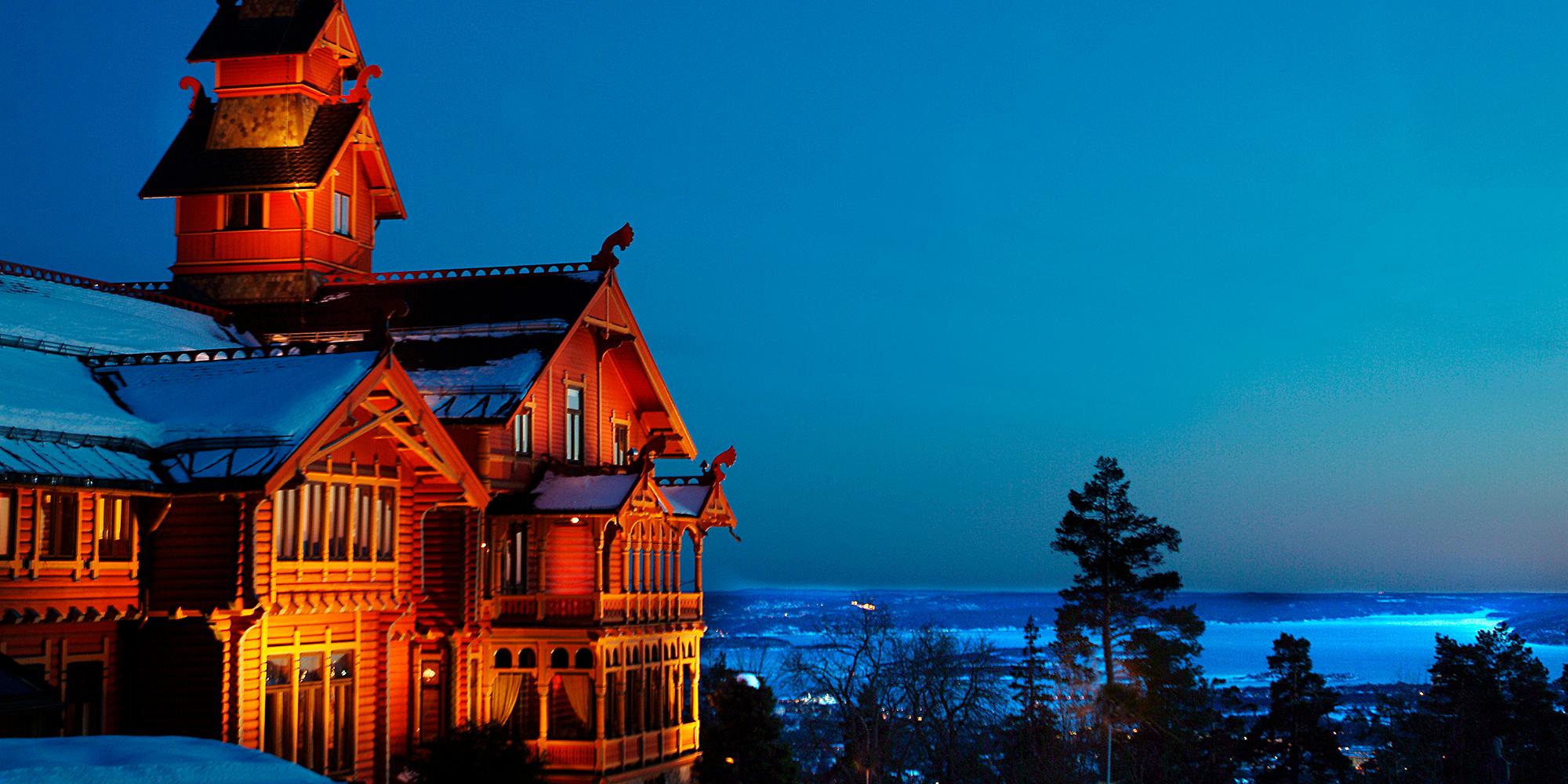 Scandic HotelsDisfruta de la mejor hospitalidad noruega en más de 90 hoteles en todo el país. Ofertas especiales disponibles.
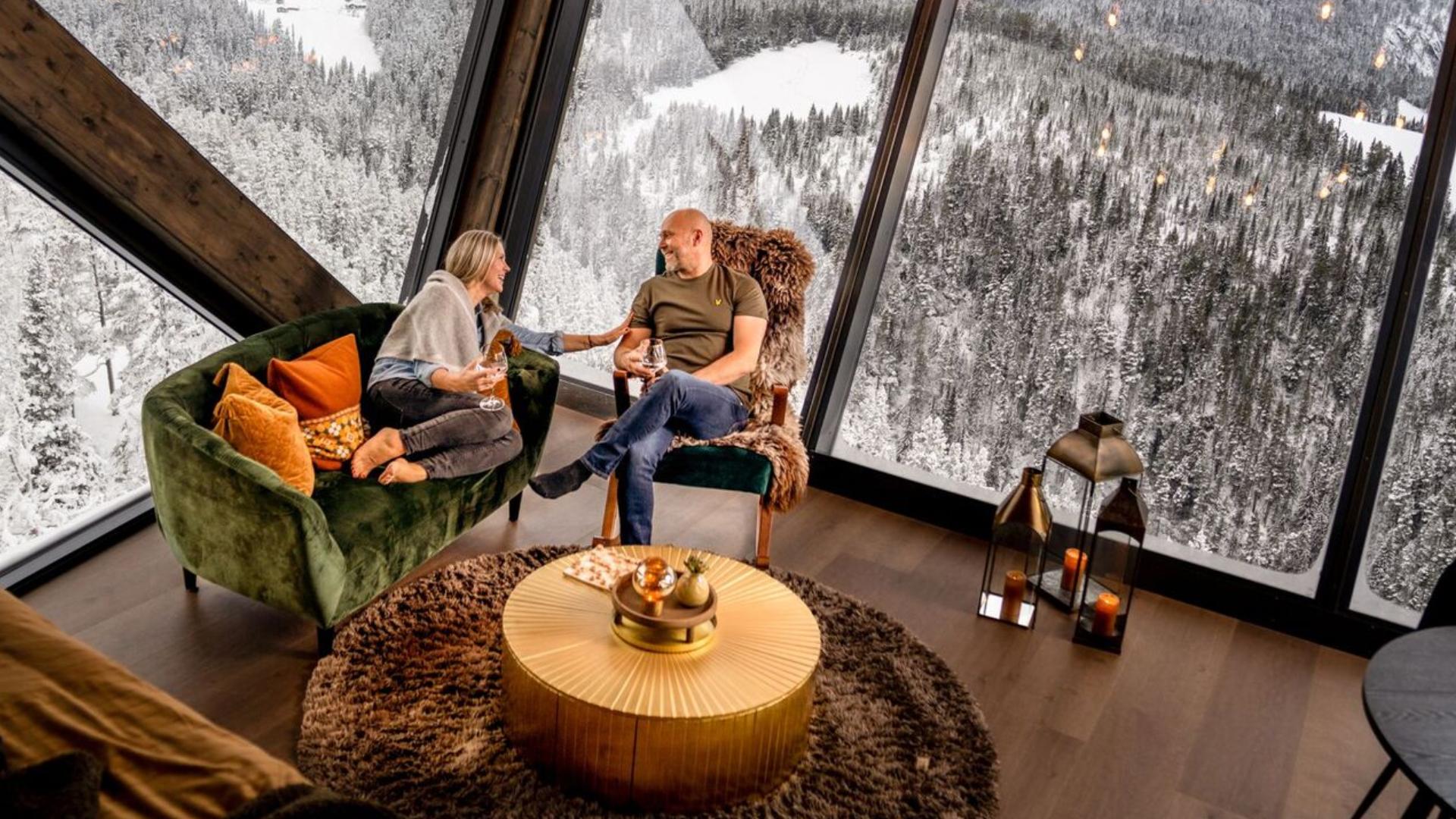 50 Degrees North NordicElige entre viajes individuales personalizados y viajes en grupos reducidos y exclusivos por Noruega.
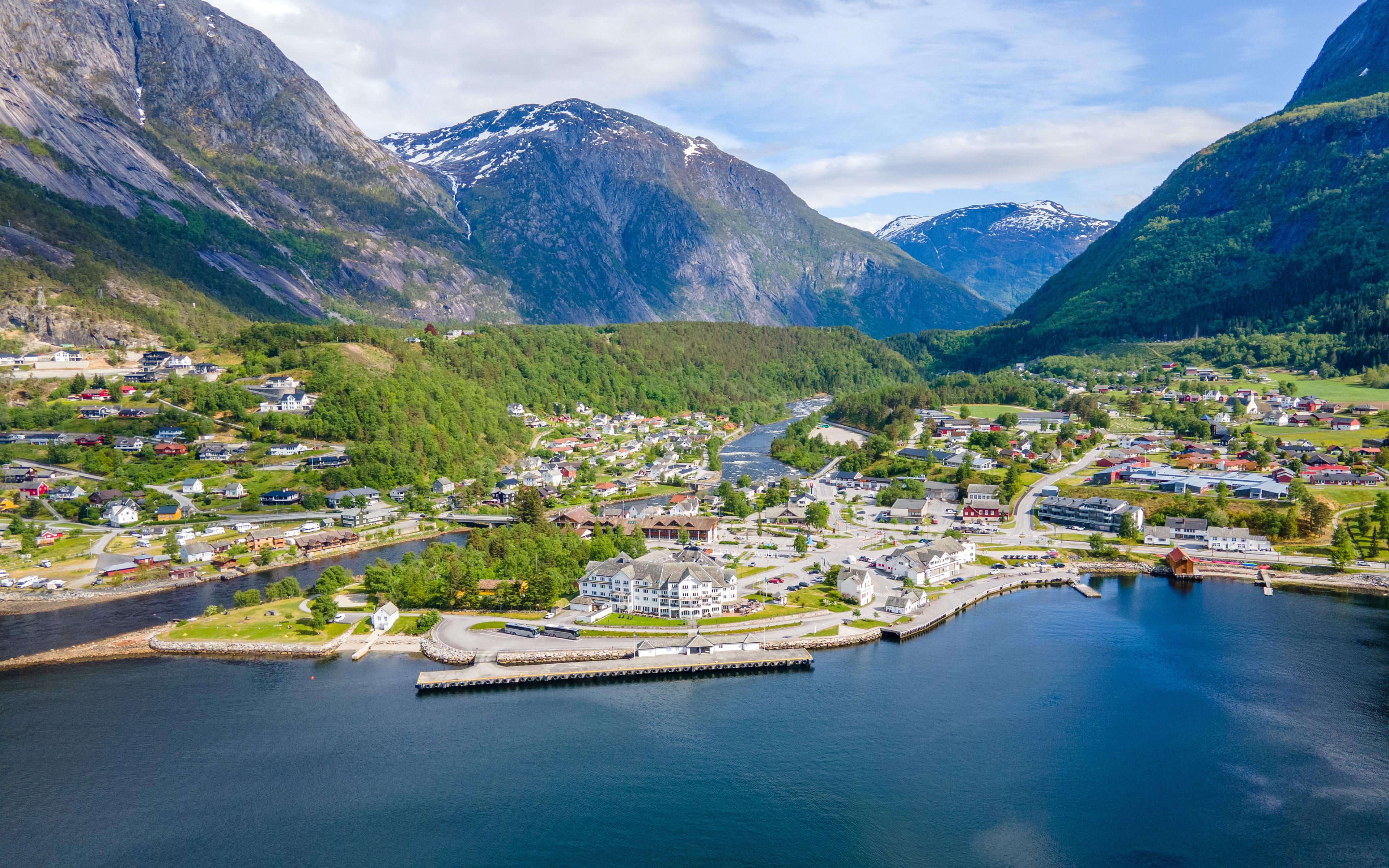 Go Fjords¡Reserva visitas guiadas y experiencias fantásticas! Ofrecemos tours en Oslo, Bergen, Stavanger, las Lofoten, el Cabo Norte y mucho más.
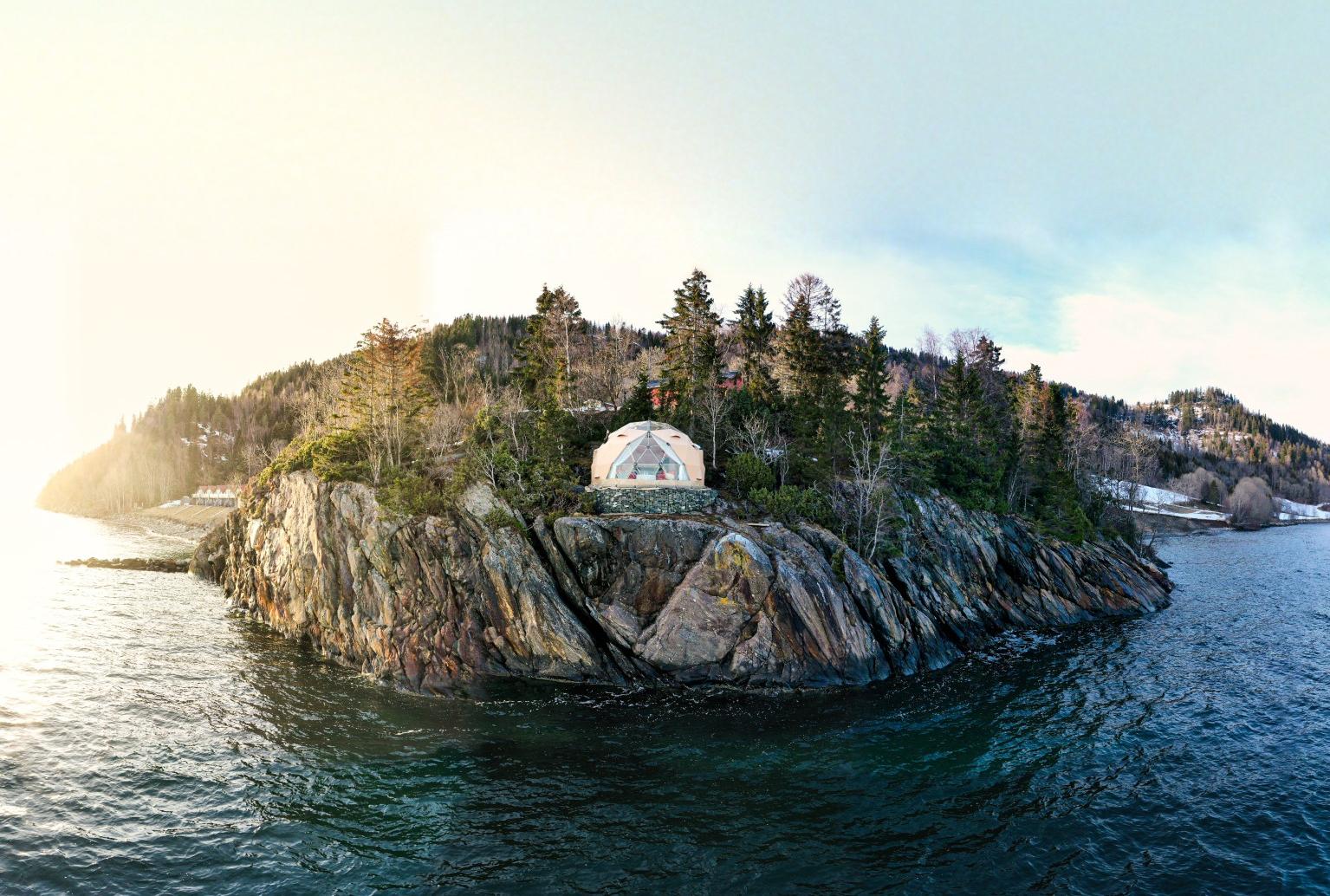 CampanyonUna acampada única en la naturaleza. Reserva una estancia en una casa del árbol o en una tienda de glamping, o alquila una parcela para autocaravanas.
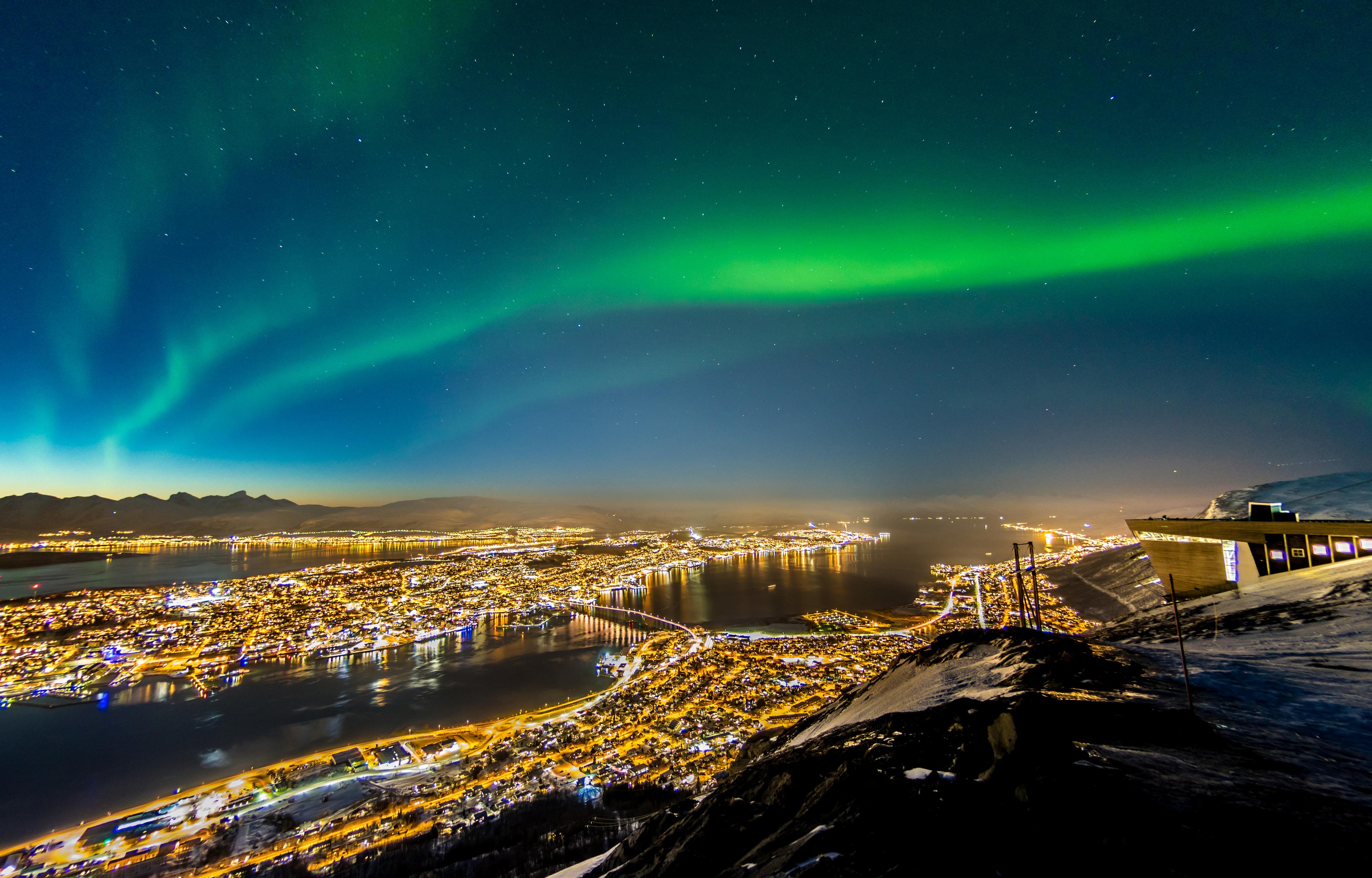 Fjord Travel NorwayDuerme en un hotel de hielo, persigue las auroras boreales y descubre los mágicos fiordos. ¡Reserva tu visita ahora!
 Auto EuropeUna experiencia de alquiler de coches siempre excelente. Busca y compara tarifas. Cancelación gratuita hasta 24 horas antes de la recogida.
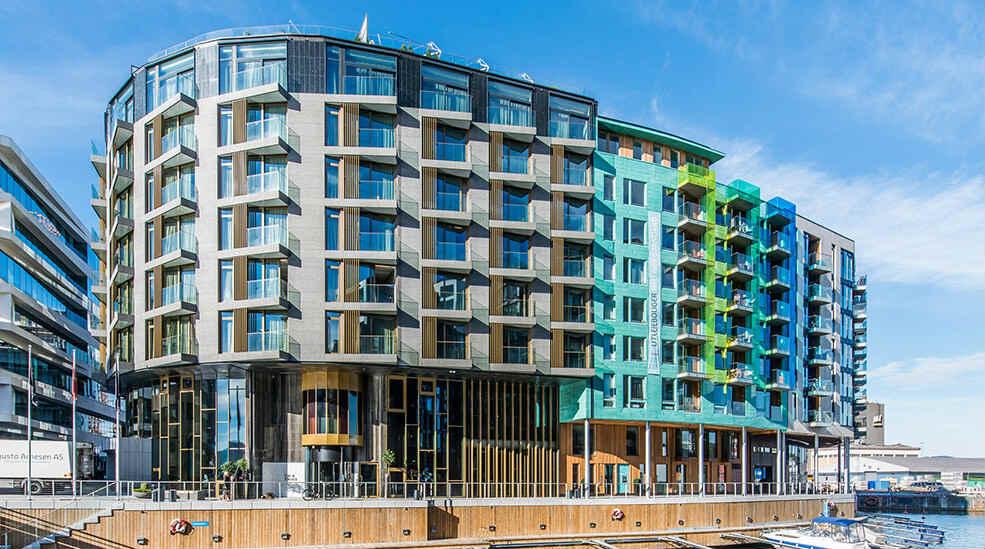 Strawberry¡Una empresa hotelera diferente! Encuentra grandes ofertas de fin de semana en más de 100 hoteles de Noruega.